Lead dispatch
Why skipping a burn is good news: how Artemis II's navigation beat its own correction plan
NASA waived the first planned Artemis II correction burn because navigation and propulsion performed so well. Here is how small errors, vents and a firing threshold shaped that call.

The Landing the Moon desk
From the April 3 briefing
The short answer: a burn that wasn't needed
NASA skipped the first planned outbound trajectory correction burn on Artemis II because Orion was already where it needed to be. In its flight day 3 update, NASA said flight controllers elected to cancel the burn because the spacecraft was on the right flight path for its April 6 lunar flyby.

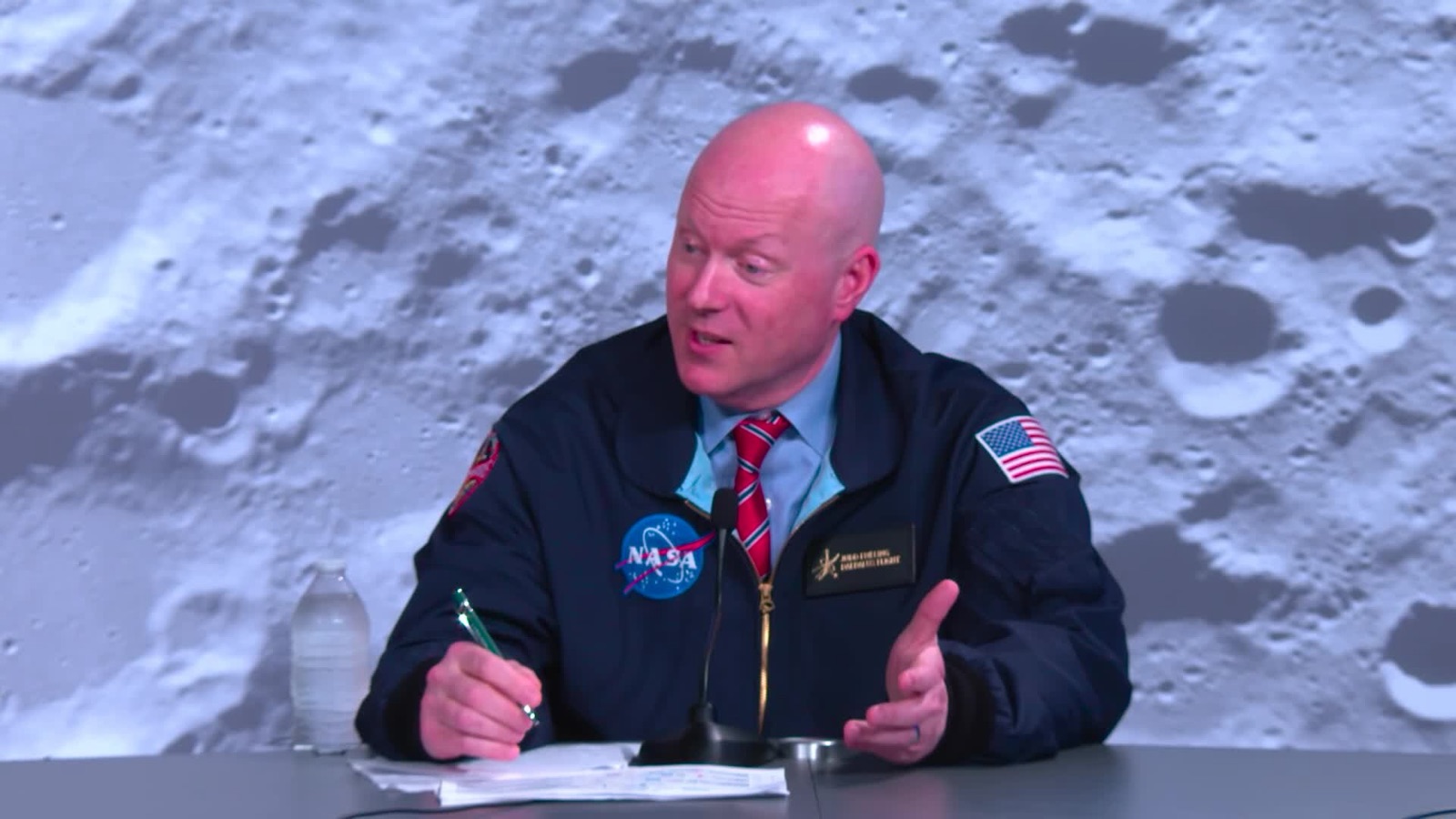
At an April 3 press briefing, ascent flight director Judd Frieling said the systems were performing so well that the team did not need the correction. The team folded any needed adjustment into the next planned correction instead. Mission planners call the skipped burn OTC-1.
A skipped burn can sound like a missed task, but a correction burn exists to fix a path that has drifted. When the path has not drifted enough to matter, there is nothing to fix.
What an outbound trajectory correction burn is
The translunar injection burn on April 2 sent the four crew members out of Earth orbit toward the Moon, the first time humans had done that since 1972. A big burn like that never aims perfectly. Small errors in speed and direction carry through the coast to the Moon, and they grow the longer nobody addresses them.
That is why the mission timeline included three planned trajectory adjustments to fine-tune Orion's velocity and path. The skipped burn was the first of them. These short engine firings are typically used after major maneuvers to make small adjustments to a spacecraft's path.
SciTechDaily reported that the planned burn would have lasted about eight seconds and changed Orion's velocity by 0.7 feet per second. That is roughly half a mile per hour, a tiny change for a spacecraft that had left Earth orbit a day earlier. The starting point was also good: an early post-flight assessment indicated the Space Launch System rocket accurately placed Orion where it needed to be in space.
Why skipping a burn counts as good news
Orion program manager Howard Hu read the cancellation as a measure of performance, saying it “shows that our navigation performance and our ability to get ranging have been outstanding.” Ranging is the tracking measurement that tells the ground how far away the spacecraft is, and it feeds the position estimate that decides whether a correction is needed.
Frieling was asked whether the result surprised the team. His answer was “No. Not at all.” He added that the outcome was well within bounds.
Nor is it the first time a Moon-bound mission has skipped a correction. Hu said he knew of at least one skipped correction burn on Artemis I. A day after the translunar injection burn, SpaceNews described Orion as performing well with only minor issues. A correction burn is insurance, and the plan assumed some of it might go unused.
How non-propulsive vents still nudge the path
Frieling named the major contributor to trajectory dispersions, the small departures from the planned path: venting. The carbon dioxide scrubbers vent CO2 overboard, and that vent is supposed to be non-propulsive but carries some propulsion anyway. The urine vent behaves the same way, and together they cause minor trajectory deviations.
Anything pushed out of a spacecraft pushes back on it, however gently. On the short Artemis II flight, wastewater was vented overboard daily, and Commander Reid Wiseman described the result as “a billion little, tiny flecks of ice floating out into deep space.” Each venting event adds a small, unplanned nudge, and over days those nudges accumulate.
Hu said the vents, whether wastewater or life-support CO2, did not cause disturbances larger than the team expected. Neither man gave a size for these nudges, and this article does not guess at one.
A billion little, tiny flecks of ice floating out into deep space.
The threshold: when a correction isn't worth firing
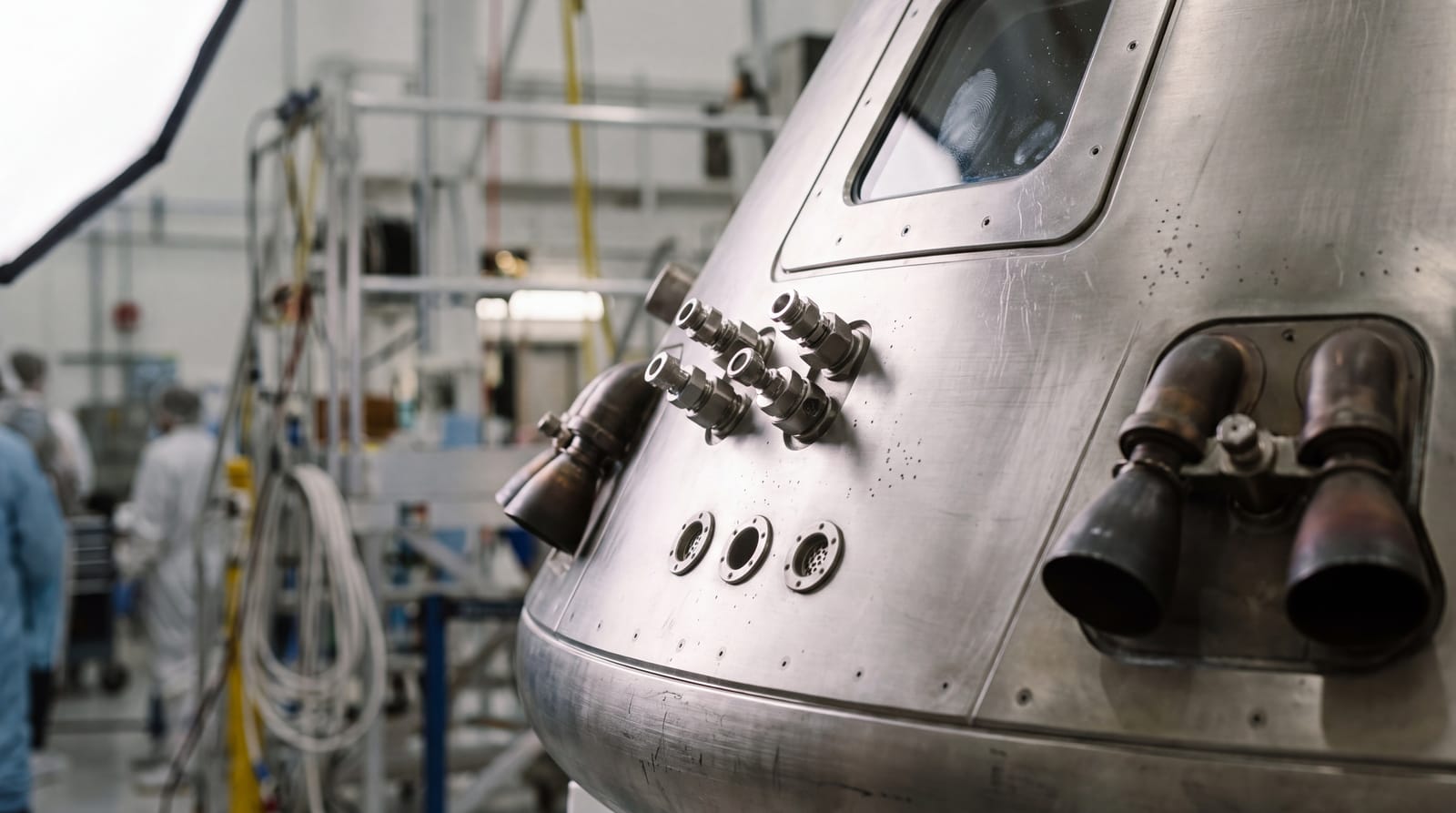
Frieling described the decision rule. The team has a threshold: if the required correction is low enough, the precision of Orion's lowest-thrust jets, part of its reaction control system, is not good enough to make firing worthwhile. The team lets the error build up and fixes it on the next correction burn.
The logic follows from precision. A burn cannot reliably remove an error smaller than the burn itself can be controlled, so firing for a very small correction risks adding error instead of removing it. Hu described the same call from the flight control team's side: when the delta-V is very small, the team gets to decide whether the burn is needed at all. Delta-V is simply the change in velocity a burn would produce.
The briefing gave no number for the threshold. The only size reported is the 0.7 feet per second planned for the skipped burn, and no source says how much correction was actually required when the team waived it.
Where the small errors go: rolled into the next burn
Skipping a burn does not erase the error it would have fixed. The error stays, grows a little, and gets folded into the next planned correction. NASA's update said as much: any adjustments needed may be incorporated into a subsequent correction burn.
A later outbound correction did happen. On flight day 5, mission control and the crew completed a burn that began at 11:03 p.m. EDT and lasted 17.5 seconds. NASA described it as a burn to refine the trajectory and said Orion continued on a precise path to the April 6 flyby. NASA's summary does not break down how much of that burn came from the skipped one.
A skipped burn means one fewer engine firing. The chance to correct the path stays in the later burns.
What new ground tools aim to characterize, and what remains unconfirmed
The episode's coverage points to new ground tools aimed at characterizing how vents affect the trajectory. The briefing excerpts used for this article do not describe those tools, so what they will measure and when they will be ready is not confirmed here. Two other figures are also missing: the threshold value and the size of the vent disturbances.
NASA's post-flight assessment is looking at a related but separate matter. Engineers are gathering data on the urine vent line issue to identify a root cause and start corrective action for Artemis III.
Flight director Rick Henfling said on April 5 that exposing wastewater to vacuum is chaotic and involves phenomena that NASA does not fully understand. He was speaking about the vent line rather than the trajectory, yet his comment shows why vent behavior is hard to predict precisely.
The takeaway for following spaceflight news
When a mission cancels a burn, look at the reason given. Here NASA said the trajectory was right, Frieling said the team was not surprised, and the decision followed a threshold tied to how precisely the smallest thrusters can fire. Hu pointed to outstanding navigation and ranging.
The plan carried three correction opportunities because perfect aim was never expected. On flight day 3 the first one went unused, and a later burn still flew when the team judged it worthwhile.
Key takeaways
- NASA cancelled the first of three planned outbound correction burns because Orion was already on the right path for its April 6 flyby.
- Frieling said the team was not surprised, and Hu credited outstanding navigation and ranging.
- Vents meant to be non-propulsive, including the CO2 scrubber vent and urine vent, still give small pushes that add to trajectory errors.
- Below a threshold, the precision of Orion's lowest-thrust jets makes a correction not worth firing, so the error is fixed on the next burn. No numeric threshold has been published.



Posted today
From the April 3 briefing
Landing the Moon
Podcast · Tracking the countdown to the lunar surface
"This is why we build redundancy in the system."
That was a speaker in the Artemis II mission status briefing, explaining why the team had to isolate one of the branches in the system. According to the speaker, the system has redundant branches, and there were "no mission impacts."
The speaker added that the team is still evaluating the situation. They also described being able to perform the rest of the burns across the mission without doing any regulation, what they call "blow down mode." In the speaker's words, there is enough helium pressure in the tanks themselves for that.
The takeaway for engineers: a fault can be contained when the design already has a second path and a fallback way to operate.
#Artemis #SystemsEngineering #SpaceExploration
Landing the Moon
@landingthemoon
At the Artemis II briefing, a speaker said the CO2 scrubber vent is "supposed to be a non-propulsive vent, but it has some propulsion to it," and so does the urine vent. Still, today's trajectory correction "was not needed." It rolls into tomorrow's.
landingthemoon
Original audio · Landing the Moon
landingthemoon A backlit Earth, seen from the crew's side of the window.
The briefing describes it as an image that "shows a backlit Earth revealing auroras as the crew heads towards the Moon." It was taken by Reid Wiseman out of an Orion window. The speaker points out two auroras, top right and left and bottom left, plus zodiacal light at the bottom right, visible as the Earth eclipses the sun.
Then the speaker adds: "It's great to think that with the exception of our four friends, all of us are represented in this image."
#Artemis2 #Orion #NASA