
Live Interview
And why does that matter?
This is how a Mato agent talks. Take the other seat: answer a few and feel it follow the thread.
Podcast charts
Published by Jeff Curto
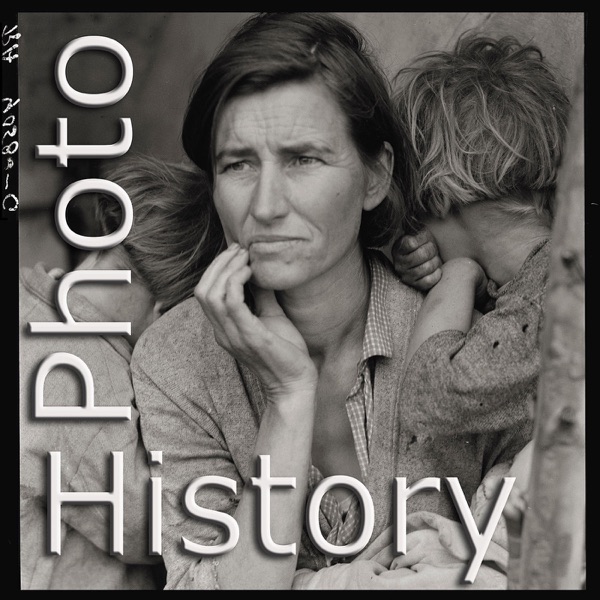
Podcasts, class lectures and resources from Jeff Curto
On the charts
Every published chart this podcast appears in, in the snapshot behind this page. Each one links to the chart it came off.
From the feed
The latest episodes published to this podcast’s own RSS feed. Titles and descriptions are the publisher’s.
The cyanotype was one of the earliest photographic processes and with its rich, blue color, remains one of the most beautiful. Invented in 1842 by the amazingly prolific Sir John Herschel, the easy-to-produce cyanotype lives on today in the darkrooms of many photographers and artists. Links for this episode: Sir John Herschel – at the Getty Museum Anna Atkins – British Algae in the New York Public Library Alternative Photography – a how-to guide from a good source Cyanotype material from Freestyle Photo Lenscratch.com – Review of a contemporary exhibition of alternative processes, including Cyanotype My Italy Photography Workshops are being planned for May and June of 2016 – get on the Advanced Notice Mailing List here Anna Atkins (1799-1871). Papaver rhoeas. Paper watermarked 1845. Cyanotype from the Atkins-Dixon album presented by Anne Dixon to her nephew in 1861. Image from A History of Women Photographers, published by Abbeville Press.
The Kodak Brownie camera was one of the most popular cameras in the history of photography. The Brownie popularized low-cost photography and introduced the concept of the snapshot to a public eager to preserve their personal and family memories. With its simple controls and initial price of $1, it was intended to be a camera that anyone could afford and use. Links for this episode: The George Eastman House’s Brownie Collection Kodak’s Brownie History Page (a little dated, but interesting) Brownie In Motion – Stephen Takacs very cool project – also on Stephen’s website The Kodak Brownie
When light sensitive material is exposed to light, a chemical change happens, but this change isn’t necessarily visible. This idea is perhaps part of why early photographers – and early viewers of photographic images – had a hard time with the concept of the latent image, yet it was one of the most important components of the technology of photography in its infancy.
The photographs of pioneer color photographer Sergei Mikhailovich Prokudin-Gorsky (1863–1944) give us a remarkable view into a world that is now lost – the Russian Empire just before the Russian Revolution and World War I. In this podcast we explore both Prokudin-Gorsky’s photographs and the unique tri-color photographic technique he employed to create them. Links for this podcast: Book – Nostalgia: The Russian Empire of Czar Nicholas II Captured in Colored Photographs by Sergei Mikhailovich Prokudin-Gorskii The Empire that was Russia – Library of Congress collection of Prokudin-Gorskii photographs and information Peasant Girls – Three young women offer berries to visitors to their izba, a traditional wooden house, in a rural area along the Sheksna River, near the town of Kirillov. Photograph by Sergei Prokudin-Gorsky
Tina Modotti (1896 – 1942) was an Italian photographer who was most active in Mexico between 1923 and 1930. Known for her romantic and business relationship with Edward Weston and her friendships with Diego Rivera, Frieda Kahlo and other Mexican artists, Modotti was also a political activist during the Mexican Revolution and beyond. Links for this episode: Tina Modotti web archive Mexico as Muse – Modotti & Weston at SFMOMA Tina Modotti at MOMA Tina Modotti Mexican sombrero with hammer and sickle 1927
John Szarkowski’s book Looking at Photographs: 100 Pictures from the Collection of The Museum of Modern Art is one of the best ways to learn not only about the history of photography, but also about photography’s aesthetics as well. Szarkowski, the former Director of the Department of Photography at MOMA from 1962 to 1991, pairs 100 photographs with a brief and insightful essay. The combination of image and text causes the reader/viewer to go back and forth and as you look at each photograph repeatedly, you add to the richness of your own viewing. Looking at Photographs by John Szarkowski – Click to go to Amazon.com
Photographer Gordon Parks, born 1912 and died 2006, was one of the most important figures of twentieth century photography. A humanitarian with a deep commitment to social justice, race relations, poverty, civil rights and honest depictions of urban life, Parks’ work provides an amazing chronicle important aspects of American urban life in the last half of the 20th century. Links for this episode: The Gordon Parks Foundation Books by Gordon Parks – on Amazon Gordon Parks: The Making of an Argument – The New Orleans Museum of Art exhibition archive page Gordon Parks: The Making of an Argument – A recap of the wonderful show at the New Orleans Museum of art about Parks’ essay Harlem Gang Leader Gordon Parks: American Gothic, 1942
Photographer James Van Der Zee was active from the 1920s through the late 1970s, working primarily in his native Harlem neighborhood in New York city. Through his elegant portraits and images of social, religious and athletic groups, he created an intimate narrative about his community, showing the world a part of America that was rarely seen. Links for this episode: James Van Der Zee in the Collection of the Art Institute of Chicago The Studio Museum of Harlem is the custodian of a large archive of Van Der Zee’s work Van Der Zee’s funerary portraits Jean-Michel Basquiat – Photograph by James Van Der Zee
When the exhibition The Family of Man opened in January of 1955, 60 years ago this month, visitors were greeted by more than 500 photographs and these words by the poet Carl Sandburg: “People! Flung wide and far, born into toil, struggle, blood and dreams, among lovers, eaters, drinkers, workers, loafers, fighters, players, gamblers. Here are ironworkers, bridgemen, musicians, sandhogs, miners, builders of huts and skyscrapers, jungle hunters, landlords and the landless, the loved and the unloved, the lonely and the abandoned, the brutal and the compassionate-one big family hugging close to the ball of Earth for its life and being.” Links for this episode: Family of Man Re-installation in Luxembourg Professor Fred Turner’s web page The Family of Man and the Politics of Attention in Cold War America – Fred Turner’s great essay on the exhibition (PDF) The Family of Man book on Amazon
Photographer Lisette Model, born in Vienna, Austria in 1901 and died 1983, was an important street photographer of the early 20th century, defining much of what would be considered part of the street photographer’s aesthetic for decades to come. The Gambler – Photograph by Lisette Model
Welcome to the History of Photography Podcast 2.0! Having retired from my college teaching job, I’m no longer teaching the photo history class, but I have lots of other irons in the fire and want to continue the podcast with some new topics and ideas. A complete semester of the History of Photography class will still be available online, as well as some other resources. Links for this episode: Photo History Podcast Classes – an entire semester online all the time Photo History Links – a large resource of useful history-related websites Camera Position Podcast – My other podcast about creative photography
The 15th and final class session examines documentary and conceptual photography, looking at the motivation and rationale behind them. We also try to tie up the ideas of the course with some concluding remarks. Slides for this class session Handouts for this class session Jeff’s other podcast, Camera Position Italy Photography Workshops
During his 29-year tenure as Director of the photography department at the Museum of Modern Art in New York, the great curator and photographer John Szarkowski (1925 to 2007) changed the way the world saw photography. This short class session introduces Szarkowski’s work and was followed by a film about him. Slides for this class session Handout for this class session Library Resource – Video about John Szarkowski or look in your local public library or on Amazon
The middle of the 20th century was a time of tremendous change in all areas of the world and especially in the world of photography. This class session looks at the changes that photography experienced during the atomic age through an examination of the cultural, political and artistic climate of the time. Slides for this class session Handout for this class session
Is any photograph real? This question comes up as we trace the trajectory of the manipulated image in this class session. We also try to see if we can figure out where our digital photographic age is taking us and whether we want to go there. Slides for this class session – Manipulation Handout for this class session
Is anatomy destiny? This class session looks at women’s photography by examining the work of various female photographers as well as by looking at the bigger issue of whether the photographer’s gender changes the images that are made. Slides for this class session Handout for this class session
This week, we examine photographers using large cameras and those using small cameras and try to examine the importance of the choice of tools to the photographer. Does the tool drive the idea, or the idea drive the tool? Slides for this class session Handout for this class session
One of the great characters in the history of the medium, Alfred Stieglitz was also one of the most influential photographers and promoters of photography of the 20th century. In this class, we look at Stieglitz and the group of photographers and other artists he gathered around him. We also try to examine why what Stieglitz did and what he said were often two different things. Slides for this class session Handout for this class session
Stop-motion photography as practiced by Edweard Muybridge and Etienne-Jules Marey and others is the topic of this class session. These scientific experiments ultimately led to the development of motion pictures by Edison. Slides for this class session Handout for this class session
A slightly shorter class session, as we cover three smaller topics: 1) the ideas surrounding stereoscopic photography, 2) the way 19th century photographers handled photographing standard subjects; once you take away subject, what other choices do photographers have to make? and 3) Rephotography: how does subject matter change over time and what does that mean for photographers? Slides for this class session Handout for this class session The Rephotographic Survey Bruce Myren’s 40th Parallel Project
Ranking source
Apple Podcasts rankings via the Mato Topic Intelligence Platform.
Observed September 20, 2026.
Apple and Apple Podcasts are trademarks of Apple Inc., registered in the U.S. and other countries.
Pairs with
Bring this source into Mato to read its transferable patterns, then turn them into an original show for your own audience.