
Live Interview
And why does that matter?
This is how a Mato agent talks. Take the other seat: answer a few and feel it follow the thread.
Podcast charts
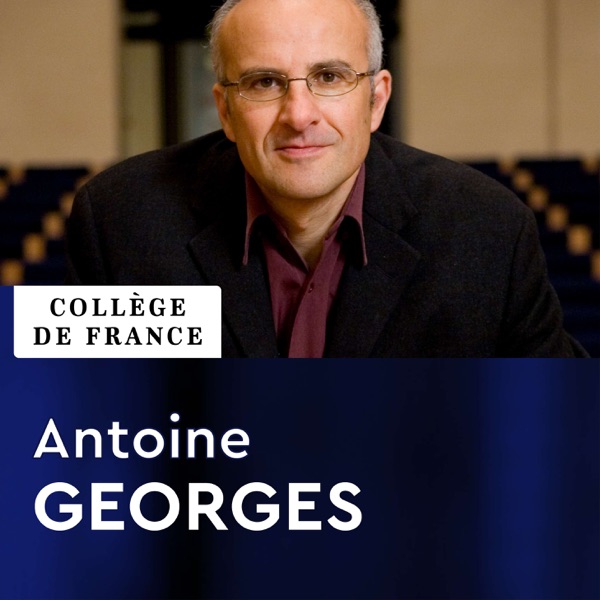
Published by Collège de France
Les recherches menées au sein de la chaire du Pr Antoine Georges portent sur la « matière quantique à fortes corrélations ». Les électrons d'une molécule ou d'un solide, les fluides quantiques d'atomes ultra froids constituent autant d'exemple de systèmes quantiques constitués d'un très grand nombre de particules en interaction. Nous nous intéressons aux phénomènes collectifs fascinants qui se développent dans ces systèmes comme la supraconductivité, les transitions métal-isolant, le magnétisme ou encore les effets topologiques. Notre équipe de recherche développe des méthodes permettant de comprendre la physique de ces systèmes et d'en prédire les propriétés, en lien constant avec les données expérimentales. Ce programme de recherche associe de manière étroite des aspects conceptuels et computationnels/algorithmiques (théorie du champ moyen dynamique et ses extensions, méthodes de Monte Carlo diagrammatique, réseaux de neurones ou circuits quantiques pour la représentation des fonctions d'ondes). Notre équipe participe au développement de la librairie numérique TRIQS et dispose de moyens de calculs significatifs.
On the charts
Every published chart this podcast appears in, in the snapshot behind this page. Each one links to the chart it came off.
From the feed
The latest episodes published to this podcast’s own RSS feed. Titles and descriptions are the publisher’s.
Antoine Georges Physique de la matière condensée Année 2025-2026 De l'effet Hall quantique aux matériaux moirés : topologie et géométrie des matériaux quantiques Séminaire - Gwendal Fève : Electron Optics Experiments in Quantum Hall Conductors: from Single Electrons to Anyons Gwendal Fève École normale supérieure
Antoine Georges Physique de la matière condensée Année 2025-2026 De l'effet Hall quantique aux matériaux moirés : topologie et géométrie des matériaux quantiques 06 - Quelques aspects de la physique des matériaux moiré
Antoine Georges Physique de la matière condensée Année 2025-2026 De l'effet Hall quantique aux matériaux moirés : topologie et géométrie des matériaux quantiques Séminaire - Rebeca Ribeiro-Palau : Topological States in Moiré Materials Rebeca Ribeiro-Palau C2N – Université Paris-Saclay
Antoine Georges Physique de la matière condensée Année 2025-2026 De l'effet Hall quantique aux matériaux moirés : topologie et géométrie des matériaux quantiques 05 - États de bord. Fonctions de Wannier et obstructions topologiques
Antoine Georges Physique de la matière condensée Année 2025-2026 De l'effet Hall quantique aux matériaux moirés : topologie et géométrie des matériaux quantiques Séminaire - Nicolas Regnault : Fractional Chern Insulators: Toy Models, Moiré and New Mysteries Nicolas Regnault Flatiron Institute et École normale supérieure
Antoine Georges Physique de la matière condensée Année 2025-2026 De l'effet Hall quantique aux matériaux moirés : topologie et géométrie des matériaux quantiques 04 - L'effet Hall quantique fractionnaire
Antoine Georges Physique de la matière condensée Année 2025-2026 De l'effet Hall quantique aux matériaux moirés : topologie et géométrie des matériaux quantiques Séminaire - Nathan Goldman : Correlated Topological Quantum Matter: From Abstract Invariants to Practical Topological Markers Nathan Goldman LKB - CNRS, Collège de France et Université libre de Bruxelles
Antoine Georges Physique de la matière condensée Année 2025-2026 De l'effet Hall quantique aux matériaux moirés : topologie et géométrie des matériaux quantiques Séminaire - Dmitri Efetov : Engineering Strong Interactions and Topology in Moiré Flat-Bands Dmitri Efetov LMU, Munich
Antoine Georges Physique de la matière condensée Année 2025-2026 De l'effet Hall quantique aux matériaux moirés : topologie et géométrie des matériaux quantiques 03 - Isolants de Chern, modèle de Haldane
Antoine Georges Physique de la matière condensée Année 2025-2026 De l'effet Hall quantique aux matériaux moirés : topologie et géométrie des matériaux quantiques 02 - Topologie et géométrie des états de Bloch
Antoine Georges Physique de la matière condensée Année 2025-2026 De l'effet Hall quantique aux matériaux moirés : topologie et géométrie des matériaux quantiques 01 - L'effet Hall quantique entier
Antoine Georges Physique de la matière condensée Année 2024-2025 Colloque : Recent Advances and Applications of Diagrammatic Monte Carlo for Fermions Kris van Houcke : Summing Feynman Diagrams for Cold Atomic Fermi Gases Kris van Houcke Laboratoire de Physique de l'ENS Résumé Diagrammatic Monte Carlo (DiagMC) is a versatile numerical technique capable of solving strongly correlated fermion systems in a controlled and accurate way. The core idea behind the technique is to sum all connected Feynman diagrams in a systematic way up to high order. In this talk, I will present some key results that have been obtained for the BEC-BCS crossover and the attractive Hubbard model. These results are directly relevant to experiments on ultra-cold fermionic atoms. In particular, I will discuss the unitary Fermi gas, a model of spin-1/2 fermions in three-dimensional continuous space and a prototypical example of a strongly correlated fermionic system. Despite the fact that the diagrammatic series has a vanishing radius of convergence, key properties such as the equation of state and the contact can still be calculated in an unbiased and accurate way [1,2,3]. When the Fermi gas is highly spin-polarised, the problem reduces to the so-called Fermi polaron problem: a single mobile impurity immersed in an ideal Fermi sea. I will discuss how the connected determinant (CDet) algorithm simplifies in this case and enables the polaron properties to be calculated with unprecedented accuracy [4]. Finally I will present results for the 3D attractive Hubbard model in the superfluid phase obtained with a CDet algorithm that sums diagrams starting from a BCS hamiltonian [5]. Here, we observe convergence of the diagrammatic series. Moreover, our study includes the polarized regime, where conventional quantum Monte Carlo methods suffer from the fermion sign problem. In the limit of high spin polarization the model corresponds to a Fermi polaron on the lattice, for which we recently found that the polaron-dimeron transition at zero temperature disappears at some critical value of the filling fraction [6]. Références [1] K. Van Houcke, F. Werner, E. Kozik, N. Prokof'ev, B. Svistunov, M.J.H. Ku, A.T. Sommer, L.W. Cheuk, A. Schirotzek and M.W. Zwierlein, Nature Phys, 8, 366–370 (2012). [2] R. Rossi, T. Ohgoe, E. Kozik, N. Prokof'ev, B. Svistunov, K. Van Houcke and F. Werner, Phys. Rev. Lett., 121, 130406 (2018). [3] R. Rossi, T. Ohgoe, K. Van Houcke and F. Werner, Phys. Rev. Lett., 121, 130405 (2018). [4] K. Van Houcke, F. Werner and R. Rossi, Phys. Rev. B, 101, 045134 (2020) [5] G. Spada, R. Rossi, F. Simkovic, R. Garioud, M. Ferrero, K. Van Houcke and F. Werner, arXiv:2103.12038 [6] G. Pascual, J. Boronat and K. Van Houcke, arXiv:2411.19725.
Antoine Georges Physique de la matière condensée Année 2024-2025 Colloque : Recent Advances and Applications of Diagrammatic Monte Carlo for Fermions Olivier Parcollet : Learning Feynman Diagrams with Tensor Trains Olivier Parcollet Flatiron Institute Résumé The real-time dynamics of interacting quantum systems remains a major challenge in computational quantum physics. Surprisingly, high-order perturbative expansions have recently emerged as a promising approach to address this question, even in strong coupling regimes and out-of-equilibrium situations. I will present the cornerstone of these approaches: parsimonious representations of diagrammatic expansions made of tensor networks and revealed by a new generation of algorithms. Finally, I will discuss applications to mesoscopic systems, along with the future perspectives and challenges in this field.
Antoine Georges Physique de la matière condensée Année 2024-2025 Colloque : Recent Advances and Applications of Diagrammatic Monte Carlo for Fermions Michel Ferrero : Origin and Fate of the Pseudogap in the Doped Hubbard Model: A Diagrammatic Monte Carlo Study Michel Ferrero École Polytechnique, CPHT, Collège de France Résumé In this seminar, I will introduce the diagrammatic Monte Carlo method and discuss its application to the two-dimensional Hubbard model at finite temperature. The results obtained through this approach are controlled and, importantly, address the infinite-size limit of the model, thus yielding physical quantities with arbitrary momentum resolution. This enables a detailed investigation of the impact of electronic correlations on the spectral properties, with a particular focus on the Fermi surface topology and the pseudogap regime. We demonstrate the selective suppression of quasiparticle excitations near the antinodal regions due to the development of magnetic correlations, observed both in the weak coupling regime with a large correlation length and in the strong coupling regime with a shorter correlation length. Furthermore, I will discuss how a modified spin-fluctuation theory can account for these findings. Finally, the evolution of the pseudogap regime with decreasing temperature will be examined, revealing its instability and eventual transition into an ordered stripe phase, consistent with ground-state calculations.
Antoine Georges Physique de la matière condensée Année 2024-2025 Colloque : Recent Advances and Applications of Diagrammatic Monte Carlo for Fermions Thomas Schäfer : Bridging the Gap of Multi-Method, Multi-Messenger Studies from Known to Unknown Fluctuations Thomas Schäfer Max Planck Institute for Solid State Research, Stuttgart Résumé The strong mutual repulsion of electrons is responsible for some of the most interesting phenomena in contemporary condensed matter physics, where examples range from unconventional high-temperature superconductivity, over quantum criticality to Mott metal-to-insulator transitions. Despite the intense research on the quantum many-body problem over the last decades, many of its aspects have not yet been fully understood. Recent progress, however, has been achieved by the application of so-called multi-method, multi-messenger studies of the most fundamental model for electronic correlations, the Hubbard model [1,2]. In the first part of the talk, I will present such a study of the half-filled two-dimensional Hubbard model on a simple square lattice at small values of the local Coulomb interaction [1]. I will demonstrate that the footprints of spin fluctuations can be tracked by a rich series of crossovers in multiple observables by multiple numerical techniques. In the second part of the talk, I will show how one can determine which fluctuation channel (charge, spin, particle-particle) is responsible for spectral properties such as the pseudogap in the strong coupling regime, directly relevant to cuprates. For this I will introduce the so-called "fluctuation diagnostics" approach [3,4], which can be utilized on top of diverse numerical methods, making it a helpful tool for future multi-method studies of strongly correlated phenomena. Références [1] Thomas Schäfer, Nils Wentzell, Fedor Šimkovic IV, Yuan-Yao He, Cornelia Hille, Marcel Klett, Christian J. Eckhardt, Behnam Arzhang, Viktor Harkov, François-Marie Le Régent, Alfred Kirsch, Yan Wang, Aaram J. Kim, Evgeny Kozik, Evgeny A. Stepanov, Anna Kauch, Sabine Andergassen, Philipp Hansmann, Daniel Rohe, Yuri M. Vilk, James P. F. LeBlanc, Shiwei Zhang, A.-M. S. Tremblay, Michel Ferrero, Olivier Parcollet, Antoine Georges, "Tracking the Footprints of Spin Fluctuations: A Multi-Method, Multi-Messenger Study of the Two-Dimensional Hubbard Model", Phys. Rev. X, 11, 011058 (2021). [2] Alexander Wietek, Riccardo Rossi, Fedor Šimkovic IV, Marcel Klett, Philipp Hansmann, Michel Ferrero, E. Miles Stoudenmire, Thomas Schäfer, and Antoine Georges, "Mott insulating states with competing orders in the triangular lattice Hubbard model", Phys. Rev. X, 11, 041013 (2021). [3] O. Gunnarsson, T. Schäfer, J. LeBlanc, E. Gull, J. Merino, G. Sangiovanni, G. Rohringer, and A. Toschi, "Fluctuation Diagnostics of the Electron Self-Energy: Origin of the Pseudogap Physics", Phys. Rev. Lett., 114, 236402 (2015). [4] Thomas Schäfer and Alessandro Toschi, "How to read between the lines of electronic spectra: the diagnostics of fluctuations in strongly correlated electron systems", J. Phys.: Condens. Matter, 33, 214001 (2021).
Antoine Georges Physique de la matière condensée Année 2024-2025 Fermions froids et simulation quantique Séminaire - Corinna Kollathh : Controlling the Cold Atomic Gases via the Coupling to a Dissipative Cavity Corinna Kollath Université de Bonn Résumé Quantum gases in optical cavities have shown many exciting phenomena as the self-organization into superradiant phases. Additionally many complex phases have been predicted to be realizable in these systems reaching from topologically interesting phases to glass like phases. The theoretical treatment of these systems is very difficult due to the presence of the long range coupling of the cavity to the atoms and fluctuations need to be critically taken into account. We investigate bosonic and fermionic atoms on a lattice and coupled to an optical cavity using many-body adiabatic elimination technique to capture the global coupling to the cavity mode and the open nature of the cavity. We discover the self-organization of approximate symmetries and find a new type of bistabilities which are caused by the excited states in the system.
Antoine Georges Physique de la matière condensée Année 2024-2025 Réseaux de neurones, apprentissage et physique quantique 05 - Fermions froids et simulation quantique Il y a une vingtaine d'années naissait un nouveau domaine de recherche aux frontières de l'optique quantique et de la physique de la matière condensée : l'étude de gaz atomiques de fermions froids piégés dans un réseau optique, ouvrant la voie à la « simulation analogique » de systèmes de nombreuses particules quantiques en interaction. Où en est-on aujourd'hui ? Ces dispositifs expérimentaux ont-ils permis d'atteindre les régimes où peuvent être observés des phénomènes collectifs émergents comme le magnétisme ou la supraconductivité ? Comment les performances de la simulation quantique réalisée dans ce contexte se comparent-elles à celles des algorithmes de simulation classique, qui ont eux aussi considérablement progressé ? C'est à ces questions que le cours de cette année, tout en présentant une introduction au domaine, tentera de répondre.
Antoine Georges Physique de la matière condensée Année 2024-2025 Fermions froids et simulation quantique Séminaire - Immanuel Bloch : Quantum Simulation and Quantum Computing with Fermions Immanuel Bloch Max Planck Institute et LMU, Munich Résumé Quantum simulation has emerged as an interdisciplinary research field that enables microscopic access to quantum matter, both in and out of equilibrium, across various physical platforms. As an example, we analyze the emergence of the pseudogap phase in the fermionic Hubbard model. We identify a universal behavior of magnetic correlations upon entering the pseudogap phase, observed in both spin-spin and higher-order spin-charge correlations. In addition to analog approaches, gate-based fermionic quantum computing offers distinct advantages for quantum simulations. We demonstrate the elementary operations required to manipulate orbital degrees of freedom, which form the basis of a fermionic quantum computer. We show high-fidelity gate operations and the generation of long-lived entangled states. Such gate-based operations can also be used to read out relevant order parameters and pairing correlations in analog quantum simulations.
Antoine Georges Physique de la matière condensée Année 2024-2025 Réseaux de neurones, apprentissage et physique quantique 04 - Fermions froids et simulation quantique Il y a une vingtaine d'années naissait un nouveau domaine de recherche aux frontières de l'optique quantique et de la physique de la matière condensée : l'étude de gaz atomiques de fermions froids piégés dans un réseau optique, ouvrant la voie à la « simulation analogique » de systèmes de nombreuses particules quantiques en interaction. Où en est-on aujourd'hui ? Ces dispositifs expérimentaux ont-ils permis d'atteindre les régimes où peuvent être observés des phénomènes collectifs émergents comme le magnétisme ou la supraconductivité ? Comment les performances de la simulation quantique réalisée dans ce contexte se comparent-elles à celles des algorithmes de simulation classique, qui ont eux aussi considérablement progressé ? C'est à ces questions que le cours de cette année, tout en présentant une introduction au domaine, tentera de répondre.
Antoine Georges Physique de la matière condensée Année 2024-2025 Fermions froids et simulation quantique Séminaire - Shiwei Zhang : Ushering a New Era of Synergy Between Computational Quantum Physics and Cold Atoms Experiment Shiwei Zhang Flatiron Institute, New York Résumé Computational quantum physics has recently seen a dramatic increase in its capabilities, precision, and predictive power. The advances have been driven by method and code development, benchmark, and collaboration. Together with exciting recent progress in cold atoms on the experimental front, we are presented with unique opportunities for a new level of synergy to address a variety of long-standing questions in quantum matter. I will describe some of the computational developments from the perspective of auxiliary-field quantum Monte Carlo methods, and then illustrate the potential for computation-experiment synergy with several examples, including the BCS-BEC crossover in the Fermi gas, and the physics of the Hubbard model - both in the usual context of high-temperature superconductivity and in possible FFLO (Fulde–Ferrell–Larkin–Ovchinnikov) pairing which can be studied with optical lattices.
Ranking source
Apple Podcasts rankings via the Mato Topic Intelligence Platform.
Observed September 20, 2026.
Apple and Apple Podcasts are trademarks of Apple Inc., registered in the U.S. and other countries.
Pairs with
Bring this source into Mato to read its transferable patterns, then turn them into an original show for your own audience.