
Live Interview
And why does that matter?
This is how a Mato agent talks. Take the other seat: answer a few and feel it follow the thread.
Podcast charts
Published by Carl Rylett
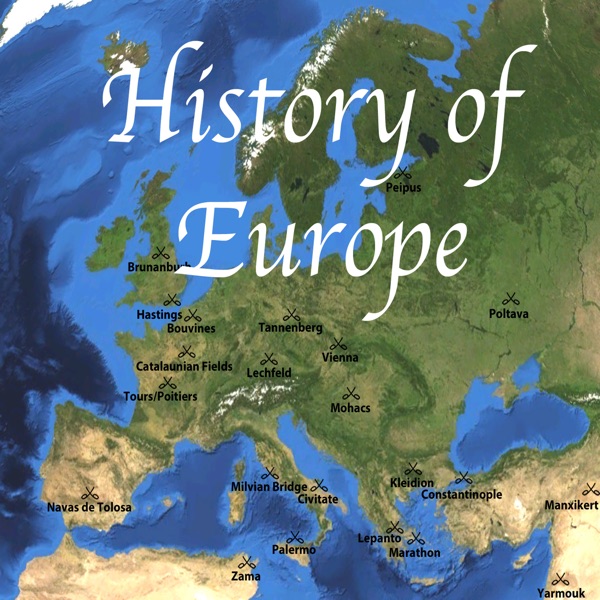
A podcast on European conflicts from the perspective of each side to provide an alternative to the traditional national narratives. Going chronologically from the Ancient Greeks onwards I described to some extent how each battle was won or lost by particular decisions, tactics, technology or fortune. But the aim of each main narrative will be to place each battle in the context of the overall history of Europe. New series on the Interwar Years 1918-1945 begins 18th July 2025 Hosted on Acast. See acast.com/privacy for more information.
On the charts
Every published chart this podcast appears in, in the snapshot behind this page. Each one links to the chart it came off.
From the feed
The latest episodes published to this podcast’s own RSS feed. Titles and descriptions are the publisher’s.
How Ramsay McDonald, Britain's First Labour Prime Minister ended up demonised by his own party, accused of betrayal to the movement. Stanley Baldwin, of the Conservative Party, became Prime Minister for the second time in 1924 and rejoined the Gold Standard. Also, the Wall street Crash, and society trends in 1920's Britain - technological advances and the growth of suburban towns Picture: Tyldesley miners outside the Miners Hall during them1926 General Strike www.historyeurope.net www.patreon.com/historyeurope https://podcasts.apple.com/us/podcast/a-history-of-europe-key-battles/id788893946 Opening Music: The Charlston. End Music by Nico Vettese Hosted on Acast. See acast.com/privacy for more information.
The 1920s in Britain witnessed great social change. It was also a watershed in the political history of the country with the first Labour Government of 1923-1924 Picture: Ramsay MacDonald www.historyeurope.net www.patreon.com/historyeurope https://podcasts.apple.com/us/podcast/a-history-of-europe-key-battles/id788893946 Opening Music: The Charlston. End Music by Nico Vettese Hosted on Acast. See acast.com/privacy for more information.
The 1920s was a key decade in British history, marked by the struggle to cope with post-war challenges, and the transition away from a society led by aristrocats. A key figure was Liberal leader, Prime Minister David Lloyd George (pictured) www.historyeurope.net www.patreon.com/historyeurope https://podcasts.apple.com/us/podcast/a-history-of-europe-key-battles/id788893946 Opening Music: The Charlston. End Music by Nico Vettese Hosted on Acast. See acast.com/privacy for more information.
International negotiations lead to the Kellogg-Briand pact, bringing hope for eternal peace in Europe. However, Germany suffers the double blow of its most able statesman Gustav Stresemann, together with the economic fallout of the Wall Street Crash. Political instability leads to President Hindenburg choosing his own cabinet and so sideline parliament. Hitler's Nazi party break through in elections in September 1930 Picture: Gustav Stresemann signing the Kellogg-Briand pact www.historyeurope.net www.patreon.com/historyeurope https://podcasts.apple.com/us/podcast/a-history-of-europe-key-battles/id788893946 Opening Music: The Charlston. End Music by Nico Vettese Hosted on Acast. See acast.com/privacy for more information.
President Ebert dies of illness, prompting a presidential election, which is won by the former WW1 military commander Paul von Hindenburg. International negotiations continue, culminating in the Treaty of Locarno, in which France, Germany and Belgium agreed never to attack each other again. Germany joins the League of Nations, and Hitler re-asserts his authority over the National Socialist Party. Picture: President Paul von Hindenberg www.historyeurope.net www.patreon.com/historyeurope https://podcasts.apple.com/us/podcast/a-history-of-europe-key-battles/id788893946 Opening Music: The Charlston. End Music by Nico Vettese Hosted on Acast. See acast.com/privacy for more information.
Post World War One Germany Struggles to pay the reparations demanded in the Treaty of Versailles. Picture: President Ebert asked Gustav Stresemann, leader of the DVP party, who formed a government coalition in 1923 www.historyeurope.net www.patreon.com/historyeurope https://podcasts.apple.com/us/podcast/a-history-of-europe-key-battles/id788893946 Opening Music: The Charlston. End Music by Nico Vettese Hosted on Acast. See acast.com/privacy for more information.
The early years of Adolf Hitler as he becomes politically active and joins the Nazi party. Meanwhile the Weimar Republic struggles with harsh post-war conditions and attempted uprisings from both the Left and Right. Photo: German police sent to put down a left-wing rebellion known as the March Action www.historyeurope.net www.patreon.com/historyeurope https://podcasts.apple.com/us/podcast/a-history-of-europe-key-battles/id788893946 Opening Music: The Charlston. End Music by Nico Vettese Hosted on Acast. See acast.com/privacy for more information.
After World War One, political upheaval in Germany leads to the overthrow of the German monarchy and establishment of a new republic based in the town of Weimar. Photo: Proclamation of Weimar Republic, 9 November 1918. www.historyeurope.net www.patreon.com/historyeurope https://podcasts.apple.com/us/podcast/a-history-of-europe-key-battles/id788893946 Opening Music: The Charlston. End Music by Nico Vettese Hosted on Acast. See acast.com/privacy for more information.
Mussolini consolidates his control of Italy, using a combination of intimidation, violence and occasional compromise to establish an authoritarian regime. He introduces a number of projects to boost Italy, including strengthing the currency, agricultural refor, after-work clubs and family planning, with mixed results. He also embarked on an expansionist foreign policy. Picture: Mussolini with the fascist youth Opening Music: The Charlston. End Music by Nico Vettese www.historyeurope.net www.patreon.com/c/historyeurope https://podcasts.apple.com/us/podcast/a-history-of-europe-key-battles/id788893946 Hosted on Acast. See acast.com/privacy for more information.
After World War One Italy suffered social unrest due to economic hardship and nationalism. Benito Mussolini led a new Fascist movement which took power in the March on Rome in October 1922 Picture: Benito Mussolini Opening Music: The Charlston. End Music by Nico Vettese www.historyeurope.net www.patreon.com/c/historyeurope https://podcasts.apple.com/us/podcast/a-history-of-europe-key-battles/id788893946 Hosted on Acast. See acast.com/privacy for more information.
A delegation from Ireland meet the British and make an agreement for Irish autonomy but makes a compromise to keep under under the British Crown. The Irish break into two sides, one supporting the treaty, one opposing it and demanding full independence and a republic. The ensuing Irish Civil War left a bitter legacy. Picture: Bombing of the Four Courts Opening Music: The Charlston. End Music by Nico Vettese www.historyeurope.net www.patreon.com/c/historyeurope https://podcasts.apple.com/us/podcast/a-history-of-europe-key-battles/id788893946 Hosted on Acast. See acast.com/privacy for more information.
The Irish form a shadow government in opposition to the British, with their own courts and tax collections. Meanwhile, Irish volunteer fighters wage guerilla warfare against the British police force, the Royal Irish Constabulary. Picture: West Connemara Flying Column Opening Music: The Charlston. End Music by Nico Vettese www.historyeurope.net www.patreon.com/c/historyeurope https://podcasts.apple.com/us/podcast/a-history-of-europe-key-battles/id788893946 Hosted on Acast. See acast.com/privacy for more information.
In January 1919 a group of recently elected Sinn Fien MPs gathered in Dublin. There they proclaimed the establishment of an Irish Republic and adopted a ‘Declaration of Independence’, which asserted Ireland’s right to be a sovereign nation. I describe here the background to the Irish people's struggle for independence from the United Kingdom, including the Easter Rising 1916. Picture: Royal Irish Constabulary Opening Music: The Charlston. End Music by Nico Vettese www.historyeurope.net www.patreon.com/c/historyeurope https://podcasts.apple.com/us/podcast/a-history-of-europe-key-battles/id788893946 Hosted on Acast. See acast.com/privacy for more information.
An overview of the situation across Europe after World War One. The Treaty of Versailles. The post-war division of territories. The German Revolution and the question of financial reparations. Picture: The heads of the "Big Four" nations at the Paris Peace Conference, 27 May 1919. From left to right: David Lloyd George, Vittorio Orlando, Georges Clemenceau, and Woodrow Wilson Opening Music: The Charlston. End Music by Nico Vettese www.historyeurope.net https://podcasts.apple.com/us/podcast/a-history-of-europe-key-battles/id788893946 Hosted on Acast. See acast.com/privacy for more information.
Conclusion of the Turkish National Struggle 1919-1922. Mustafa Kemal, later known as Ataturk, leads the Turkish Nationalists against the armies of Greece. The Battle of Sakarya River between the Turks and Greeks is a key battle of European history and shapes of the future of their respective countries. Picture: Inferno of Smyrna Music: The Charlston Hosted on Acast. See acast.com/privacy for more information.
Turkish National Struggle 1919-1922 The Ottoman Empire emerges defeated from World War One. The Entente Allies impose harsh conditions in the armistice whereby the Ottomans lose most of their territory including parts of Anatolia. However, Mustafa Kemal, later known as Ataturk, raises an army to oppose the Allies Picture: Mustafa Kemal and Turkish soldiers Hosted on Acast. See acast.com/privacy for more information.
As background to the Turkish National Struggle, this episode describes the events in the Caucasus Mountains in World War One, - conflict between Russia, the Ottoman Empire, the Germans, and nationalist groups of Georgians, Armenians and Azerbaijanis. Separately I talk about Greece's involvement in World War One. Picture: Kaiser Wilhelm of Germany and Enver Pasha, Minister of War for the Ottoman Empire Hosted on Acast. See acast.com/privacy for more information.
The Ottoman Empire in World War One - the fights for the Suez Canal, Gaza, Jerusalem and Arabia between the British and Turks Picture: General Allenby enters Jerusalem Hosted on Acast. See acast.com/privacy for more information.
In 1920 the Polish and Soviet Russian armies clashed in a series of battles across a wide area of eastern Europe including Ukraine and Lithuania. The Soviets advanced deep into Poland and reached the gates of Warsaw, with the aims of capturing the city and., more widely, exporting their revolution across Europe. Picture: Polish soldiers in the Battle of Warsaw 1920 Hosted on Acast. See acast.com/privacy for more information.
The Polish Army make a pre-emptive strike against Soviet Russia. They invade the eastern borderlands, and take large amounts of territory, especially in Ukraine, but they fail to break the Russian army. Meanwhile, the Ukrainians attempt to form an administration in Kyiv Picture: Vladimir Lenin rallying his people to the war Intro Music: The Charlston Hosted on Acast. See acast.com/privacy for more information.
Ranking source
Apple Podcasts rankings via the Mato Topic Intelligence Platform.
Observed September 20, 2026.
Apple and Apple Podcasts are trademarks of Apple Inc., registered in the U.S. and other countries.
Pairs with
Bring this source into Mato to read its transferable patterns, then turn them into an original show for your own audience.