
Live Interview
And why does that matter?
This is how a Mato agent talks. Take the other seat: answer a few and feel it follow the thread.
Podcast charts
Published by Dr Gillian Shepherd
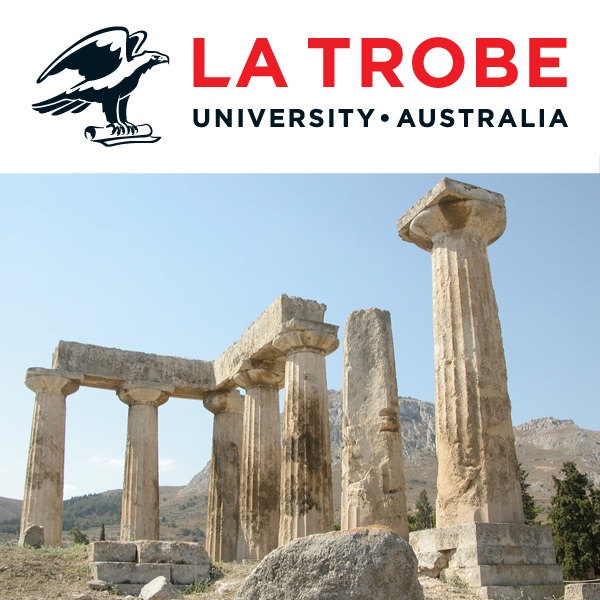
This subject deals with the cultural history of the ancient Greek world through both textual sources and the material evidence of art and archaeology. The period covered runs from the Iron Age world of Archaic Greece through to the late Classical period (roughly from the 8th century to the 4th century BCE). We will concentrate mainly on Athens and mainland Greece, but we will also focus on the Greek expansion into other parts of the Mediterranean world (Sicily and South Italy) in the process of colonisation. Historical texts will be combined with literary sources and archaeology to explore the physical nature of ancient Greek cities and social issues such as the position of women, ethnicity, sexuality and slavery in the ancient Greek world.
On the charts
Every published chart this podcast appears in, in the snapshot behind this page. Each one links to the chart it came off.
From the feed
The latest episodes published to this podcast’s own RSS feed. Titles and descriptions are the publisher’s.
Has Greek history had any impact on the modern world? Are the literature, art and architecture of the ancient Greeks still relevant centuries later? In this lecture Sarah Midford examines the enduring appeal of classical Greece and the ways in which its culture has both moulded Western society and also been manipulated by it. Copyright 2014 La Trobe University, all rights reserved. Contact for permissions.
Has Greek history had any impact on the modern world? Are the literature, art and architecture of the ancient Greeks still relevant centuries later? In this lecture Sarah Midford examines the enduring appeal of classical Greece and the ways in which its culture has both moulded Western society and also been manipulated by it. Copyright 2014 La Trobe University, all rights reserved. Contact for permissions.
Dr. Heather Sebo begins by discussing the proposal in the parabasis of Aristophanes Frogs that clemency be extended to citizens exiled for their involvement in the oligarchic coup of 411 BCE. An instance of Aristophanes’ immersion in the issues and debates of his times is the way he alludes to the debasing of the coinage (discussed in a previous lecture), using it as a metaphor for the idea that good citizens are in exile while slaves become citizens. Also revealing of contemporary attitudes is the shift in Dionysos’ initial intention to bring Euripides back from Hades because he finds his poetry thrilling and stimulating to his ultimate decision for Aeschylus as the poet most likely to encourage patriotism and unquestioning self-sacrifice in the current military emergency. Copyright 2014 La Trobe University, all rights reserved. Contact for permissions.
Dr. Heather Sebo begins by discussing the proposal in the parabasis of Aristophanes Frogs that clemency be extended to citizens exiled for their involvement in the oligarchic coup of 411 BCE. An instance of Aristophanes’ immersion in the issues and debates of his times is the way he alludes to the debasing of the coinage (discussed in a previous lecture), using it as a metaphor for the idea that good citizens are in exile while slaves become citizens. Also revealing of contemporary attitudes is the shift in Dionysos’ initial intention to bring Euripides back from Hades because he finds his poetry thrilling and stimulating to his ultimate decision for Aeschylus as the poet most likely to encourage patriotism and unquestioning self-sacrifice in the current military emergency. Copyright 2014 La Trobe University, all rights reserved. Contact for permissions.
For the ancients, the consequences of defeat in war were that every man, women and child became the property of the victors, to be disposed of in whatever way they saw fit. In this lecture Dr Heather Sebo shows that the anxieties and implications of this terrible possibility were expressed on the Athenian stage, particularly in the Trojan War plays of Euripides. Copyright 2014 La Trobe University, all rights reserved. Contact for permissions.
For the ancients, the consequences of defeat in war were that every man, women and child became the property of the victors, to be disposed of in whatever way they saw fit. In this lecture Dr Heather Sebo shows that the anxieties and implications of this terrible possibility were expressed on the Athenian stage, particularly in the Trojan War plays of Euripides. Copyright 2014 La Trobe University, all rights reserved. Contact for permissions.
Having looked at some practical issues regarding ancient Greek slavery, in this second lecture Dr Gillian Shepherd examines some of the attitudes of the ancient Greeks towards their slaves – including terminology, approaches to treating slaves, “rights” of slaves, debates about the justification and morality of slavery, and the notion of the “natural slave”. Copyright 2014 La Trobe University, all rights reserved. Contact for permissions.
Having looked at some practical issues regarding ancient Greek slavery, in this second lecture Dr Gillian Shepherd examines some of the attitudes of the ancient Greeks towards their slaves – including terminology, approaches to treating slaves, “rights” of slaves, debates about the justification and morality of slavery, and the notion of the “natural slave”. Copyright 2014 La Trobe University, all rights reserved. Contact for permissions.
In the first of two lectures on Ancient Greek slavery, Dr Gillian Shepherd looks at two important slave systems – chattel slavery in Athens and the helots of Sparta – and how they might have come into being. Concentrating on Athenian slavery, the lecture goes on to examine some essential features of ancient Greek slavery, including sources and numbers of slaves, the work undertaken my slaves and their role in the ancient economy. Copyright 2014 La Trobe University, all rights reserved. Contact for permissions.
In the first of two lectures on Ancient Greek slavery, Dr Gillian Shepherd looks at two important slave systems – chattel slavery in Athens and the helots of Sparta – and how they might have come into being. Concentrating on Athenian slavery, the lecture goes on to examine some essential features of ancient Greek slavery, including sources and numbers of slaves, the work undertaken my slaves and their role in the ancient economy. Copyright 2014 La Trobe University, all rights reserved. Contact for permissions.
Athens was a wealthy and prosperous place in the classical period. In this lecture Dr Gillian Shepherd takes a closer look at the Athenian economy by examining the nature of coinage in ancient Greece and one major source of Athenian wealth – the silver mines of Laurion, which provided the famous “Owl” coins of Athens. Copyright 2014 La Trobe University, all rights reserved. Contact for permissions.
Athens was a wealthy and prosperous place in the classical period. In this lecture Dr Gillian Shepherd takes a closer look at the Athenian economy by examining the nature of coinage in ancient Greece and one major source of Athenian wealth – the silver mines of Laurion, which provided the famous “Owl” coins of Athens. Copyright 2014 La Trobe University, all rights reserved. Contact for permissions.
Dr Heather Sebo contrasts the traditions of women’s lament with the public orations associated with the communal burial of the war dead. It contrasts the traditional focus on personal grief and the irreplaceable uniqueness of the deceased individual with the political view of the dead as interchangeable and replaceable, as hero citizens who have done their duty in dying for the city but who will be replaced by others who will do the same. Sophocles’ Antigone (442 BCE) is very relevant to this issue in that it explores the psychological cost of suppressing the emotional expression of mourning and anticipates and the “replaceability argument”, especially as it will later be expressed in Perikles’ funeral oration (Thucydides 2.44.3). Copyright 2014 La Trobe University, all rights reserved. Contact for permissions.
Dr Heather Sebo contrasts the traditions of women’s lament with the public orations associated with the communal burial of the war dead. It contrasts the traditional focus on personal grief and the irreplaceable uniqueness of the deceased individual with the political view of the dead as interchangeable and replaceable, as hero citizens who have done their duty in dying for the city but who will be replaced by others who will do the same. Sophocles’ Antigone (442 BCE) is very relevant to this issue in that it explores the psychological cost of suppressing the emotional expression of mourning and anticipates and the “replaceability argument”, especially as it will later be expressed in Perikles’ funeral oration (Thucydides 2.44.3). Copyright 2014 La Trobe University, all rights reserved. Contact for permissions.
One of the best sources of evidence for understanding an ancient society is burials. Ancient cemeteries can provide evidence for population, diet, social divisions, religious beliefs and cultural practices, and changes in funerary method can signal changes in social and cultural attitudes and priorities. However, the evidence needs to be treated carefully, since cemeteries do not necessarily provide direct reflections of ancient populations and can represent idealised social identities. In this lecture Dr Gillian Shepherd looks at patterns, shifts and changes in classical Athenian burial customs and explores their possible explanations. Copyright 2013 La Trobe University, all rights reserved. Contact for permissions.
One of the best sources of evidence for understanding an ancient society is burials. Ancient cemeteries can provide evidence for population, diet, social divisions, religious beliefs and cultural practices, and changes in funerary method can signal changes in social and cultural attitudes and priorities. However, the evidence needs to be treated carefully, since cemeteries do not necessarily provide direct reflections of ancient populations and can represent idealised social identities. In this lecture Dr Gillian Shepherd looks at patterns, shifts and changes in classical Athenian burial customs and explores their possible explanations. Copyright 2013 La Trobe University, all rights reserved. Contact for permissions.
Greek art is full of images of “others”, both historical (such as the Persians and Scythians) and mythological (such as centaurs and Amazons). In this lecture Dr Gillian Shepherd examines how non-Greek groups were represented visually, how they appear in relation to Greeks, and the role of such imagery in defining Greek culture and making reference, albeit obliquely, to recent historical events. Copyright 2013 La Trobe University, all rights reserved. Contact for permissions.
Greek art is full of images of “others”, both historical (such as the Persians and Scythians) and mythological (such as centaurs and Amazons). In this lecture Dr Gillian Shepherd examines how non-Greek groups were represented visually, how they appear in relation to Greeks, and the role of such imagery in defining Greek culture and making reference, albeit obliquely, to recent historical events. Copyright 2013 La Trobe University, all rights reserved. Contact for permissions.
One of the preoccupations of the ancient Greeks, especially in the fifth century BC, was the idea of the barbarian “other” – people who were barbaros (ie did not speak Greek) and had customs and cultures which contrasted with the practices of the Greeks. The fifth century BC historian Herodotus was particularly interested in such “ethnography” and provides detailed accounts of other groups like the Egyptians, Scythians, the Amazons and the Persians. In this lecture Dr Rhiannon Evans looks at Herodotus’ ideas of other peoples and how in fact they might shed more light on the Greeks than the “others”. Copyright 2013 La Trobe University, all rights reserved. Contact for permissions.
One of the preoccupations of the ancient Greeks, especially in the fifth century BC, was the idea of the barbarian “other” – people who were barbaros (ie did not speak Greek) and had customs and cultures which contrasted with the practices of the Greeks. The fifth century BC historian Herodotus was particularly interested in such “ethnography” and provides detailed accounts of other groups like the Egyptians, Scythians, the Amazons and the Persians. In this lecture Dr Rhiannon Evans looks at Herodotus’ ideas of other peoples and how in fact they might shed more light on the Greeks than the “others”. Copyright 2013 La Trobe University, all rights reserved. Contact for permissions.
Ranking source
Apple Podcasts rankings via the Mato Topic Intelligence Platform.
Observed September 20, 2026.
Apple and Apple Podcasts are trademarks of Apple Inc., registered in the U.S. and other countries.
Pairs with
Bring this source into Mato to read its transferable patterns, then turn them into an original show for your own audience.