
Live Interview
And why does that matter?
This is how a Mato agent talks. Take the other seat: answer a few and feel it follow the thread.
Podcast charts
Published by Nigel Warburton
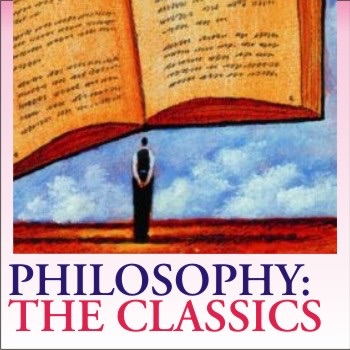
Author Nigel Warburton reads from his book Philosophy: The Classics which is an introduction to 27 key works in the history of Philosophy
On the charts
Every published chart this podcast appears in, in the snapshot behind this page. Each one links to the chart it came off.
From the feed
The latest episodes published to this podcast’s own RSS feed. Titles and descriptions are the publisher’s.
Soren Kierkegaard's Either/Or is an oblique but brilliant contribution to philosophy. In this episode of Philosophy: The Classics author Nigel Warburton summarises the book and considers several interpretations of it.
Is it better to be a happy pig or a sad Socrates? John Stuart Mill's Utilitarianism is the topic of this episode of Philosophy: The Classics.
Published in 1859, the same year as Darwin's Origin of Species , John Stuart Mill's On Liberty remains the classic statement of individual freedom. Here I summarise some of its main themes and outline some criticisms that have been made of it.
What is the nature of reality? Why can music be so profound? Are we doomed to suffer or is extended happiness possible? Should we choose a life of asceticism? These are some of the questions that Arthur Schopenhauer addressed in The World as Will and Idea. In this episode of Philosophy: The Classics Nigel Warburton outlines and criticizes Schopenhauer's great book.
Immanuel Kant's ethical stance is uncompromising: you must do your moral duty whatever the consequences. In this reading from his book Philosophy: The Classics , Nigel Warburton outlines the main features of Kant's approach and sketches some criticisms of it.
What is our relation to reality? Are some features of our experience conditions of our having any experience at all? In this reading from his book Philosophy: The Classics Nigel Warburton attempts to summarise Immanuel Kant's Critique of Pure Reason , a notoriously difficult yet important book.
How should society be organised? Can you force someone to be free? Jean-Jacques Rousseau's controversial The Social Contract is the subject of this podcast chapter of Nigel Warburton's book Philosophy: The Classics .
Does the apparent design in the natural world point to the existence of an omnipotent, omniscient and benevolent God? In his posthumous Dialogues Concerning Natural Religion , perhaps his finest work, David Hume put some devastating criticisms of the Design Argument in the mouths of his characters. Listen to Nigel Warburton reading this summary of the book.
How do we learn about the world? David Hume's answer, like Locke's, was via experience. In this podcast, based on Nigel Warburton's Philosophy: The Classics, outlines Hume's views on a number of issues such as induction, causation, and miracles.
What are the legitimate powers of the State? This is the fundamental question John Locke addressed in his Second Treatise of Civil Government . Nigel Warburton sketches the main features of this work and outlines some criticisms of it in this podcast of a chapter from his book Philosophy: The Classics (3rd ed.)
Is a newborn's mind a blank slate? What makes you the same person that you were several years ago despite bodily changes? These are two central questions that John Locke addressed in his classic work An Essay Concerning Human Understanding . Nigel Warburton outlines the key ideas from this book.
What kind of freedom can human beings achieve? Is the mind distinct from the body? Are we and everything in the universe part of God? In this episode of Philosophy: The Classics, Nigel Warburton outlines the key features of Spinoza's great book Ethics .
Why would anyone give up their freedom to become part of an organised state? In this reading from his book Philosophy: The Classics , Nigel Warburton outlines Thomas Hobbes' central arguments from Leviathan .
Can I know anything for certain? Can I even be sure that I exist? Descartes pushed scepticism to its limits in his Meditations. Nigel Warburton explains Descartes' key ideas and some of the criticisms that can be levelled against them.
Is this just a handbook for psychopaths, or a satirical attack on his contemporaries, or did Machiavelli have a moral message? In this reading from his book Philosophy: The Classics , Nigel Warburton explains the central themes from Machiavelli's great work The Prince and explores different interpretations of the book.
What consolation can Philosophy provide to a condemned man? Boethius wrote The Consolation of Philosophy while awaiting torture and execution. He imagines Philosophy visiting him personified as a woman. Philosophy explains to him how the Wheel of Fortune turns, but yet happiness remains within human control. Nigel Warburton reads Chapter 3 from this book Philosophy: The Classic s which gives a critical summary of Boethius' book.
'How should we live?' This is a fundamental question for all of us. In his Nicomachean Ethics Aristotle attempted to answer it. Listen to author Nigel Warburton's summary of the main themes of the book in this reading from his book Philosophy: The Classics .
Plato's Republic is one of the great works in philosophy. Hear how Plato thought society should be organised and why he wanted to ban representational art. Nigel Warburton reads the first chapter of his book Philosophy: The Classics .
Ranking source
Apple Podcasts rankings via the Mato Topic Intelligence Platform.
Observed September 20, 2026.
Apple and Apple Podcasts are trademarks of Apple Inc., registered in the U.S. and other countries.
Pairs with
Bring this source into Mato to read its transferable patterns, then turn them into an original show for your own audience.