
Live Interview
And why does that matter?
This is how a Mato agent talks. Take the other seat: answer a few and feel it follow the thread.
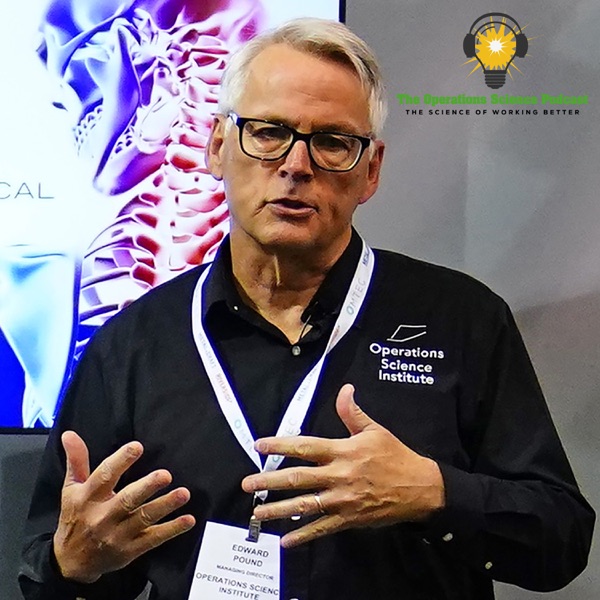
Podcast charts
Published by Ed Pound
The Operations Science Podcast: Authentic Leadership Stories from Operations and Project LeadersWelcome to The Operations Science Podcast, the premier destination for authentic, in-depth conversations with operations and project leaders who share real-life stories of their career triumphs, setbacks, and the invaluable insights gained along the way. Hosted with a passion for uncovering the strategies and mental frameworks that drive success, this podcast is a must-listen for executives, managers, and aspiring leaders in industries such as general manufacturing, medical devices, aerospace, maintenance, repair, and overhaul (MRO) companies, and diagnostic labs. With a focus on leadership, operational excellence, and continuous improvement, each episode delivers actionable takeaways to help you navigate the complexities of modern business landscapes.What to Expect from The Operations Science PodcastOur guests include C-level executives, VPs of operations and supply chain, directors, manage...
On the charts
Every published chart this podcast appears in, in the snapshot behind this page. Each one links to the chart it came off.
From the feed
The latest episodes published to this podcast’s own RSS feed. Titles and descriptions are the publisher’s.
Building automation is about much more than robots. Success depends on strong planning, smart execution, and systems that can adapt. Michael McHale shares the lessons that helped PSA Systems grow into a fully integrated automation company. Discover why project scoping matters, how AI is reshaping project management, and why experience remains a competitive advantage. This episode is packed with practical insights for manufacturers, engineers, and operations leaders. Learn how better decisions upfront create better outcomes later. Key Discussion Points 02:10—Why PSA Built a Fully Integrated Automation Business 08:00—Why Project Scoping Determines Success or Failure 12:05—Using AI to Improve Project Management 16:00—The Challenge of Scheduling in Complex Manufacturing 25:40—Can American Manufacturing Compete with China? 29:00—The Reality of Private Equity in Automation 32:00—Why Experience Still Wins in Manufacturing 33:20—Michael McHale's Career Journey Learn more about the Operations Science Institute: https://opscience.org Join the OSI Insider community: https://insider.opscience.org Get your copy of Operations Science Applied: https://bit.ly/OSA2026 Don't forget to: 👍 Like this video 🔔 Subscribe for more authentic conversations 💬 Comment with your biggest takeaway 📤 Share this episode with someone who needs to hear it #OperationsScience #Manufacturing #Automation #IndustrialAutomation #ProjectManagement #AI #OperationalExcellence #Engineering #Leadership #ContinuousImprovement
Most people think logistics is about tracking a package. But moving rockets, satellites, and oversized freight is a completely different challenge. In this episode of the The Operations Science Podcast, Ed Pound sits down with Ben Martin to explore what it really takes to transport some of the world's largest and most sensitive equipment. Ben shares lessons from aerospace and wind energy, why planning often begins months—or even years—in advance, and how operations leaders manage risk when every detail matters. Key Discussion Points 01:37—Why industrial logistics is different from parcel shipping 06:18—Planning oversized freight and transporting wind turbines 09:28—From wind energy to moving rockets 17:13—Transportation failures and the lessons they teach 20:50—How AI is changing logistics planning 25:23—Why being a generalist is an advantage in operations 29:20—Ben's career journey and life outside of work Want to better understand the science behind operational performance? OSI Insider is a free, self-paced introduction: https://insider.opscience.org Go deeper with Operations Science Applied: bit.ly/OSA2026 #OperationsScience #SupplyChain #Logistics #Aerospace #Manufacturing #Leadership #Transportation #AI #OSI
Manufacturing doesn't become chaotic because people aren't working hard enough. It becomes chaotic when leaders don't understand how variability moves through a system. Fred White spent 13 years flying UH-60 helicopters before moving into manufacturing, eventually becoming the first production manager at Tesla's Gigafactory. He shares what that experience taught him about variability, constraints, flow, leadership, and continuous improvement. Ed and Fred also discuss the end-of-the-month scramble, why pushing people harder doesn't solve capacity problems, and the operational principles that remain true across industries. Key Discussion Points 00:00 Introduction 02:25 From military aviation to manufacturing 03:00 Building Tesla's Gigafactory 05:50 Lessons learned after Tesla 08:55 The end-of-the-month scramble 11:10 Breaking down silos with value streams 13:05 Why doing more with less creates problems 15:05 Operations principles across industries 16:00 Advice for new operations leaders 17:05 AI in manufacturing 18:15 Making continuous improvement stick 25:00 The experience that changed Fred's career Want to better understand why operations behave the way they do? OSI Insider is a free, self-paced introduction to operations science: https://insider.opscience.org Go deeper into variability, flow, and operational performance with Operations Science Applied: bit.ly/OSA2026 Don't forget to: 👍 Like this video 🔔 Subscribe for more authentic conversations 💬 Comment with your biggest takeaway 🔗 Share it with someone who needs to hear this #OperationsScience #Manufacturing #OperationalExcellence #Leadership #ContinuousImprovement #OperationsManagement #SupplyChain #ManufacturingLeadership
Most manufacturers see variability as the enemy. Christopher Morgan has spent decades proving otherwise. As General Manager of Street Furniture Australia, Christopher leads a highly customized manufacturing operation where no two days look the same. Customers constantly request modifications, project timelines shift without warning, and traditional automation often isn't an option. Yet despite all that variability, his team has built systems that deliver predictability, visibility, and higher output. In this conversation, Christopher shares how a simple scheduling change increased output by 30%, why visual management still beats complicated software in many situations, and how limiting work-in-progress helped create a more efficient operation. Whether you're leading a factory, managing projects, or trying to improve flow in any business, this episode offers practical lessons on dealing with uncertainty without losing control. Key Discussion Points 02:30—Why they never retire products 05:00—Why automation doesn't work for their business 07:00—Managing variability as a competitive advantage 08:00—Locking the production schedule & 30% productivity increase 12:00—Confirmed Dispatch Dates & customer lead times 15:00—Velocity over volume philosophy 17:00—The red tubs visual management system 18:00—Black tubs for urgent orders & pink tubs for R&D 21:00—Why exactly 35 red tubs? 23:00—Scheduling by labor hours instead of dollar value 24:00—Finished goods inventory & storage strategy 26:50—Factory layout redesign & continuous improvement 29:00—Building a culture of ownership & employee engagement 32:30—Using AI for scheduling, purchasing & engineering drawings 35:20—Christopher Morgan's career journey 39:00—Hobbies: historical reenactment & Polish saber fencing If this conversation challenged the way you think about operations: 👍 Like this episode 🔔 Subscribe for more conversations on operations, leadership, and continuous improvement 💬 Comment with your biggest takeaway ↗️ Share this episode with someone responsible for improving flow, productivity, or operational performance Ready to make better decisions in uncertain environments? Learn the principles behind flow, capacity, variability, and operational performance in Operations Science Applied: https://insider.opscience.org #OperationsScience #Manufacturing #Leadership #ContinuousImprovement #LeanManufacturing #OperationsManagement #IndustrialEngineering #BusinessLeadership #SupplyChain #Productivity #OSI
Many Lean and continuous improvement programs struggle—not because the tools are wrong, but because organizations overlook the foundation: developing capable people. In this conversation, Abdulrahman Yossri shares lessons from nearly two decades of manufacturing leadership across consumer goods, chemicals, aluminum, and industrial operations. Together with Ed Pound, they discuss why capability building is the key to sustainable operational excellence, how leaders can align teams around shared goals, and why companies should think of themselves as training academies. Key Discussion Points 02:10 The common challenge across manufacturing 07:15 Why problems are opportunities for improvement 08:10 Lessons from becoming a plant manager 13:00 Why capability building comes before Lean 16:35 The four levels of workforce development 23:00 Solving the skilled labor challenge 28:20 Connecting education to industry 31:00 Using AI without losing expertise 38:00 Final thoughts If this conversation gave you a new perspective on leadership and operational excellence: 👍 Like the video 💬 Share your biggest takeaway in the comments 📤 Pass this along to someone building high-performing teams Want to better understand the science behind operational performance? OSI Insider is a free, self-paced introduction designed to help leaders understand why operations behave the way they do. For a deeper dive, explore Operations Science Applied #OperationsManagement #LeanManufacturing #ContinuousImprovement #OperationalExcellence #Manufacturing #OSI
Most operations teams spend too much time arguing about lead times. Customers want products faster. Sales wants shorter lead times. Operations pushes back. But what if the real goal isn't lead time at all? Kim Shelby shares how her team shifted from fixed lead times to due-date quoting. The result was better customer communication, stronger operational performance, and more reliable delivery commitments. The conversation explores demand variability, capacity management, forecasting, leadership, and practical AI applications in supply chain operations. Key Discussion Points 01:15 Meet Kim Shelby 03:15 Managing operations in a high-change environment 04:30 Why production dates create unnecessary noise 07:20 The shift from lead times to due-date quoting 10:00 Managing customer expectations 12:00 Building support through pilot programs 13:45 Demand variability and forecasting challenges 16:00 Capacity utilization and operational performance 20:00 When OTIF improves but customers remain unhappy 22:00 Improving cash flow through better commitments 24:00 AI applications in supply chain operations 27:00 Kim's career journey 33:00 Career advice: Say yes to everything Stop relying on fixed assumptions. Learn the science behind reliable delivery, better forecasting, and stronger operational performance with Operations Science Applied: bit.ly/OSA2026 If you want more insights on how to level up your operations, visit insider.opscience.org #OperationsManagement #SupplyChain #Manufacturing #Leadership #CommitDate #LeadTime #ATP #OperationalExcellence #OperationsScience #ContinuousImprovement #OSI
Construction projects rarely fail because of one big mistake. More often, they collapse under misalignment, unrealistic schedules, procurement delays, poor sequencing, and operational variability that no one planned for. Construction manager and mechanical engineer Milton Griffiths shares lessons from greenfield and brownfield infrastructure projects, discussing how contractors, procurement teams, logistics, weather, workforce fatigue, and communication all shape project outcomes in the real world. The discussion explores practical construction leadership, operational clarity, risk management, supplier coordination, schedule realism, and why successful project delivery starts long before work begins onsite. Key Discussion Points 02:20 – What separates successful projects from failing ones 04:45 – Greenfield vs. brownfield construction realities 05:20 – Why unrealistic schedules destroy projects 07:00 – Procurement lead times and remote project logistics 09:15 – Managing inventory and equipment on construction sites 12:00 – Weather, climate, and operational variability in construction 14:00 – Laydown areas, theft risks, and inventory control 18:15 – Early warning signs that projects are falling behind 20:00 – Workforce fatigue, morale, and productivity 21:00 – Change orders, contractor incentives, and schedule pressure 24:00 – Standing time, coordination, and contractor claims 27:00 – Buffers, contingencies, and risk management 28:00 – Common misunderstandings that derail construction performance 30:00 – Ubuntu culture and collaboration between contractors 31:00 – Why brownfield projects are more predictable 33:00 – AI, drones, and emerging technology in construction 35:00 – Milton’s engineering journey and early influences 38:00 – Transitioning from design engineering into construction management 41:00 – Art, mentorship, and launching The Hidden Strength Podcast Construction leadership isn’t just about getting work done faster. It’s about understanding flow, variability, coordination, and the operational realities that determine whether projects succeed or spiral into chaos. Operations become easier to improve when you understand the science behind how work actually flows. Explore the principles behind variability, coordination, and operational performance with Operations Science Applied: bit.ly/OSA2026 You may also find OSI Insider useful. It's a free guided tour through operations science that's structured, self-paced, and designed to be a quick read: https://insider.opscience.org If this conversation challenged the way you think about project execution: 👍 Like this video 🔔 Subscribe for more conversations on operations, leadership, and project execution 💬 Share your biggest takeaway in the comments 🔗 Send this to someone managing complex projects or construction teams #ConstructionManagement #ProjectManagement #OperationsManagement #Leadership #Engineering #Infrastructure #ConstructionProjects #OperationalExcellence #MechanicalEngineering #OperationsScience #OSI
When you’re managing operations where a single mistake can cost millions—or put lives at risk—process discipline stops being theoretical. Josh “Tree” Dittmar shares lessons from two worlds where operational excellence is non-negotiable: semiconductor manufacturing and U.S. Navy flight operations. From planning multi-million-dollar semiconductor capacity years in advance to coordinating aircraft launches on an aircraft carrier, this episode explores what it really takes to lead in complex, high-stakes environments. The discussion dives into variability, operational constraints, safety systems, AI adoption, leadership culture, and why the best operators never stop learning. Key Discussion Points: 00:00 – Introduction 01:10 – Tree Dittmar’s role in semiconductor manufacturing 02:14 – Long-term capacity planning and expensive equipment constraints 04:49 – Why semiconductor manufacturing is incredibly complex 06:05 – 3D heterogeneous integration and the future of chips 07:08 – Coordinating operations across multiple business functions 08:28 – Brownfield vs. greenfield manufacturing challenges 10:48 – Why semiconductor tools can’t simply be “leaned out” 12:05 – Variability, buffers, and Operations Science principles 14:18 – Demand planning and operational forecasting 15:50 – AI in semiconductor manufacturing 17:13 – AI governance, policy, and security concerns 19:17 – Lessons from Navy aircraft carrier operations 21:33 – Designing systems for Six Sigma-level safety 22:26 – Flight deck communication and operational coordination 24:17 – Fast feedback loops and operational discipline 26:26 – How the Navy trains operators for high-risk environments 28:25 – What semiconductor fabs can learn from military training 28:37 – Foreign object damage and contamination parallels 31:15 – Safety culture in dangerous operational environments 33:58 – Mission, purpose, and team culture 36:50 – Leadership, adaptability, and lifelong learning 39:34 – Working across cultures and global teams 41:17 – Career advice for future operations leaders 43:20 – Final thoughts Operations isn’t magic. It’s systems, tradeoffs, discipline, and leadership under uncertainty. If you lead teams, manage production systems, or operate in high-complexity environments, this conversation will change how you think about operational performance. A better operation starts with understanding the science behind it. Discover how variability, flow, and operational constraints shape performance in the real world with Operations Science Applied: bit.ly/OSA2026 Don’t forget to: 👍 Like this video 🔔 Subscribe for more conversations on operations, leadership, and systems thinking 💬 Comment with your biggest takeaway 🔗 Share this episode with someone leading complex operations #OperationsManagement #Semiconductor #Leadership #Manufacturing #OperationsScience #SupplyChain #ArtificialIntelligence #SystemsThinking #LeanManufacturing #Engineering #Navy #OperationalExcellence #SemiconductorIndustry #BusinessLeadership #OSI
Global supply chains don’t fail all at once. They fail slowly—through fragile systems, poor data discipline, supplier consolidation, regulatory bottlenecks, and operational decisions that look efficient until disruption exposes the cracks. Kate Kowalczuk has spent her career operating inside that reality. From pharmaceuticals and medical devices to chemicals and consumer products, she’s worked across highly regulated industries where one supplier issue, one manufacturing change, or one delay in approval can ripple across an entire operation. What makes this conversation compelling is how clearly it reveals the hidden complexity behind modern operations. A winter storm in Texas disrupts 25% of global chemical capacity. An ERP system becomes unreliable because teams stop maintaining clean data. A supplier quietly discontinues a low-volume product, forcing entire organizations into reactive mode. An AI system promises end-to-end procurement automation, but still struggles with the human side of negotiation and judgment. Kate brings a grounded perspective to all of it. She explains why resilience has become just as important as efficiency, why sustainability increasingly matters operationally (not just environmentally), and why strong systems still depend on disciplined people behind them. The conversation also takes a personal turn as she reflects on growing up in Poland under the Iron Curtain, and how that experience shaped her views on minimalism, leadership, resilience, and overconsumption. ⏱️ Key Discussion Points: 00:00 Introduction 02:08 Regulatory complexity in pharma and med device supply chains 04:05 Why manufacturing changes can take months for approval 06:12 Batch sizes, operational tradeoffs, and regulatory barriers 08:30 The three biggest supply chain challenges today 09:42 How the Texas freeze disrupted global chemical capacity 11:18 Supplier consolidation and regional manufacturing constraints 12:35 Product discontinuations and operational risk 14:55 ERP systems: SAP, NetSuite, D365, and operational realities 17:42 Customization vs adapting the business to the system 19:28 Why ERP data integrity breaks down inside organizations 22:10 What separates great planners and procurement leaders 24:40 Supplier collaboration and process improvement opportunities 27:30 Supply chain visibility and emerging technologies 29:18 The real opportunities and limits of AI in procurement 31:20 Why regulated industries remain cautious with AI 32:30 Growing up in Poland under the Iron Curtain 34:05 Minimalism, sustainability, and operational thinking 35:48 Overconsumption, resilience, and the future of operations 37:08 Leadership lessons from working across cultures 39:02 Sustainability, textile recycling, and life outside work Operations become far easier to improve when you understand the science behind them. Explore the principles behind flow, variability, and operational performance with Operations Science Applied: bit.ly/OSA2026 Don’t forget to: 👍 Like this video 🔔 Subscribe for more authentic conversations on operations and leadership 💬 Comment with your biggest takeaway 📤 Share this episode with someone building resilient operations #Operations #SupplyChain #Procurement #Leadership #OperationalExcellence #ERP #Manufacturing #AI #Sustainability #OperationsScience #SupplyChainManagement #Pharmaceuticals #OSI
What does it take to scale continuous improvement across multiple plants, cultures, and operating realities—without turning standardization into bureaucracy? Andre Scarance shares what global manufacturing leaders often learn the hard way: improvement doesn’t scale through tools alone. It scales through alignment, clear mental models, disciplined business systems, and leadership that makes improvement everyone’s responsibility. We explore why some plants sustain gains while others slip back into firefighting, how productivity and quality should never be traded against each other, where AI may fit into future operations systems, and why changing standards too often can quietly destroy performance. If you care about operational excellence, manufacturing leadership, Lean, or building systems that hold under pressure, this one delivers. Key Discussion Points 00:00 Intro 01:34 Meet Andre Scarance 02:30 Scaling strategy across global manufacturing sites 05:22 Making continuous improvement everyone’s job 07:13 What stable operations look like (and warning signs of struggle) 08:18 Why projects fail before they start 09:13 Shared mental models and operational behavior 10:32 Managing improvement projects across sites 12:21 Gaining trust from frontline operations 15:44 Why tools alone don’t create transformation 17:13 Kaizen, practical learning, and capability building 19:00 The productivity challenge every plant is facing 20:01 AI in continuous improvement and operations 23:04 Productivity vs. quality — false tradeoff? 24:50 Measuring productivity in manufacturing 25:21 Selecting projects that actually matter 28:00 Why improvements fail to sustain 31:29 Andre’s career journey from IT to operations 35:13 Mentors, leadership lessons, and career advice 37:24 Advice for the next generation of operations leaders If this conversation sparked an idea: 👍 Like this video 🔔 Subscribe for more conversations on operational excellence and leadership 💬 Share your biggest takeaway in the comments 📤 Send this episode to a leader working to scale improvement across complex operations Sustainable improvement starts with understanding how operations actually behave. Learn the science behind flow, variability, and performance in Operations Science Applied: bit.ly/OSA2026 #OperationalExcellence #ContinuousImprovement #LeanManufacturing #OperationsLeadership #Manufacturing #BusinessSystems #Leadership #ProcessImprovement #IndustrialEngineering #OperationsScience #SupplyChain #AIinManufacturing #OSI
Most organizations don’t struggle because they lack talent. They struggle because they move too slowly, operate in silos, and avoid the hard changes everyone already sees coming. This conversation goes deep into what happens when you bring FMCG-level execution discipline into a pharmaceutical environment—and why most teams resist it at first. Adil Belrhzal shares how he built a fast-growing pharma operation inside a diversified group by combining multinational rigor, startup speed, and a culture that allows people to fail fast and learn faster. There’s a simple idea at the center of this conversation that most leaders overlook. If people don’t understand what’s in it for them, nothing changes. Key Discussion Points 00:00 – Introduction to Operations Science Podcast 00:45 – Adil’s role and building a pharma business in Morocco 03:19 – Multinational vs local companies: speed, culture, decision-making 06:23 – FMCG vs pharma: where discipline really comes from 08:38 – Why change fails: “What’s in it for me?” 10:13 – Weekly vs daily execution: adapting FMCG discipline 12:55 – Performance shift: daily targets + right to fail 15:01 – The power of naïve questions and unlearning 16:00 – Aligning leadership and breaking silos 18:06 – Why organizations lack a shared understanding 19:11 – Variability: the silent killer in pharma operations 21:53 – Inventory, supply chains, and serving patients first 23:17 – Preparing for 6 IPOs in 6 years 26:48 – AI adoption: from fear to full integration 30:15 – Decentralizing AI across the organization 33:14 – Moving from experimentation to strategic AI 35:46 – Personal story: resilience and early responsibility 38:21 – Leadership mindset: staying grounded in chaos 40:00 – Habits, routines, and balance If this conversation made you rethink how you run your operation: 👍 Give it a like 🔔 Subscribe so you don’t miss what’s next 💬 Drop your biggest takeaway in the comments 🔗 And share this with someone who’s trying to drive real change Operational excellence shouldn’t rely on guesswork. Learn the science behind flow, variability, and performance in Operations Science Applied: bit.ly/OSA2026 #Operations #Leadership #Pharma #FMCG #OperationalExcellence #AIinBusiness #SupplyChain #LeanLeadership #BusinessStrategy #Execution #OSI #H&SGroup #DislogGroupHealthcare #Steripharma #GlobalPharmaceuticalIndustryAdvisors #TransformationalLeadership
Chris Morehouse leads operations across seven manufacturing plants where labor is tight, margins are real, and leadership consistency directly shapes performance. What makes this conversation especially valuable is Chris’s grounded perspective: Lean transformation does not begin with tools—it begins with standards, leadership routines, and a shared understanding of what good looks like. From sustaining gains through layered process audits to building maintenance capability, reducing tribal knowledge, applying Factory Physics, and exploring how AI can support predictive maintenance and troubleshooting, this discussion is packed with practical lessons for operations leaders. If you’re leading plants, building systems, or trying to reduce variability across teams, this conversation offers a blueprint for turning operational chaos into disciplined flow. Key Discussion Points 00:47 Why early Lean efforts failed 03:21 Consultant-led vs internally driven transformation 04:24 Why maintenance is a cost lever, not a cost center 06:16 Managing seven plants and cross-industry lessons 08:45 Labor scarcity and system-based productivity 10:09 Time-to-competency by role 11:49 Building labor pipelines through schools and partnerships 15:09 Upskilling maintenance technicians with a structured curriculum 17:13 Factory Physics, bottlenecks, and SMED 20:53 How leaders learn systems thinking 24:39 Leadership variability across seven plants 28:51 Sustaining gains with layered process audits 30:39 Practical AI use cases in manufacturing 35:05 Chris Morehouse’s leadership journey 40:29 Advice for non-engineers entering operations Stay Connected If this conversation gave you a new lens on leadership, Lean, or operational systems: ✅ Like and subscribe for more authentic operations conversations 💬 Share your biggest takeaway in the comments 🔁 Send this to an operations leader who needs to hear it 🎯 Follow for more real-world lessons from the front lines of industry Stop managing in the dark. Learn the science behind every operation—and finally get variability under control. Get your copy of Operations Science Applied today: bit.ly/OSA2026 #OperationsLeadership #LeanManufacturing #FactoryPhysics #ContinuousImprovement #OperationalExcellence #ManufacturingLeadership #AIinManufacturing #LeadershipDevelopment #SupplyChain #IndustrialEngineering #OSI
Big transformation programs rarely fail because of technology alone. They fail when teams optimize systems instead of outcomes. Marta Moreira Rodriguez shares what nearly 25 years in transformation leadership has taught her about turning complexity into measurable business value—across ERP modernization, CRM workflows, ServiceNow, AI agents, process redesign, and enterprise-scale change. What stands out in this conversation is how she frames transformation through business outcomes first, systems second. From reducing unnecessary ERP customization to using agentic AI for document validation, tender workflows, and order processing, Marta breaks down what actually works when organizations are trying to modernize legacy operations without losing compliance, speed, or customer experience. If you lead PMOs, digital transformation, ERP programs, operations, supply chain, or enterprise delivery teams, this one will feel very familiar. Key Discussion Points 00:00 Why transformation should start with business value 02:10 Fixing process gaps across CRM, SAP HANA, ServiceNow & workflows 06:48 Portfolio thinking vs managing isolated systems 10:32 Why poor scope definition kills projects 14:25 ERP upgrades: reduce customization, maximize value 19:40 Why every company thinks they’re “unique” 23:12 Where AI actually creates business value 27:05 Real use case: AI agents for document validation & order workflows 31:28 Consultant mindset vs internal transformation leadership 35:50 How Marta diagnoses business constraints fast 40:15 Hidden logistics bottlenecks and process heat maps 44:22 Marta’s career journey: gaming, Microsoft, consulting & enterprise transformation 49:10 Leadership, running, scouting & community service If you're leading transformation work right now, the most valuable takeaway may be this: start with the value stream, not the software vendor. Don’t forget to: 👍 Like this video 🔔 Subscribe for more real conversations from the front lines of operations 💬 Comment with your biggest takeaway 🔗 Share this with someone leading transformation right now #OperationsScience #DigitalTransformation #ERP #AI #ProjectManagement #Leadership #BusinessTransformation #SAP #ServiceNow #OperationalExcellence #EnterpriseSystems #ChangeManagement #OSI
Electric vehicles are accelerating faster than ever. But there’s a massive operational challenge most people aren’t talking about. What happens to the batteries when they reach end-of-life? This conversation explores the systems, strategy, and leadership required to build large-scale battery recycling operations, from the ground up. From navigating uncertainty in a brand-new industry to balancing capital investment, AI, hiring, and operational excellence—this is a real look at building industrial infrastructure for the future. If you care about operations, sustainability, manufacturing, or scaling new technology. This one connects the dots. Key Discussion Points 00:01 - Building a large-scale battery recycling operation 03:30 - Structured decision-making under uncertainty 07:00 - Why battery recycling is a complex emerging industry 10:25 - How lithium-ion batteries are actually recycled 14:25 - Second-life batteries vs recycling 16:25 - Managing capital risk in a new industry 19:35 - Building culture and leading high-performance teams 23:20 - Where AI fits into battery recycling operations 28:50 - Hiring and scaling a fast-growing company 31:00 - Government support and sustainability incentives 33:00 - Operational excellence while building a new plant 35:40 - Project management for large capital projects 41:00 - Julian’s background and career path 46:00 - Work-life balance and leadership mindset 47:17 - Closing thoughts The EV revolution is here. The operational infrastructure behind it is just getting started. Don't forget to: 👍 Like this video 🔔 Subscribe for more authentic conversations 💬 Comment with your biggest takeaway 🔗 Share with someone who needs to hear this #Operations #OperationalExcellence #Manufacturing #EV #ElectricVehicles #BatteryRecycling #Sustainability #Leadership #SupplyChain #IndustrialEngineering #AI #ContinuousImprovement #ProcessImprovement #OperationsManagement #CleanEnergy
What does operational excellence look like when the product you manufacture directly impacts a person’s dignity and quality of life? In this conversation, Mindaugas Valkavicius shares what it takes to lead 200+ frontline operators in a high-sensitivity environment—where safety, quality, and service aren’t abstract metrics, but daily commitments. From ramping up capacity during the pandemic to consolidating production across borders, Mindaugas unpacks the realities of scaling responsibly while keeping people at the center. This isn’t theory. It’s practical leadership from the factory floor. Key Discussion Points 00:00 – Introduction to Operations Science 01:39 – Scope of leading 200+ operators in medical device manufacturing 02:47 – From prototyping to mass manufacturing 05:13 – Where variability hides in operations 06:50 – Leading remotely during the pandemic 08:40 – Doubling plant capacity during COVID 09:46 – Balancing automation and manual inspection 12:29 – Continuous improvement as daily habit 16:21 – Structured Kaizen events and rapid gains 18:26 – Prioritizing improvement after low-hanging fruit 22:00 – Overcoming fear around job loss and Kaizen 24:02 – 24-month forecasting and consolidation strategy 26:40 – Executing cross-border production transfers 29:35 – Measuring efficiency: OEE and budget alignment 31:24 – Why finance should join the Gemba walk 33:40 – Advice for new operations leaders 36:17 – Building trust: Lessons from family and early leadership If this conversation adds value to you: 👍 Like this video 🔔 Subscribe for more real conversations from the frontlines of operations 💬 Comment with the leadership insight that stood out most 🔗 Share this with someone building or leading a team #Operations #OperationalExcellence #ManufacturingLeadership #ContinuousImprovement #Kaizen #MedicalDevices #Leadership #LeanManufacturing #OperationsManagement #IndustryLeadership
Global supply chains don’t fail all at once. They bend, stretch, and quietly test every assumption you’ve made about planning, inventory, and timing. In this conversation on the Operation Science Podcast, Vitoria Vellani shares what it actually looks like to manage demand planning and import operations in Brazil—where long lead times, currency swings, port congestion, and seasonal demand collide. From importing luggage across three continents to balancing forecast accuracy with real-world uncertainty, this episode digs into the decisions supply chain teams rarely get credit for, but everyone feels when they go wrong. You’ll hear practical insights on: Planning for volatility instead of pretending it doesn’t exist Why inventory accuracy is non-negotiable How communication across sales, operations, and logistics keeps the system moving Where AI helps — and where human judgment still matters most No theory. Just how global operations actually work when conditions change faster than your forecast. Key Discussion Points 00:00 – Setting the context: operations under real-world constraints 01:30 – Importing into Brazil: lead times, currency, and global exposure 04:20 – Moving from medical devices to consumer goods 06:10 – Managing disruption: containers, congestion, and freight volatility 09:20 – Forecasting, safety stock, and seasonal pressure 12:40 – Combining historical data with sales insight 15:00 – Inventory accuracy and why errors quietly destroy plans 18:30 – Where demand planning breaks down — and how to strengthen it 21:20 – Using AI in forecasting without over-trusting the output 25:20 – Working across cultures in global supply chains 29:00 – KPIs that actually reflect supply chain health 33:20 – Career lessons, mentorship, and building confidence over time 37:00 – Final reflections and takeaways If this conversation resonated with you: 👍 Like the episode 🔔 Subscribe for more real conversations about operations 💬 Share your biggest takeaway in the comments 🔗 Send this to someone dealing with planning, inventory, or supply chain volatility right now #SupplyChain #DemandPlanning #Operations #Logistics #InventoryManagement #Forecasting #GlobalTrade #OperationsScience
When a deeply entrenched operating habit jeopardizes $14–15B in revenue, you don’t get a second chance to get it right. This conversation with former Intel manufacturing leader Zane Rakes reveals how a shift in perspective—powered by Operation Science—transformed one of the most complex production environments on earth: semiconductor manufacturing. From “bear traps” of runaway WIP to a trim, predictable factory capable of cutting cycle time by ~80%, Zane breaks down the real story of transforming Intel’s Fab 23—from chaos, firefighting, and hidden variability… to clarity, stability, and breakthrough performance. If you work in semiconductor, operations, lean, high‑mix manufacturing, maintenance, or executive leadership, this deep‑dive is a masterclass in how systems actually behave—and what it takes to fix them. 00:00 – 01:00 • Setting the stage: how a single operating habit put billions at risk 01:00 – 03:00 • Introducing guest Zane Rakes & his semiconductor background 03:00 – 06:00 • Early Intel years, operations vs. equipment management 06:00 – 08:00 • First exposure to Factory Physics (Operation Science) 08:00 – 10:30 • “Bear traps,” variability, and the hidden cost of firefighting 10:30 – 12:00 • The Fab 23 turnaround begins: outdated MES & massive WIP problems 12:00 – 14:00 • Why schedules looked better on paper than in reality 14:00 – 16:00 • Taking over as Manufacturing Manager 16:00 – 18:30 • How Intel traditionally measured success: wafer starts vs. true output 18:30 – 21:00 • The case for WIP control—and the uphill battle convincing planning 21:00 – 23:30 • Using Little’s Law to expose the gap between goals and physics 23:30 – 26:30 • What direct observation revealed (including “embarrassing” discoveries) 26:30 – 29:00 • Fixing the send‑ahead process: from 3–6 hours to under 1 hour 29:00 – 32:00 • Transitioning from a “fat fab” to a “trim fab” 32:00 – 34:30 • The politics of starts moderation & gaining executive buy‑in 34:30 – 36:30 • Building the Starts Protocol (the engine of the turnaround) 36:30 – 38:30 • The unexpected win: yield improvements from lower WIP 38:30 – 40:00 • Achieving consistent ~21–22 day cycle times (down from ~110 days) 40:00 – 43:30 • Defining ideal state using scientific principles—not benchmarks 43:30 – 47:00 • Why variability—not tools—is the true enemy 47:00 – 49:30 • Using WIP as a proxy for system health 49:30 – 51:00 • Managing severe capacity loss on critical tools 51:00 – 56:00 • Zane's personal journey: upbringing, military career, and joining Intel 56:00 – end • Closing thoughts and timeless lessons for any production system Key Takeaways: Why high WIP hides problems and destroys performance? How to transition from firefighting to physics‑driven operations? Why semiconductor fabs (and most production systems) run slower than their tools suggest? How small changes in variability create massive changes in throughput and cycle time? The organizational realities of shifting from starts‑driven to flow‑driven thinking The critical connection between inventory, yield, stability, and cost If this conversation reshaped how you think about operations, help amplify the message: Show your support: 👍 Give this video a like to help it reach more ops leaders 🔔 Subscribe for more real, unfiltered conversations on what truly drives performance 💬 Drop a comment: What’s the biggest “bear trap” you’ve faced in your own operations? 🔗 Share this episode with someone who needs to rethink how their system really works #OperationsScience #FactoryPhysics #SemiconductorManufacturing #OperationalExcellence #LeanManufacturing #ContinuousImprovement #ManufacturingLeadership #CycleTimeReduction #SystemsThinking #HighTechManufacturing #Intel #ManufacturingTransformation #WIPControl #VariabilityReduction #ProcessEngineering
Managing global medical device projects is no small feat—especially when teams span multiple time zones and cultures. In this episode of the Operations Science Podcast, host Ed Pound interviews Diana Dimitrova, Senior Project Manager, who shares her proven strategies for leading complex programs that bring life-changing drug delivery devices to market. Discover how Diana: ✅ Coordinates cross-functional teams across Denmark, China, India, Europe, and the U.S. ✅ Builds trust and bridges cultural differences for high-performing teams ✅ Implements risk management and standardized processes to avoid costly delays ✅ Leverages AI and digital twins to accelerate development and reduce costs ✅ Balances speed, cost, scope, and patient safety without compromising quality Key Topics Covered: Global project management in the medical device industry Cross-cultural collaboration and communication best practices Risk management and resource planning for large-scale programs AI and digital transformation in product development Leadership insights: facilitation vs. top-down decision-making Connect with Us: 🌐 Learn more at opscience.org 📌 Subscribe for more episodes on operational excellence 👍 Like, comment, and share if you found this helpful! #OperationsScience #MedicalDevices #ProjectManagement #Leadership #AI #GlobalTeams #RiskManagement #OperationalExcellence
In this episode of the Operations Science Podcast, host Ed Pound speaks with Ricardo Monge, a seasoned program manager specializing in medical device manufacturing. Ricardo shares his experiences orchestrating complex, multimillion-dollar project transfers across borders—merging technical rigor with human influence. You’ll learn: ✔ How to balance strategic timelines with tactical operations ✔ Best practices for managing scope creep and regulatory compliance ✔ The role of AI as a supportive tool in project management ✔ Why effective communication and cultural sensitivity matter Timestamps: 00:00 Introduction to the Operations Science Podcast 00:48 Meet Our Guest: Ricardo Monge 02:32 Ricardo's Role and Project Management Insights 04:57 Challenges and Best Practices in Project Transfers 23:47 The Role of AI in Project Management 26:58 Regulatory and Compliance Considerations 30:40 Effective Communication and Cultural Sensitivity 33:52 Personal Insights: Ricardo's Background and Interests 38:04 Conclusion and Final Thoughts #MedicalDevices #ProjectManagement #AIinBusiness #GlobalOperations #Leadership #Manufacturing #RiskManagement #PodcastEpisode #Innovation #OperationsScience
In this episode of the Operations Science Podcast, host Edward Pound sits down with Oscar Sroor, a global operations leader based in Bordeaux, France, to explore what it really takes to achieve sustainable operational excellence. With experience spanning manufacturing, medical devices, FMCG, and global supply chains, Oscar shares his journey from classic lean initiatives to leading large-scale business transformations. The conversation goes beyond tools and frameworks, focusing on structured thinking, scientific discipline, cultural adaptation, and systems-level improvement. Key topics include: Why lean tools alone aren’t enough How to standardize and improve tender processes Scaling capacity without burning out teams Optimizing distribution networks and ERP systems Measuring cultural maturity in continuous improvement The evolving role of AI, Industry 4.0, and Industry 5.0 Leading transformation across diverse European cultures This episode is essential listening for operations leaders, continuous improvement professionals, transformation leaders, and executives who want to move beyond surface-level optimization and build systems that truly perform. Timestamps - 00:00 Trailer 00:47 Meet Our Guest: Oscar Sroor 01:31 Oscar's Continuous Improvement Journey 02:30 Explaining Operational Roles and Challenges 04:13 Transforming Business Processes 06:55 Standardizing Tender Processes 09:50 Measuring and Improving Tender Responses 15:31 Doubling Factory Capacity 17:37 Optimizing Distribution Networks 20:30 ERP Systems and Operational Decisions 27:16 Trainer Development and Kaizen Facilitation 28:41 Measuring Cultural Maturity in Lean Practices 29:39 Challenges in Training Facilitators 32:15 Communication and Cultural Adaptation in Europe 36:35 AI and Industry 4.0 41:58 Oscar Sroor's Journey and Influences 45:16 Balancing Work and Family Life 47:44 Podcast Conclusion and Call to Action #OperationsScience #OperationalExcellence #ContinuousImprovement #BusinessTransformation #LeanThinking #ProcessImprovement
Ranking source
Apple Podcasts rankings via the Mato Topic Intelligence Platform.
Observed September 20, 2026.
Apple and Apple Podcasts are trademarks of Apple Inc., registered in the U.S. and other countries.
Pairs with
Bring this source into Mato to read its transferable patterns, then turn them into an original show for your own audience.