
Live Interview
And why does that matter?
This is how a Mato agent talks. Take the other seat: answer a few and feel it follow the thread.
Podcast charts
Published by Amber Ivey (AI)
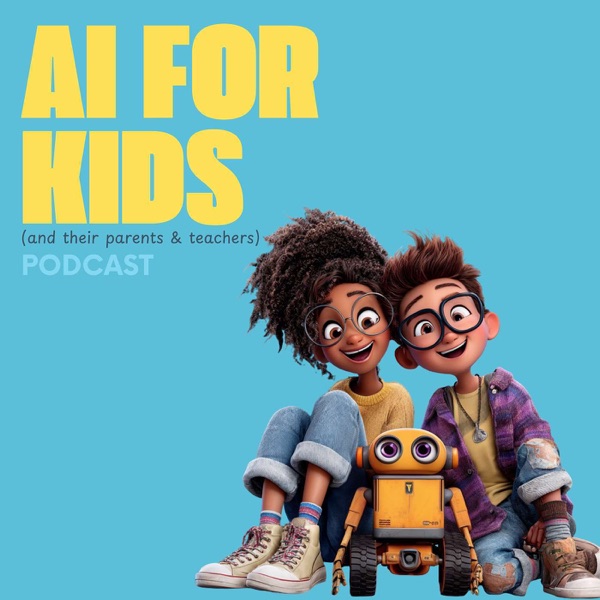
Welcome to AI for Kids , a podcast made for kids, with parents and teachers there to support and guide them, without adding more screen time. This podcast is made for kids ages 4–12 (and curious teens too) and the adults who support them. You’ll hear fun, easy-to-follow conversations with fellow kids and even AI experts. We break down what AI is, how it shows up in everyday life, and how to talk about it at the dinner table or on the drive to school. Whether you’re multitasking, carpooling, or winding down for the night, AI for Kids fits your life. It’s screen-free, engaging, and created to spark curiosity, not replace it. Because kids don’t need more screen time to stay ahead, just better ways to understand the world they’re growing up in.
On the charts
Every published chart this podcast appears in, in the snapshot behind this page. Each one links to the chart it came off.
From the feed
The latest episodes published to this podcast’s own RSS feed. Titles and descriptions are the publisher’s.
Send us Fan Mail AI is not coming to school someday. It is already there, tucked into search boxes, video recommendations, study apps, and yes, the chatbots everyone talks about. We’re kicking off the new school year with a clear-eyed look at what that means for kids, parents, and teachers, starting with a surprising stat: 86% of kids ages 9 to 17 have used AI. So the question is not whether students will use artificial intelligence, but how we can use it without handing over our thinking. We share five practical rules for AI literacy that you can actually remember during homework time: Brain Before Bot (try first, then ask for help), Teacher Before Tool (every class has its own rules), Check The Robot (AI can sound right and still be wrong), Private Means Private (no personal info in AI tools), and People Before Programs (AI is never the right place for bullying, safety concerns, or big feelings). Along the way, we give kid-friendly examples and better ways to prompt AI, like asking for hints, alternate explanations, and quiz practice instead of full answers. We also play a quick “AI or me” game to test real school scenarios, then we end with a back-to-school AI challenge: find one way technology can help you learn without doing the learning for you. If this helped you, subscribe, share it with a family member or teacher, and leave a review so more kids can build smart and safe AI habits. Support the show Hey parents and teachers, if you want to stay on top of the AI news shaping your kids’ world, subscribe to our weekly AI for Kids Weekly newsletter: https://aiforkidsweekly.beehiiv.com/ Help us become the #1 podcast for AI for Kids, parents, teachers, and families. Like our content? patreon.com/AiDigiTales Get or gift the book “AI… Meets… AI” Social Media & Contact : Website : www.aidigitales.com Email : contact@aidigitales.com Follow Us : Instagram Books on Amazon or Free AI Worksheets Listen, rate, and subscribe! Apple Podcasts Amazon Music Spotify YouTube Other
Send us Fan Mail AI can feel like magic until you look closer and realize it’s built on choices, data, and a whole lot of guessing. For our Season 3 finale of AI for Kids, we pull together the biggest takeaways from the season and turn them into simple, usable rules kids can remember and grown-ups can support at home, in libraries, and in classrooms. The bottom line stays the same: you don’t have to fear artificial intelligence, but you do have to think, pause, and stay curious. We talk about what AI literacy for kids really means beyond “typing a good prompt.” It’s the habit of asking better questions: Did this help me learn or just hand me an answer? Does it sound true or do I need to verify it? We also revisit why data literacy matters so much, with everyday examples like checking the weather, budgeting money, and forecasting toward a goal. Those small moments teach kids how to reason with information, which is exactly what they need when they face AI hype, viral screenshots, or content that might be misinformation. Then we get real about safety and boundaries. We unpack why human-like chatbots and character AI can be unhealthy when kids start treating a word generator like a person, and why “easy” is often a warning sign for sloppy or wrong. We also explore AI toys and hyper-personalization, including how a talking toy that follows one interest can shrink imagination instead of expanding it. For parents and teachers, we share a practical “parent in the loop” mindset: define the goal, choose tools built for kids and stay involved as the tech changes. If this season helped your family, subscribe, share the show with a friend, and leave a review so more parents, teachers, and caregivers can find it. What’s one AI rule you want kids to remember this summer? Support the show Hey parents and teachers, if you want to stay on top of the AI news shaping your kids’ world, subscribe to our weekly AI for Kids Weekly newsletter: https://aiforkidsweekly.beehiiv.com/ Help us become the #1 podcast for AI for Kids, parents, teachers, and families. Like our content? patreon.com/AiDigiTales Get or gift the book “AI… Meets… AI” Social Media & Contact : Website : www.aidigitales.com Email : contact@aidigitales.com Follow Us : Instagram Books on Amazon or Free AI Worksheets Listen, rate, and subscribe! Apple Podcasts Amazon Music Spotify YouTube Other
Send us Fan Mail AI is getting louder, faster, and more impressive by the week and that can make kids wonder what’s left for humans to do. We wanted to bring a calmer, more real-world answer: the future still needs people who can build, fix, and make things when life breaks in unpredictable ways. I’m joined by Archie D. Nettles, Jr. , creator of Trades to the Rescue and the TradesTopolis universe. He writes kids as the heroes of infrastructure, the ones who solve the problems that actually keep homes and cities working. We talk about what “skilled trades” really means, why plumbers, electricians, HVAC techs, carpenters, and mechanics are often the unsung heroes, and why these careers deserve the same early attention kids give to astronauts and doctors. Then we get into the AI question everyone asks: can robots really do these jobs? Archie explains why dexterity, tight spaces, and human trust make many trade tasks hard to automate, especially when you need help at 9 p.m. on a Sunday. We also flip the script to show how AI can be a teammate: faster planning, parts lookup, real-time estimates, better customer answers, and safer work with augmented reality that helps visualize what’s behind a wall or how electrical currents flow. If your kid loves Legos, inventing, fixing toys, cooking, or asking “how does that work,” this is a confidence boost and a roadmap. Subscribe, share with a family who’s thinking about careers, and leave a review so more kids can hear that there’s more than one way to be smart. Resources: Follow Torque and Tori's Adventure Get the book . Follow on Instagram Support the show Hey parents and teachers, if you want to stay on top of the AI news shaping your kids’ world, subscribe to our weekly AI for Kids Weekly newsletter: https://aiforkidsweekly.beehiiv.com/ Help us become the #1 podcast for AI for Kids, parents, teachers, and families. Like our content? patreon.com/AiDigiTales Get or gift the book “AI… Meets… AI” Social Media & Contact : Website : www.aidigitales.com Email : contact@aidigitales.com Follow Us : Instagram Books on Amazon or Free AI Worksheets Listen, rate, and subscribe! Apple Podcasts Amazon Music Spotify YouTube Other
Send us Fan Mail Vampire fish in the Great Lakes sounds like a prank until you learn sea lampreys are real and they’re chewing through ecosystems like trout and salmon. We start with that eerie mental image, then take a hard turn into something hopeful: kids solving a real environmental problem with artificial intelligence, creativity, and a strong sense of what “safe” should mean. A team of fourth graders in Michigan enters the Presidential AI Challenge and builds a concept called the Guardian of the Lakes, an AI-powered drone designed to spot sea lampreys even in murky water and remove them while leaving other fish alone. We unpack the big idea powering their invention: computer vision. When a student says the drone “detects patterns,” that’s the clearest definition of AI you’ll hear all week. We connect it to everyday tech kids already know, like self-checkout systems that can tell a banana from an apple. Then we focus on the part adults often skip: AI safety and privacy. One kid nails the rule in plain language, reminding us that helpful AI can’t come at the cost of tracking people or grabbing private information in public spaces. To make the learning stick, we share a screen-free activity, the Guardian Game, where your family or class picks a neighborhood problem, designs a “guardian,” decides what patterns the AI must recognize, and sets one safety rule. If you want practical AI literacy for kids, STEM education ideas, and a real story about responsible innovation, press play. Subscribe, share this with a parent or teacher, and leave a review so more families can build safer, smarter AI habits together. Support the show Hey parents and teachers, if you want to stay on top of the AI news shaping your kids’ world, subscribe to our weekly AI for Kids Weekly newsletter: https://aiforkidsweekly.beehiiv.com/ Help us become the #1 podcast for AI for Kids, parents, teachers, and families. Like our content? patreon.com/AiDigiTales Get or gift the book “AI… Meets… AI” Social Media & Contact : Website : www.aidigitales.com Email : contact@aidigitales.com Follow Us : Instagram Books on Amazon or Free AI Worksheets Listen, rate, and subscribe! Apple Podcasts Amazon Music Spotify YouTube Other
Send us Fan Mail A character in your game says hi back, remembers your name, and chats like they actually know you. That can feel amazing and also a little risky, because more and more games are adding AI powered NPCs that can hold real conversations through tools like Roblox text generation and Minecraft add-ons. When a game starts talking like a person, kids need a few simple rules to stay safe without losing the fun. We break down three big takeaways for navigating AI in video games. First, an AI character is not your friend, even if it sounds kind, curious, and supportive, so it should never become the place you share secrets. Second, what you type or say can be stored by the company running the AI, which is why personal info like your real name, school, or where you live is always a no. Third, AI can be confidently wrong, a problem often called hallucinating, so if something feels weird, scary, or off, you pause and check with a trusted grown-up. We also share a screen-free family activity called “Bot or Not” that helps kids spot the difference between clean, generic, super-polite bot answers and the messy, specific details real humans tend to give. If you want practical online safety guidance for kids, parents, and caregivers as AI shows up in everyday apps and games, hit play, share this with a family you know, and subscribe and leave a review so more people can find the show. Support the show Hey parents and teachers, if you want to stay on top of the AI news shaping your kids’ world, subscribe to our weekly AI for Kids Weekly newsletter: https://aiforkidsweekly.beehiiv.com/ Help us become the #1 podcast for AI for Kids, parents, teachers, and families. Like our content? patreon.com/AiDigiTales Get or gift the book “AI… Meets… AI” Social Media & Contact : Website : www.aidigitales.com Email : contact@aidigitales.com Follow Us : Instagram Books on Amazon or Free AI Worksheets Listen, rate, and subscribe! Apple Podcasts Amazon Music Spotify YouTube Other
Send us Fan Mail AI sounds smart. But that doesn’t mean it’s right. And it definitely doesn’t mean it should be doing your thinking for you. This week, Dhani Ramadhani joins the show. She’s a mom, a Harvard grad, a GovTech expert, and the creator of aiPTO, a resource built to give families real language for talking about AI at the dinner table. Dhani shares the THINK framework, five letters that put YOU in charge when you’re using AI. WHAT WE COVER The THINK framework: Take time before you believe, How does it work, Intention, Never share private info, Keep your brain in charge aiPTO: what it stands for (AI, Parent, Tech, Opportunity) and how families can leverage their resources Deepfakes: what they are, why they’re hitting schools, and the Take It Down Act AI bias: how training data shapes what AI says and who it serves Privacy: why your selfie might be training an AI model right now Agency: why YOU matter more in this world than you realize FOR KIDS: TRY THIS AFTER THE EPISODE Pick one thing in your life that bugs you (meal planning, homework, organizing). Try using AI to help, but run it through the THINK framework first. Ask yourself: am I using AI to learn or to skip the hard part? No judgment, just be honest about it. Audit your screen time. Is the algorithm pushing you toward something, or are you choosing it? RESOURCES & LINKS Her children's book: The Power of Pondering: Empowering Kids to Think for Themselves in the Age of AI aiPTO (aiparenttech.com) The THINK Framework on aiPTO AI Everywhere book (feat. Dhani’s chapter) Take It Down (NCMEC) — deepfake removal tool Dhani on Instagram: @aiPTO365 Support the show Hey parents and teachers, if you want to stay on top of the AI news shaping your kids’ world, subscribe to our weekly AI for Kids Weekly newsletter: https://aiforkidsweekly.beehiiv.com/ Help us become the #1 podcast for AI for Kids, parents, teachers, and families. Like our content? patreon.com/AiDigiTales Get or gift the book “AI… Meets… AI” Social Media & Contact : Website : www.aidigitales.com Email : contact@aidigitales.com Follow Us : Instagram Books on Amazon or Free AI Worksheets Listen, rate, and subscribe! Apple Podcasts Amazon Music Spotify YouTube Other
Send us Fan Mail This week, we’re tackling one of the scariest AI scams happening right now: voice cloning. Criminals are using AI to copy someone’s voice from just a few seconds of audio, a TikTok, a voicemail, a birthday video, and then calling their family pretending to be them. The calls sound real. The panic is real. And families across the country are losing money to it. But there’s a dead-simple way to protect your family. One step. We break it all down. How AI voice cloning works: and why it only needs about 3 seconds of audio Where scammers find your voice: social media posts, voicemails, school event videos How the scam plays out: fake emergency calls to parents and grandparents The family code word: a simple, private word or phrase that stops the scam cold What else you can do: calling back on saved numbers, being thoughtful about what you post Why you should tell your grandparents: they’re the #1 target The One Step: Set Up a Family Code Word Pick a secret word or phrase that only your family knows. Never post it, never text it, never put it in a video. If anyone ever gets a scary call from someone claiming to be a family member, the first thing you do is ask: What’s the code word? Set it up tonight at dinner. It takes two minutes. Your family will be more protected today than it was yesterday. Action Items for Kids Talk to your family tonight about choosing a code word Call or visit your grandparents and help them set one up too Think about what you post online If you get a weird call: don’t panic, hang up, call the person back on their real number Links & Resources AI for Kids Weekly FBI Warning on AI Voice Scams FTC Report Fraud Support the show Hey parents and teachers, if you want to stay on top of the AI news shaping your kids’ world, subscribe to our weekly AI for Kids Weekly newsletter: https://aiforkidsweekly.beehiiv.com/ Help us become the #1 podcast for AI for Kids, parents, teachers, and families. Like our content? patreon.com/AiDigiTales Get or gift the book “AI… Meets… AI” Social Media & Contact : Website : www.aidigitales.com Email : contact@aidigitales.com Follow Us : Instagram Books on Amazon or Free AI Worksheets Listen, rate, and subscribe! Apple Podcasts Amazon Music Spotify YouTube Other
Send us Fan Mail This week, Amber sits down with digital producer and internet culture veteran Matt Silverman for a real talk about algorithms, slop, screen addiction, and why being a little bit skeptical online might be the most important skill a kid can have right now. Matt has spent decades covering how the internet works — and more importantly, how it works on us. He breaks it all down in a way that actually makes sense, whether you're 10 or your parent is 45. In this episode: Why the internet shifted from connecting people to feeding you content, and who profits from that What "digital literacy" actually means (hint: it's three questions) The difference between harmless scrolling and content engineered to manipulate you What AI-generated "slop" is and why it's getting harder to spot Why being bored might actually be good for your brain The screen-free comedy podcast made 100% by humans, for kids The 3 questions to ask before you like, share, or believe anything online: Who made this? Why did they make it? Why is this platform showing it to me? Check out this week's newsletter on Tuesday for a screen-free activity that relates to these three questions. Links & Resources Mentioned: Matt Silverman Tales from the Cloud Sea : The completely improvised, screen-free comedy adventure podcast for kids. Locket : The low-key, non-algorithmic photo-sharing app Matt recommends as a healthier social option for kids. Support the show Hey parents and teachers, if you want to stay on top of the AI news shaping your kids’ world, subscribe to our weekly AI for Kids Weekly newsletter: https://aiforkidsweekly.beehiiv.com/ Help us become the #1 podcast for AI for Kids, parents, teachers, and families. Like our content? patreon.com/AiDigiTales Get or gift the book “AI… Meets… AI” Social Media & Contact : Website : www.aidigitales.com Email : contact@aidigitales.com Follow Us : Instagram Books on Amazon or Free AI Worksheets Listen, rate, and subscribe! Apple Podcasts Amazon Music Spotify YouTube Other
Send us Fan Mail A game is loading, a video looks fun, and then a screen pops up demanding your birthday. Why does an app need your age, and what happens if you type it in without thinking? I dig into the real reason age questions show up so often and why that “quick little form” is actually a big online safety moment for kids and families. We connect age gates to real-world rules kids already understand, like movie ratings and height signs at amusement parks. Then we talk about where AI and automated systems can show up: sorting users into age groups, limiting certain features, and shaping what content gets recommended. I’m careful to point out a key truth: an app can ask for your age and still be a bad fit for kids. That’s why your best protection is not the app itself, it’s your brain, your questions, and a trusted grown-up who can help check settings and permissions. You’ll leave with three simple rules to remember, including why your birthday is personal information and why you never have to type private details just because a screen asks. To make it practical, I share a screen-free game you can play at home or in class called “Kid, Grown Up, Or Ask First,” using examples like chat games, shopping apps, learning apps, and even school tools that request a birthday. If this helped, download and share the episode with another parent, teacher, or curious kid, and subscribe on your favorite podcast app or YouTube. After you listen, what app asked for your age most recently? Support the show Hey parents and teachers, if you want to stay on top of the AI news shaping your kids’ world, subscribe to our weekly AI for Kids Weekly newsletter: https://aiforkidsweekly.beehiiv.com/ Help us become the #1 podcast for AI for Kids, parents, teachers, and families. Like our content? patreon.com/AiDigiTales Get or gift the book “AI… Meets… AI” Social Media & Contact : Website : www.aidigitales.com Email : contact@aidigitales.com Follow Us : Instagram Books on Amazon or Free AI Worksheets Listen, rate, and subscribe! Apple Podcasts Amazon Music Spotify YouTube Other
Send us Fan Mail AI can feel like a mind that knows you, agrees with you, and never gets tired, which is exactly why we need to talk about how it shows up in real life. I’m joined by Dr. Tiffany Petricini , who studies AI and relationships, and Dr. Sarah Zipf, who researches technology in education, to unpack what kids actually need to know about AI beyond the hype and scary movie plots. We get into why technology is never neutral, why there are always benefits and disadvantages, and why schools should start with one grounding question before adopting any AI tool: what is it for? We also challenge a big myth about “digital natives.” Being great on a phone does not automatically mean strong computer literacy, and that gap matters when AI tools enter the classroom. Along the way, we talk AI literacy for kids, digital citizenship, and how families can ask better questions instead of letting fear make decisions for them. Then we tackle AI chatbots and AI friends head-on. AI can sound comforting because it responds instantly and tells you what you want to hear, but it cannot be a real friend, and it cannot replace trusted adults or real peers. We break down why “AI is math” helps demystify what’s happening, how bias can sneak into AI outputs, and how play-based learning (like cooking recipes and hands-on games about algorithms) can teach big ideas without adding more screen time. If this conversation helps your family, subscribe, share it with a friend, and leave a review so more parents and kids can find it. What is one rule you think every household should have for using AI? Support the show Hey parents and teachers, if you want to stay on top of the AI news shaping your kids’ world, subscribe to our weekly AI for Kids Weekly newsletter: https://aiforkidsweekly.beehiiv.com/ Help us become the #1 podcast for AI for Kids, parents, teachers, and families. Like our content? patreon.com/AiDigiTales Get or gift the book “AI… Meets… AI” Social Media & Contact : Website : www.aidigitales.com Email : contact@aidigitales.com Follow Us : Instagram Books on Amazon or Free AI Worksheets Listen, rate, and subscribe! Apple Podcasts Amazon Music Spotify YouTube Other
Send us Fan Mail A kids’ video can be bright, catchy, and totally wrong. We’re seeing more AI-generated videos for kids show up on YouTube and tablets, and some of them slip mistakes into the middle where a quick parent check might miss it. That matters because “small” errors can teach unsafe ideas, confuse real-world rules, and spread misinformation while looking like normal cartoons and sing-alongs. We break down what’s going on in plain language: how AI can create videos fast, why some creators push quantity over quality, and why automated content moderation does not always catch problems in time. If you’ve been wondering about YouTube Kids safety, parental controls, or how to build media literacy for kids, this conversation gives you a clear starting point. We also share a simple example of how a video can teach the opposite of a basic safety lesson, even though everything looks friendly on the surface. Most important, we talk directly to kids about a real superpower: noticing when something feels off. Weird movement, odd voices, sentences that don’t make sense, or a lesson that clashes with real life are all signals to pause, pick something else, and tell a trusted adult. That one habit supports digital safety and critical thinking in a world filled with AI-generated content. If this helps your family, subscribe wherever you get your podcasts or on YouTube, share the episode with a parent or teacher, and leave a review so more people can learn how to spot these videos faster. What’s the strangest “kids” video you’ve ever seen? Support the show Hey parents and teachers, if you want to stay on top of the AI news shaping your kids’ world, subscribe to our weekly AI for Kids Weekly newsletter: https://aiforkidsweekly.beehiiv.com/ Help us become the #1 podcast for AI for Kids, parents, teachers, and families. Like our content? patreon.com/AiDigiTales Get or gift the book “AI… Meets… AI” Social Media & Contact : Website : www.aidigitales.com Email : contact@aidigitales.com Follow Us : Instagram Books on Amazon or Free AI Worksheets Listen, rate, and subscribe! Apple Podcasts Amazon Music Spotify YouTube Other
Send us Fan Mail AI can do homework-level tasks in seconds, which is exactly why so many parents and teachers feel uneasy. After a short break, we’re back with a solo check-in that tackles the question showing up all over parent message boards: how much AI is too much for kids, and what does “healthy” AI use actually look like when school and screens are already competing for attention? We dig into a concept called cognitive offloading, where we hand our thinking over to a machine and slowly lose the mental “muscle” that comes from struggling through a hard problem. I use a simple analogy: AI can either be autopilot, where the tool flies the plane and the learner checks out, or it can be a copilot, where your child stays in control and the AI supports with directions, hints, and explanations. That difference matters for learning, writing, and long-term critical thinking. You’ll leave with three practical rules you can use right away at home or in the classroom: try first and use AI second, prompt for tutoring instead of asking the bot to do the work, and always fact-check because large language models can hallucinate. We also talk about why this isn’t just a kids issue, how adults can slide into the same habits, and why the best approach is sitting alongside kids to build real AI literacy without giving up curiosity or creativity. Subscribe for more parent-friendly AI guidance, share the show with a friend, and leave a review so more families can find it. What’s one boundary you want to set for AI use this week? Solo check-in from AI for Kids for parents & teachers: AI can do homework-level tasks in seconds, and that’s raising questions about over-reliance. This episode explains why that matters and gives 3 practical rules to keep kids’ thinking strong while using AI, at home or school. Clear, screen-friendly guidance for kids (ages 4–12) and the adults who support them. Support the show Hey parents and teachers, if you want to stay on top of the AI news shaping your kids’ world, subscribe to our weekly AI for Kids Weekly newsletter: https://aiforkidsweekly.beehiiv.com/ Help us become the #1 podcast for AI for Kids, parents, teachers, and families. Like our content? patreon.com/AiDigiTales Get or gift the book “AI… Meets… AI” Social Media & Contact : Website : www.aidigitales.com Email : contact@aidigitales.com Follow Us : Instagram Books on Amazon or Free AI Worksheets Listen, rate, and subscribe! Apple Podcasts Amazon Music Spotify YouTube Other
Send us Fan Mail Check out this replay episode for kids and parents interested in AI support with storytime. What if a child could open a book and see their own name, face, and dreams driving the plot forward, then watch that same story come to life on screen? We sit down with Brian Carlson, CEO and co‑founder of Storytime AI, to explore how personalized stories and videos can turn reluctant readers into eager creators. From short, high‑interest tales to full‑length novels, Brian shows how identity and representation fuel motivation and why putting kids at the center of the page unlocks deeper comprehension and joy. We trace Brian’s journey from math‑obsessed student to educator in the South Pacific to founder building tools across 70 languages. Along the way, we weigh the promise and the pitfalls: early exposure to AI can empower the next generation of builders and problem solvers, but only if we protect critical thinking, writing, and judgment. Brian shares a simple rule of thumb, treat AI as a scaffold, not a substitute, to kids learn story structure, iterate with feedback, and develop their own voice. Then we look ahead. Text‑to‑video is maturing fast, and Storytime AI is preparing for a near future where kids can say “make a movie about us in Stuttgart” and watch the scene unfold, complete with read‑along captions. We talk practical equity too: AI‑supported tutoring can level access, giving every learner targeted practice, custom quizzes, and timely nudges while teachers guide the human side of growth. And for creators worried about losing originality, we explore how democratized tools echo vibrant fan‑fiction communities, expanding who gets to tell stories, not replacing the craft of storytelling. Curious to try it? Brian set up a listener perk: use code AIDIGI in Storytime AI for 10 free stories. This code may or may not work due to the replay. If this conversation sparked ideas, subscribe, rate the show, and share it with a friend who cares about reading, learning, and the future of AI for kids. Support the show Hey parents and teachers, if you want to stay on top of the AI news shaping your kids’ world, subscribe to our weekly AI for Kids Weekly newsletter: https://aiforkidsweekly.beehiiv.com/ Help us become the #1 podcast for AI for Kids, parents, teachers, and families. Like our content? patreon.com/AiDigiTales Get or gift the book “AI… Meets… AI” Social Media & Contact : Website : www.aidigitales.com Email : contact@aidigitales.com Follow Us : Instagram Books on Amazon or Free AI Worksheets Listen, rate, and subscribe! Apple Podcasts Amazon Music Spotify YouTube Other
Send us Fan Mail Check out this replay episode for kids and parents interested in cyber security. Curious about how artificial intelligence shapes our daily lives? Join us as we chat with Tennisha Martin, the visionary founder of Black Girls Hack, who shares her journey from a tech-savvy childhood to leading a nonprofit that empowers underrepresented communities through cybersecurity and technology. Discover the thrill of breaking and testing software for security purposes, and learn how AI, from predictive text to smart home devices, is seamlessly woven into our routines. Tennisha explains AI concepts in ways kids can grasp, emphasizing why it's crucial to understand AI's benefits and potential risks for safety and security. Ever wondered about the ethical implications of AI misuse? We explore these challenges, especially how AI-generated code can be exploited, and discuss Tennisha's motivations behind establishing Black Girls Hack. Learn about the organization's hands-on training and support, and get inspired by the empowering environment of cybersecurity conferences like Hack for Summer Camp and SquadCon. We wrap up with a fun game of Two Truths and a Dream, sharing personal anecdotes and practical advice for young tech enthusiasts. This episode is a treasure trove of insights and tips for anyone keen on venturing into the world of technology and cybersecurity. Resources: BlackGirlsHack - Our cornerstone brand advocating to increase diversity of Black girls and women within Cyber https://blackgirlshack.org/ We Got Next Cyber - 9th through 12th grade training program wegotnextcyber.com SquadCon/ Girls Hack Village - Girls Hack Village has a cybersecurity conference that provided a gender-diverse platform for women and girls in cybersecurity squadcon.me Hacking Events - BlackGirlsHack - Events Support the show Hey parents and teachers, if you want to stay on top of the AI news shaping your kids’ world, subscribe to our weekly AI for Kids Weekly newsletter: https://aiforkidsweekly.beehiiv.com/ Help us become the #1 podcast for AI for Kids, parents, teachers, and families. Like our content? patreon.com/AiDigiTales Get or gift the book “AI… Meets… AI” Social Media & Contact : Website : www.aidigitales.com Email : contact@aidigitales.com Follow Us : Instagram Books on Amazon or Free AI Worksheets Listen, rate, and subscribe! Apple Podcasts Amazon Music Spotify YouTube Other
Send us Fan Mail In this replay we revisit our episode with the one and only Phil Rogofsky . Is STEM only for scientists and engineers? Join us as we unravel this myth with our special guest, Phil Rogofsky , the visionary behind the Maryland STEM Festival (October 18th to November 17th). Phil’s journey into the world of STEM started with childhood dreams inspired by the Apollo program and Jacques Cousteau, coupled with his parents' influence. He passionately shares how these early experiences shaped his belief that STEM is for everyone, not just a select few, and how this belief fueled the creation of a festival aimed at making STEM accessible and engaging for all. Explore the innovative spirit of the Maryland STEM Festival, which ensures a variety of events within 30 minutes of every resident. Phil recounts the festival's humble beginnings, sparked by a visit to the USA Science and Engineering Festival, and its evolution into a statewide initiative that connects the public with the STEM community. From musical performances to nature walks, the festival offers family-friendly activities that ignite interest in STEM among children and adults. You'll be inspired by stories of meaningful collaborations and the festival's goal of fostering a curious and enthusiastic community. Engage in a fun Tech Trivia game as we discuss the origins of STEM and the invention of the computer. Phil reflects on standout moments like the Sports and STEM event at Morgan State and the Middle School STEM Professional Match program, showcasing how STEM is woven into everyday life—from IT auditing at the Social Security Administration to the science behind sports. Discover practical ways for kids to engage in STEM, emphasizing its critical role in preparing them for a future filled with endless possibilities. Support the show Hey parents and teachers, if you want to stay on top of the AI news shaping your kids’ world, subscribe to our weekly AI for Kids Weekly newsletter: https://aiforkidsweekly.beehiiv.com/ Help us become the #1 podcast for AI for Kids, parents, teachers, and families. Like our content? patreon.com/AiDigiTales Get or gift the book “AI… Meets… AI” Social Media & Contact : Website : www.aidigitales.com Email : contact@aidigitales.com Follow Us : Instagram Books on Amazon or Free AI Worksheets Listen, rate, and subscribe! Apple Podcasts Amazon Music Spotify YouTube Other
Send us Fan Mail This week, we’re sharing a fan-favorite replay, an episode that ranks in the top ten of our all-time most listened-to episodes. In this week's replay episode we unlock the secrets of building adaptive, personalized robots with Dr. Randi Williams , a leading figure in AI and robotics, as she shares her journey from a math-obsessed child inspired by Jimmy Neutron to a pioneering expert aiming to make technology fairer and more inclusive. Dr. Williams takes us behind the scenes of her work at the Algorithmic Justice League (AJL) , discussing the triumphs and challenges of creating robots that can truly engage with humans. Through the lens of projects like PopBots , you’ll discover how even preschoolers can grasp foundational AI concepts and start innovating from an early age. Hear the inspiring story of a young learner who programmed a multilingual robot, and explore the engaging tools and platforms like MIT’s Playground that make learning AI fun and accessible. Finally, we tackle the crucial issue of algorithmic bias and the importance of diverse data sets in AI training. This episode underscores how creativity and a passion for learning can drive meaningful advancements in AI and robotics. Resources for parents and kids: Preschool-Oriented Programming (POP) Platform PopBots Playground Raise MIT Day of AI Turing Test Game Unmasking AI Coded Bias Personal Robots Group Scratch National Coding Week Support the show Hey parents and teachers, if you want to stay on top of the AI news shaping your kids’ world, subscribe to our weekly AI for Kids Weekly newsletter: https://aiforkidsweekly.beehiiv.com/ Help us become the #1 podcast for AI for Kids, parents, teachers, and families. Like our content? patreon.com/AiDigiTales Get or gift the book “AI… Meets… AI” Social Media & Contact : Website : www.aidigitales.com Email : contact@aidigitales.com Follow Us : Instagram Books on Amazon or Free AI Worksheets Listen, rate, and subscribe! Apple Podcasts Amazon Music Spotify YouTube Other
Send us Fan Mail A single question from a four-year-old, “What is data?”, sparked a four-year journey that turned everyday moments into a blueprint for teaching kids the foundations of AI. We sit down with Chandra Donelson , chief data and AI officer, Air Force reservist, and author of The Data Detective series, to show how data literacy starts at home with simple habits that build real confidence. Chandra shares the carnival breakthrough that helped her son grasp quantitative and qualitative data by counting people in ride lines and noticing details in the world around him. We unpack how she tested each draft by asking her son to explain concepts back, if a five-year-old couldn’t re-teach it, it didn’t make the cut. She walks us through translating artful curiosity into STEAM, the value of slow, intentional creation even as AI tools speed up publishing, and why her newest book, The Data Detective at the Airport, weaves real family scenes and snapshots into the story. We also dig into practical, parent-friendly routines that turn life into a data lab: checking the weekly forecast to plan outfits, budgeting toward a VR headset, and cooking with measurements to build intuition for patterns and predictions. Chandra ties these skills to math fundamentals and explains why data is the true foundation beneath AI, no clean data, no trustworthy intelligence. Her career arc from military intelligence to data leadership highlights the power of raising your hand, finding mentors, and building community through Women in Data , where representation and support open doors for the next generation. Resources: The Data Detective at the Carnival The Data Detective at the Airport Support the show Hey parents and teachers, if you want to stay on top of the AI news shaping your kids’ world, subscribe to our weekly AI for Kids Weekly newsletter: https://aiforkidsweekly.beehiiv.com/ Help us become the #1 podcast for AI for Kids, parents, teachers, and families. Like our content? patreon.com/AiDigiTales Get or gift the book “AI… Meets… AI” Social Media & Contact : Website : www.aidigitales.com Email : contact@aidigitales.com Follow Us : Instagram Books on Amazon or Free AI Worksheets Listen, rate, and subscribe! Apple Podcasts Amazon Music Spotify YouTube Other
Send us Fan Mail A video looks real, the voice sounds familiar, but something feels off. That gut check matters, and we turn it into a simple habit kids can use every day: pause, check, ask. We break down deepfakes in plain language, show how AI learns to mimic faces and voices, and teach a family-friendly game that trains kids to spot tricks without fear or extra screen time. We start by explaining what deepfakes are and how pattern-learning lets AI copy smiles, speech, and movement. From there, we introduce Real, Trick, or Check—a quick activity any grown-up can run in the car, at home, or in class. Kids learn to look for practical red flags: videos that only exist on social feeds, clips that rush or scare, lips that don’t match words, flat robotic audio, super short edits, and sketchy new accounts. The goal isn’t to catch every fake with one clue; it’s to slow down and verify with a trusted adult before reacting or sharing. Safety is stronger when families protect what AI can learn. We offer clear steps: post sparingly, lock down privacy settings, avoid untrusted sites, and be careful when texting photos or voice notes. We also cover what to do if a fake targets your child: you did nothing wrong, tell a trusted adult, save evidence, and report it. To stop impostors who use cloned voices, we share our favorite tool, a private code word that only you, your kids, and your classroom know. If a message can’t provide it, stop and verify through a known channel. By the end, your family has a shared language for staying calm and curious around AI: protect your pictures and your voice, practice the game, and keep the code word handy. If something feels wrong, talk to a trusted adult right away. Enjoy the episode, then subscribe, share it with a friend, and leave a quick review to help more families build smart tech habits. Support the show Hey parents and teachers, if you want to stay on top of the AI news shaping your kids’ world, subscribe to our weekly AI for Kids Weekly newsletter: https://aiforkidsweekly.beehiiv.com/ Help us become the #1 podcast for AI for Kids, parents, teachers, and families. Like our content? patreon.com/AiDigiTales Get or gift the book “AI… Meets… AI” Social Media & Contact : Website : www.aidigitales.com Email : contact@aidigitales.com Follow Us : Instagram Books on Amazon or Free AI Worksheets Listen, rate, and subscribe! Apple Podcasts Amazon Music Spotify YouTube Other
Send us Fan Mail What do kids really touch when they “use AI”? We sat down with educator Tom Mullaney and early virtual economy pioneer Tim Allen to strip away the buzzwords and bring AI back to what children actually experience: predictive systems that generate words, pictures, and sounds without authorship or intent. From Second Life marketplaces to today’s chatbots, we trace how hype blurs reality, how “easy button” tools undercut learning, and why kids deserve a clear, practical map for using AI without losing creativity or judgment. We dig into a simple, striking demo: nine leading models drawing a wall clock once per minute, often getting it wrong in different ways. That moving snapshot opens a bigger lesson—if a model can’t keep a clock straight, don’t trust it where accuracy matters. Tom explains why generative AI reads as polished but painfully boring in student writing, while Tim offers pathways for young coders to use models for boilerplate and then switch to human craft for novelty and taste. Together we explore the mental health risks of parasocial chatbot bonds, the screen-addictive design of platforms, and the Harvard study that ties lifelong happiness to real relationships, not fleeting likes. Parents and teachers will find practical guardrails: ask who built the tool and who benefits, demand transparency and family controls, and push for real accountability when systems output harmful content. Kids get a north star: humans create, computers generate. Keep AI as a tool, not a crutch. Choose projects that make you think, verify results, and be proud to fail boldly as you learn. We also touch on the environmental cost of running large models and why a family-first approach to AI can help everyone stay curious, safe, and grounded. If this conversation helps you teach skepticism without fear and keep kids building in the real world, share it with a friend, subscribe for more like this, and leave a review with the one guardrail you’d add first. Support the show Hey parents and teachers, if you want to stay on top of the AI news shaping your kids’ world, subscribe to our weekly AI for Kids Weekly newsletter: https://aiforkidsweekly.beehiiv.com/ Help us become the #1 podcast for AI for Kids, parents, teachers, and families. Like our content? patreon.com/AiDigiTales Get or gift the book “AI… Meets… AI” Social Media & Contact : Website : www.aidigitales.com Email : contact@aidigitales.com Follow Us : Instagram Books on Amazon or Free AI Worksheets Listen, rate, and subscribe! Apple Podcasts Amazon Music Spotify YouTube Other
Send us Fan Mail Kids are meeting chatbots everywhere, from homework helpers to pop‑ups on websites, and many of them think the robot “feels” things. We cut through the hype with a friendly, practical guide that shows how chatbots really work, why they sometimes sound brilliant and sometimes go off the rails, and what families can do to stay curious and safe at the same time. We start by breaking down the core idea: a chatbot predicts the next word using patterns, not feelings or understanding. That simple lens explains why a bot can write a funny pizza joke yet invent a name when asked about your classroom. From there, we shift into digital safety that kids can remember: treat a chatbot like a stranger, never share personal information, and pause the moment a reply feels weird or unkind. Along the way we model the “grown‑up in the loop” rule and show how to fact‑check results so confidence never replaces care. To make it hands‑on, we share a quick kitchen‑table activity that sorts “Safe Questions” and “Not Safe Questions.” On one side, creative prompts like stories, riddles, and science facts. On the other, anything that reveals names, addresses, school details, or phone numbers. We wrap with five simple takeaways that turn into everyday habits: chatbots are not people, they make mistakes, you never share private data, you stop and tell a grown‑up when something feels off, and you can still have fun within clear boundaries. If this helped your family or classroom, subscribe for more parent‑friendly AI tips, share the episode with someone who needs it, and leave a quick review so more caregivers can find these tools. Your support helps more kids stay safe, curious, and creative with AI. Support the show Hey parents and teachers, if you want to stay on top of the AI news shaping your kids’ world, subscribe to our weekly AI for Kids Weekly newsletter: https://aiforkidsweekly.beehiiv.com/ Help us become the #1 podcast for AI for Kids, parents, teachers, and families. Like our content? patreon.com/AiDigiTales Get or gift the book “AI… Meets… AI” Social Media & Contact : Website : www.aidigitales.com Email : contact@aidigitales.com Follow Us : Instagram Books on Amazon or Free AI Worksheets Listen, rate, and subscribe! Apple Podcasts Amazon Music Spotify YouTube Other
Ranking source
Apple Podcasts rankings via the Mato Topic Intelligence Platform.
Observed September 20, 2026.
Apple and Apple Podcasts are trademarks of Apple Inc., registered in the U.S. and other countries.
Pairs with
Bring this source into Mato to read its transferable patterns, then turn them into an original show for your own audience.