
Live Interview
And why does that matter?
This is how a Mato agent talks. Take the other seat: answer a few and feel it follow the thread.
Podcast charts
Published by Emily Field RD
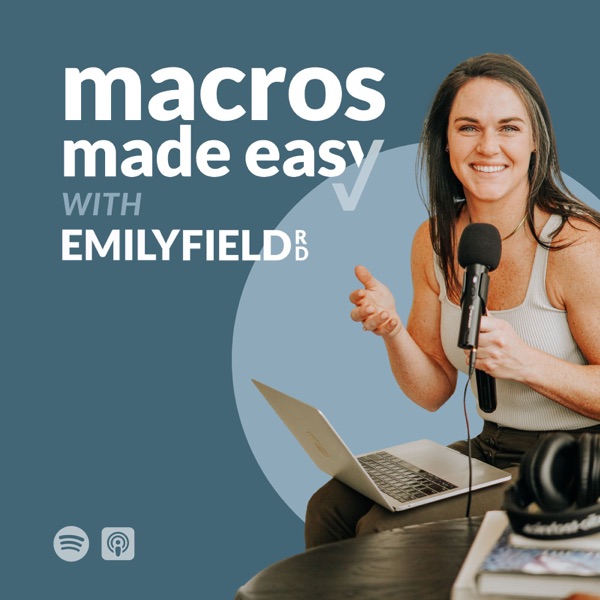
Welcome to Macros Made Easy, the podcast that simplifies the world of macros. If you're overwhelmed by the concept of tracking your macros, or wondering how you might use the approach in your full, busy life, you're not alone. This show is designed to make it easy for you to understand and implement a macro balanced eating pattern and put you in the driver's seat of how you look, feel and perform. Your host, Emily Field is a Registered Dietitian with nearly a decade of experience using the macros approach with her clients. She knows the power that a macros approach can have - such as an improved metabolism, easy and painless fat loss and enhanced food freedom. Join Emily for each episode as she makes macros easy while helping you reach your health goals with ease. Connect with Emily: www.emilyfieldrd.com Instagram & Facebook @emilyfieldrd
On the charts
Every published chart this podcast appears in, in the snapshot behind this page. Each one links to the chart it came off.
From the feed
The latest episodes published to this podcast’s own RSS feed. Titles and descriptions are the publisher’s.
You probably wouldn't wait until retirement to start saving for retirement. So why wait until you feel weak to start building muscle? In this episode, I'm making the case that muscle deserves to be treated like a retirement account. The strength you build now becomes a physical reserve you can draw from later, helping you stay capable, independent, and confident as you age. If you've ever wondered when do you start losing muscle, the answer may be earlier than you think. Muscle mass can begin gradually declining in our 30s, which is exactly why building muscle after 40 deserves your attention before weakness becomes noticeable in everyday life. We'll look at the research behind female aging body changes and why muscle isn't just about looking toned or changing your body composition. Strength affects your ability to climb stairs, carry luggage, get off the floor, maintain your balance, recover from periods of inactivity, and continue doing the things you love. In this episode, you'll learn: When you start losing muscle and why those small losses can add up over several decades. Why building muscle after 40 is absolutely possible, including after menopause and well into your 60s, 70s, and beyond. The benefits of strength training for women beyond appearance, including independence, bone health, metabolic health, and physical capacity. How female aging body changes can affect muscle, strength, and bone health over time. Why nutrition, protein, total energy, sleep, and recovery all matter when you're building muscle after 40. The benefits of strength training for women aren't limited to what happens inside the gym. The real return on your investment is having a body that can continue carrying the suitcase, climbing the stairs, hiking the trail, getting off the floor, and living independently for as long as possible. And while we can't control every aspect of female aging body changes, we can influence the physical reserve we're building today. So if you're asking when do you start losing muscle, don't let the answer discourage you. Let it remind you that you still have time to make deposits. The research is incredibly encouraging about our ability to gain strength and lean mass later in life. Listen to the full episode to learn more about the benefits of strength training for women and why you shouldn't wait until you feel weak to decide that strength matters. Your future body needs something to draw from. Start making deposits now. RESOURCES MENTIONED IN THIS EPISODE: Access free and low cost resources and services from this episode HERE! Read the full show notes for this episode HERE! Episode 51 with Mark Breedon CONNECT WITH EMILY FIELD RD: Instagram Website Facebook
If your health decisions are still driven by making yourself smaller, it may be time to rethink the way you approach nutrition, training, and progress. In this episode, I explain why building a strong body starts with changing your identity, not just your workout or meal plan. If your goal is fat loss for women, it's easy to fall into the mindset that eating less, exercising more, and chasing a lower number on the scale is always the answer. But that approach often works against the very body you're trying to build. Instead, we'll explore what it looks like to make decisions from the perspective of someone who's building a strong body through sustainable nutrition, progressive strength training, recovery, and healthy habits for life. This shift doesn't mean giving up on fat loss for women. It means pursuing it in a way that supports muscle, energy, confidence, and long-term health. In this episode, you'll learn: The five identity shifts that support lasting body recomposition for women. Why a strong body requires different choices than simply chasing a smaller body. How fat loss for women can work alongside muscle preservation instead of against it. Why healthy habits for life matter more than short-term restriction. If you've been frustrated by slow progress, constantly questioning your nutrition, or feeling like you have to choose between getting lean and getting stronger, this episode will help you think differently about body recomposition for women. You'll walk away with a new framework for building a strong body, creating healthy habits for life, and approaching fat loss for women without sacrificing the health and resilience you want for the future. Listen to the full episode to learn how building a strong body starts with the choices you practice every day and how healthy habits for life can transform the way you approach fat loss for women and body recomposition for women. RESOURCES MENTIONED IN THIS EPISODE: Access free and low cost resources and services from this episode HERE! Read the full show notes for this episode HERE! CONNECT WITH EMILY FIELD RD: Instagram Website Facebook
After stepping away on maternity leave, I came back with a much clearer vision for this podcast and the work I want to do. Yes, macros for women are still an important part of the conversation. They remain one of the best tools for understanding nutrition, building muscle, improving energy, and supporting body composition. But I've realized they're just one piece of something much bigger. This next season of Macros Made Easy is about helping you build a strong, resilient body that supports your life today and for decades to come. We'll still talk about macros for women, but we'll also dive into strength training, metabolism, recovery, habits, mindset, and what really matters when it comes to women and aging. If you're looking for practical health tips for women that fit real life instead of perfect life, you're in the right place. These episodes will be shorter, more focused, and designed to leave you with one actionable idea you can actually use. My goal is to make this one of your favorite health podcasts for women by giving you clear strategies instead of overwhelming information. In this episode, you'll learn: Why macros for women are still a valuable tool, but not the ultimate goal. How my mission has evolved to better support women and aging through strength, resilience, and sustainable habits. Why simple, actionable health tips for women are often more effective than chasing perfection. What you can expect from future episodes of one of the most practical health podcasts for women, including topics like muscle, metabolism, recovery, and building lifelong health. If you've ever wondered how to make nutrition work in the middle of a busy career, motherhood, travel, stress, or changing seasons of life, this episode is for you. Together, we'll explore how macros for women can build confidence instead of dependence, how to think differently about women and aging, and why the best health tips for women help you become stronger, not just smaller. Listen now to discover why the future of Macros Made Easy is about so much more than tracking numbers, and why this next chapter will continue delivering practical, evidence-based conversations for women who love health podcasts for women that meet them where they are. Ready to listen? Tune into the full episode and join me as we build a stronger, more resilient future together. RESOURCES MENTIONED IN THIS EPISODE: Access free and low cost resources and services from this episode HERE! Read the full show notes for this episode HERE! CONNECT WITH EMILY FIELD RD: Instagram Website Facebook
Summer travel season is here, which means road trips, flights, vacations, family visits, and plenty of opportunities for your normal routine to get turned upside down. That's why I'm bringing back this rewind episode all about maintaining your nutrition goals while traveling. If you've ever worried that a vacation, work trip, or long weekend away would completely derail your progress, this episode will help you approach travel with more confidence and flexibility. I'm sharing practical strategies for tracking macros, finding balanced meals on the road, and making choices that support your goals without letting nutrition take over your entire trip. From researching restaurants ahead of time to packing macro friendly travel snacks, you'll learn how a little preparation can make nutrition on the go feel much easier. We also discuss navigating airports, convenience stores, fast food restaurants, and long travel days when your usual routine isn't available. Most importantly, this episode is a reminder that travel doesn't require perfection. With the right mindset and a few simple tools, you can continue tracking macros, enjoy your trip, and stay aligned with your goals while still making room for flexibility and fun. In this episode, I cover: Why planning ahead makes tracking macros easier while traveling How to research restaurants and meals before your trip My favorite macro friendly travel snacks for flights, road trips, and busy travel days Easy travel food ideas to help you prioritize protein on the go How to navigate convenience stores and fast food restaurants without stress Practical tips for making nutrition on the go simple, flexible, and sustainable If this episode was helpful, take a screenshot, share it on Instagram, and tag me @emilyfieldrd so more women can learn how to use a macros approach in a stress-free way. And if you're ready to build confidence with food wherever life takes you, check out Macros Made Easy and learn how to create balanced meals, understand your macros, and make nutrition work in real life. RESOURCES MENTIONED IN THIS EPISODE: Access free and low cost resources and services from this episode HERE! MyFitnessPal Chronometer Macros First Read the full show notes for this episode HERE! CONNECT WITH EMILY FIELD RD: Instagram Website Facebook
Can you drink alcohol and still make progress toward your health and body composition goals? As we head into Memorial Day weekend, where cookouts, lake days, brewery visits, and social drinks are often part of the celebration, I wanted to bring back one of the most practical episodes I’ve ever recorded on alcohol and macros. This rewind episode breaks down how alcohol impacts your metabolism, recovery, fat loss, muscle growth, and overall progress when you’re trying to balance health goals with real life. We’re talking about the reality of alcohol calories, why alcohol functions differently from other macronutrients, and how drinking can influence everything from cravings and recovery to hydration and body composition. Most importantly, this episode is not about guilt or restriction. It’s about awareness, moderation, and learning how to make intentional choices while still maintaining food freedom. If you’ve ever wondered how to approach drinking while pursuing body composition goals, especially during social weekends and summer events, this episode will help you navigate it in a more realistic and informed way. In this episode, I cover: How alcohol and macros work together when tracking Why alcohol calories can add up quickly How alcohol affects fat loss, muscle growth, and recovery The connection between exercise and alcohol Tips for drinking while still supporting your goals How to approach alcohol without losing food freedom If this episode was helpful, take a screenshot, share it on Instagram, and tag me @emilyfieldrd so more women can learn how to approach nutrition in a sustainable, stress-free way. And if you’re ready to learn how to build balanced meals, track macros confidently, and support your goals without restriction, check out Macros Made Easy. RESOURCES MENTIONED IN THIS EPISODE: Access free and low cost resources and services from this episode HERE! Read the full show notes for this episode HERE! Working Against Gravity Alcohol to Macro Calculator MacrosFirst - macro tracking app CONNECT WITH EMILY FIELD RD: Instagram Website Facebook
If you’ve ever felt overwhelmed by conflicting nutrition advice, this episode is for you. In today’s conversation, I’m breaking down why so many women feel stuck jumping from one health trend to another - and why the real issue usually isn’t lack of discipline. It’s lack of clarity. I’m sharing how learning a simple nutrition framework can completely change the way you approach food, your health goals, and your confidence around eating. Instead of constantly second-guessing every decision, you’ll learn how macro tracking creates awareness, flexibility, and long-term consistency without relying on restrictive diet rules. We’re also talking about why macros for women are about so much more than weight loss. This approach can support energy, blood sugar stability, muscle building, body composition, and sustainable habits that actually fit real life. If you’ve been trying to eat healthy but still feel confused, exhausted, or frustrated with your results, this episode will help you understand why fueling your body properly matters more than chasing the next nutrition trend. In this episode, I cover: Why most women feel stuck and overwhelmed by nutrition advice How macro tracking helps you stop second-guessing food choices Why balanced meals are the foundation of fueling your body How a simple nutrition framework creates sustainable results Why macros for women are about more than just weight loss If this episode helped you rethink the way you approach nutrition, take a screenshot, share it on Instagram, and tag Emily at @emilyfieldrd. And if you’re ready to stop guessing and finally learn how to eat in a way that supports your body long-term, check out the Macros Made Easy course and start building confidence with food today. RESOURCES MENTIONED IN THIS EPISODE: Access free and low cost resources and services from this episode HERE! Read the full show notes for this episode HERE! CONNECT WITH EMILY FIELD RD: Instagram Website Facebook
If you’ve ever felt overwhelmed by all the “rules” around pregnancy nutrition, this episode is going to offer a very different perspective. Because the truth is, there isn’t just one right way to approach pregnancy. And the decisions I made around pregnancy nutrition, glucose and pregnancy, and pregnancy body image might not look like what you typically see online. But they were intentional. In this episode, I’m walking you through the “different” things I did to support my pregnancy, and more importantly, why I made those choices. In this episode, we discuss: • How I approached pregnancy nutrition without falling into fear, restriction, or over-control • My perspective on glucose and pregnancy, including how I thought about blood sugar without becoming obsessive • The mindset shifts that supported a healthier pregnancy body image through constant physical change • How the macros made easy approach translated into pregnancy in a way that felt supportive instead of rigid • Why autonomy and intentional decision-making mattered more than blindly following every recommendation If you’ve ever felt like you’re “doing it wrong” or questioning your choices, this episode will help you take a step back and think more critically about what actually matters. Because supporting your body during pregnancy isn’t about perfection. It’s about understanding your body, staying grounded in your decisions, and building an approach to pregnancy nutrition that actually works for you. When you zoom out, conversations around glucose and pregnancy and pregnancy body image often become overly rigid or fear-driven. This episode is meant to bring you back to a more balanced perspective. This is what macros made easy looks like in a completely different season of life. Not perfect. Not rigid. Not all-or-nothing. Just intentional, informed, and supportive. RESOURCES MENTIONED IN THIS EPISODE: Access free and low cost resources and services from this episode HERE! Read the full show notes for this episode HERE! CONNECT WITH EMILY FIELD RD: Instagram Website Facebook
If you’ve ever felt like your body stopped responding the way it used to, this episode is going to shift how you think about midlife metabolism. Because the truth is, your metabolism isn’t broken. It’s under-supported. And once you understand how metabolism adaptation actually works, everything starts to make a lot more sense. In this episode, we break down what’s really happening beneath the surface and what it actually looks like to learn how to fix your metabolism in a way that supports your body long term. In this episode, we discuss: • Why your midlife metabolism feels slower and how metabolism adaptation is a normal physiological response, not a personal failure • What most women get wrong when trying to figure out how to fix your metabolism, especially after years of eating less and doing more • How balancing macros supports your metabolism, energy, and recovery instead of continuing the cycle of under-fueling • The role of metabolism adaptation in stalled progress and why eating less is often the thing keeping you stuck • What it actually looks like to learn how to fix your metabolism by supporting your body instead of pushing it harder If you’ve been stuck in a cycle of doing everything “right” but not seeing results, this episode will help you understand why. The issue isn’t your effort. It’s that your midlife metabolism has adapted to years of under-fueling, and continuing to push harder only reinforces that pattern. When you shift your focus toward balancing macros, supporting recovery, and working with your body instead of against it, you start to create an environment where change can actually happen. This is the reframe most women need. Learning how to fix your metabolism isn’t about restriction or doing more. It’s about understanding metabolism adaptation and giving your body the support it’s been missing. RESOURCES MENTIONED IN THIS EPISODE: Access free and low cost resources and services from this episode HERE! Read the full show notes for this episode HERE! CONNECT WITH EMILY FIELD RD: Instagram Website Facebook
If you’ve ever felt like macro tracking only works when life is calm, organized, and perfectly planned, this episode is going to change the way you approach it. Because the truth is, learning how to hit your macros isn’t about having more time. It’s about having a system that actually works in real life. In this episode, we break down what macros made easy actually looks like when you’re busy, overwhelmed, and juggling a full schedule. In this episode, we discuss: • Why macros made easy doesn’t mean perfect, and what realistic macro tracking actually looks like in real life • The protein first strategy and how it simplifies your day so you can finally learn how to hit your macros consistently • How to use macro-friendly foods to reduce decision fatigue and make meals easier without overthinking everything • A realistic system for how to hit your macros even when your schedule is unpredictable • How to make macros made easy fit into your lifestyle so you can stay consistent long term If you’ve ever felt like you know what to do but can’t seem to follow through, this episode will help you understand why. The issue isn’t that you need more discipline or a better plan. It’s that your current approach likely doesn’t fit your actual life. When you shift your focus toward simple systems like protein first, leaning on macro-friendly foods, and building consistency instead of chasing perfection, learning how to hit your macros becomes far more realistic. This is what macros made easy is supposed to feel like. Not rigid, not overwhelming, and not something that only works when everything is perfectly planned, but something you can return to again and again, even on your busiest days. RESOURCES MENTIONED IN THIS EPISODE: Access free and low cost resources and services from this episode HERE! Read the full show notes for this episode HERE! CONNECT WITH EMILY FIELD RD: Instagram Website Facebook
GLP-1 supplements are rapidly changing the weight loss conversation. Many people are experiencing reduced appetite, quieter food noise, and faster weight loss than they ever thought possible. But there’s an important conversation happening in the research world that almost no one is talking about publicly: muscle loss. When people lose weight, they don’t just lose fat. A portion of that weight often comes from lean tissue, which means muscle loss during weight loss can significantly impact metabolism, strength, long-term health, and the ability to maintain results. In this episode, we unpack what current research is showing about GLP-1 supplements, how rapid weight loss affects body composition, and why lifestyle habits still play a major role in determining the quality of weight loss. While GLP-1 supplements can help reduce appetite and support weight loss, they do not automatically prevent muscle loss during weight loss, which is why training and nutrition strategies matter. In this episode you’ll hear: • Why muscle loss during weight loss matters for metabolism, strength, and long-term health • What GLP-1 supplements actually do in the body and how they influence appetite and calorie intake • What research is showing about muscle loss during rapid weight loss • Why strength training for fat loss becomes critical when calorie intake drops • How protein intake and strength training for fat loss help reduce muscle loss and protect long-term results Ultimately, the goal isn’t just to become smaller. The goal is to lose mostly fat while preserving muscle, supporting metabolism, and protecting your strength for the long run. RESOURCES MENTIONED IN THIS EPISODE: Access free and low cost resources and services from this episode HERE! Read the full show notes for this episode HERE! CONNECT WITH EMILY FIELD RD: Instagram Website Facebook
If you have ever wondered whether tracking your food could lead to disordered eating, this episode is for you. Maybe you are macro curious but cautious. Maybe someone has told you that learning how to track macros automatically leads to obsession. Or maybe you have tracked before and noticed yourself panicking when you were a few grams off, treating your macros like a ceiling, or banking calories to feel more disciplined. In this honest conversation, I break down what disordered eating actually is and how it is different from structured eating. We talk about the difference between awareness and rigidity, and why tracking itself is not the same thing as disordered eating. You will learn how to approach how to track macros in a way that builds competence instead of control. We cover the red flags that signal when structure is becoming restrictive, including perfectionism, compensating with extra cardio, and patterns like banking calories that quietly turn flexibility into control. We also unpack the difference between diet culture and flexible dieting. When done correctly, flexible dieting is not about elimination or shrinking at all costs. It is about adequacy, balance, and learning how to fuel your body intelligently. That is a very different conversation than punishment or restriction. If you have been trying to figure out how to track macros without sliding into old patterns, this episode will help you understand where obsession actually comes from and how to prevent it. Macro tracking can become rigid, but the presence of numbers does not automatically equal disordered eating. The goal is not to convince you to track. The goal is to help you choose intentionally and understand your relationship with structure before you begin. RESOURCES MENTIONED IN THIS EPISODE: Access free and low cost resources and services from this episode HERE! Read the full show notes for this episode HERE! CONNECT WITH EMILY FIELD RD: Instagram Website Facebook
If you’ve been told cortisol is the problem, this episode will shift how you see your body. Today, we’re talking about cortisol dysregulation, stress & sleep, and why most women are trying to fix the wrong thing. Cortisol itself is not the problem. It’s a survival hormone. The issue is when your body has to rely on it too heavily for too long. In this episode, I explain how cortisol dysregulation develops, why it often shows up first in your stress & sleep patterns, and how under-fueling quietly drives the cycle. If you feel wired but tired, struggle with middle-of-the-night waking, feel inflamed or puffy, or can’t seem to recover the way you used to, this conversation will connect the dots. We’ll talk about: • Why cortisol isn’t the problem — but chronic compensation is • How everyday stress impacts stress & sleep more than you realize • The role under-eating plays in cortisol dysregulation • Why food is often the solution, not the stressor • How balanced macros can support stress & sleep without adding more pressure Most women think they need to lower cortisol. But lowering cortisol isn’t the solution. Supporting your body consistently is the solution. When food intake is adequate and balanced, cortisol dysregulation often improves, stress & sleep stabilize, and the body no longer needs to stay on high alert. If you’ve been treating cortisol as the problem, this episode will help you see why nourishment may actually be the solution. RESOURCES MENTIONED IN THIS EPISODE: Access free and low-cost resources and services from this episode HERE!
If you have ever felt awkward, defensive, or uncomfortable because you are tracking macros or paying attention to how you eat, this episode is for you. I want to talk about why doing something reasonable for your health can feel socially uncomfortable and how to stay grounded when it does. For many women, tracking macros is not actually the hard part. The hard part is the comments, the jokes, the looks, and the feeling that you need to explain or justify yourself. In a world that makes health hard, choosing intention often means stepping outside the default, and that can create discomfort for other people. In this episode, I break down why tracking macros can trigger reactions and why those reactions usually have very little to do with you. I explain how macros are not a diet or a moral stance, but a practical tool for navigating an environment built around convenience, distraction, and overconsumption. We also talk about how to stop explaining macros to everyone around you. I walk you through who actually deserves context and who does not, and how to talk about tracking macros in a calm, confident way without turning meals into debates or draining your energy. I reframe macros as a skill rather than a ruleset. Similar to budgeting or time management, tracking macros works as a practical tool that provides structure in a noisy environment. When health is hard, having a practical tool reduces guesswork and builds awareness without obsession or rigidity. You will hear: • Why tracking macros often feels socially uncomfortable • How the environment makes health hard by default • Why macros are a practical tool, not control • When explaining macros helps and when it does not • How to stay confident without over-explaining By the end of this episode, I want you to feel more settled in the truth that you are not doing anything wrong by being intentional. Tracking macros is not about perfection. It is about awareness, adaptability, and using a practical tool to support yourself in a world that makes health hard. If you want language, perspective, and permission to stop shrinking your choices or explaining macros just to keep other people comfortable, this episode will support you. RESOURCES MENTIONED IN THIS EPISODE: Access free and low-cost resources and services from this episode HERE! Read the full show notes for this episode HERE! CONNECT WITH EMILY FIELD RD: Instagram Website Facebook
In this episode of Macros Made Easy, I’m sharing something more personal than usual. I’m walking you through what pregnancy is teaching me about midlife, menopause, and body autonomy, and why moving through two seasons in a changing one body has reshaped how I think about food, training, and trust. At first glance, pregnancy and menopause seem like opposites, but living in both worlds has shown me how similar they actually feel. In two seasons that look very different on paper, the body gets louder, hormones take the lead, and the old rules stop working. When you are living in one body that is changing without asking for permission, trying to maintain a controlling diet only creates more frustration and disconnection. I talk about how pregnancy has forced me to let go of a controlling diet mindset and lean fully into flexible dieting instead. Eating more without attaching meaning to it. Training for function instead of aesthetics. Resting without guilt. These same shifts are exactly what midlife women need as hormones change and the body stops responding to restriction. This episode explores why body autonomy matters more than ever during hormonal transitions. True body autonomy is not about forcing your body into submission. It is about learning how to partner with your body during two seasons of change while honoring that you are still living in one body that deserves care, nourishment, and respect. I also explain why flexible dieting is often the missing piece for women navigating midlife and menopause. A controlling diet increases stress when hormones are already elevated. flexible dieting creates structure without rigidity and support without punishment. When you shift away from a controlling diet and toward flexible dieting, your body can finally exhale. Throughout the episode, I connect my pregnancy experience to what I see daily in midlife women who feel confused, frustrated, or disconnected from their bodies. When you are moving through two seasons in the same one body, the goal is not control. The goal is trust. That is where body autonomy begins. In this episode, I cover: Why pregnancy and menopause feel surprisingly similar inside the body How a controlling diet backfires during hormonal transitions Why flexible dieting supports energy, recovery, and resilience How to rebuild body autonomy when the old rules stop working What it means to care for one body through two seasons of change If your body feels unfamiliar lately, this episode is for you. Whether you are navigating perimenopause, menopause, or simply a new season in your health, learning to release a controlling diet, embrace flexible dieting, and rebuild body autonomy is how you move forward with confidence in the same one body, even as you pass through two seasons. 👉 Listen now and learn how to support your body instead of fighting it. For more guidance, explore the Macros Made Easy course . RESOURCES MENTIONED IN THIS EPISODE: Access free and low cost resources and services from this episode HERE! Read the full show notes for this episode HERE! CONNECT WITH EMILY FIELD RD: Instagram Website Facebook
If you are in midlife and feel like you have to diet hard to see results, this episode is for you. In today’s episode of Macros Made Easy, I share three real client stories that prove you do not need to diet hard to make progress in midlife. These client stories come from women who were already trying, already training, and already putting in effort, yet still felt stuck and frustrated. In this episode, I walk you through exactly what changed when these women learned how to know maintenance calories instead of guessing or undereating. Understanding how to know maintenance calories helped them stop jumping into another fat loss phase out of fear. When you truly understand how to know maintenance calories, you can support your body instead of constantly trying to diet hard. We talk about why staying in a constant fat loss phase often backfires in midlife. These client stories show how choosing the right fat loss phase at the right time matters more than pushing harder. I explain how to move into and out of a fat loss phase without spiraling or feeling like you failed if the scale does not move right away. In this episode, you will learn • How to know maintenance calories without fear or confusion • When a fat loss phase makes sense and when it does not • How to train for strength not size in midlife • Why client stories reveal patterns that generic plans miss • Why you do not need to diet hard to see real results By the end of this episode, you will understand why these client stories prove that midlife progress comes from better strategy, knowing how to know maintenance calories, choosing the right fat loss phase, and learning how to train for strength not size, not from trying to diet hard. RESOURCES MENTIONED IN THIS EPISODE: Access free and low-cost resources and services from this episode HERE! Read the full show notes for this episode HERE! CONNECT WITH EMILY FIELD RD: Instagram Website Facebook
Most women know exactly what they want when it comes to their health. Lose weight. Feel leaner. Be more consistent. Have more energy. But after years of coaching, I have learned that wanting results is not the same thing as practicing change. In this episode, I explain why outcome goals often fall apart and why process goals are what actually create progress that lasts. I walk you through the real difference between outcome goals and process goals and why outcome goals tend to feel motivating at first but rarely survive real life. Outcome goals do not guide you on a random Tuesday when you are tired. This episode is about shifting your focus away from outcome goals and toward process goals that support your body and your life. I share practical examples of how to turn vague outcome goals into clear process goals you can actually execute. We talk about how sustainable behaviors like eating regularly, lifting consistently, and using tracking macros strategically create momentum over time. When process goals lead the way, sustainable behaviors stack naturally, and consistency becomes a byproduct instead of a personality trait. Listen now to learn how to shift from outcome goals to process goals, build sustainable behaviors, and use tracking macros as a supportive tool instead of a source of pressure. RESOURCES MENTIONED IN THIS EPISODE: Access free and low-cost resources and services from this episode HERE! Read the full show notes for this episode HERE! CONNECT WITH EMILY FIELD RD: Instagram Website Facebook
If you are closing out the year feeling proud, exhausted, frustrated, or ready for a reset, this episode is for you. I want to help you see your year clearly and use everything you learned to build the strongest version of yourself in 2026. This is your moment to reconnect with daily habits to improve life, shape a truly healthy new year, and begin the work that helps you become your best self. So many women think they need a perfect plan in January, but the real growth begins right now. This episode will give you the end-of-year motivation you need to keep moving, even if this season feels heavy or inconsistent. You are not starting over. You are starting differently, and you already have more data, more experience, and more self-awareness than you realize. I share my own reflections from this past year, including the moments I struggled, the seasons of limbo, and how I rebuilt my routines with compassion. These are the same strategies I teach inside Eat to Lean, and they will help you return to the basics with confidence. You will hear how to use daily habits to improve life in small, consistent ways so you can build momentum long before January arrives. Inside the episode, I walk through what I call the build year. This is the season where your imperfect effort is the entire point. You learn from your patterns. You show up without punishment. You adopt the mindset that helps you become your best self in real life, not in a fantasy version of your schedule. This is how midlife women create a truly healthy new year without relying on willpower alone. You will learn why your end-of-year motivation does not have to feel perfect to matter. You will learn why skill building, metabolic rebuilding, and mindset rebuilding all count as progress. You will understand why daily habits to improve life carry more impact than any strict plan. And you will hear how to use these habits to become your best self across your routines, your nutrition, and your self-talk. In this episode, I walk you through: • Why daily habits to improve life matter more than perfection • How to create a truly healthy new year without starting from zero • Why a build year is often the most transformative season • How to find genuine end-of-year motivation even when you feel drained • What it looks like to slowly and steadily become your best self By the end of this episode, you will feel clearer, supported, and grounded in the truth that your future self is built by the choices you make today. And every time you choose awareness over shame or consistency over perfection, you step closer to the woman you are becoming. This is your foundation for a healthy new year and your roadmap for a year of real growth. 👉 Listen in and learn how to use daily habits to improve life so you can become your best self in 2026. RESOURCES MENTIONED IN THIS EPISODE: Access free and low-cost resources and services from this episode HERE! Read the full show notes for this episode HERE! CONNECT WITH EMILY FIELD RD: Instagram Website Facebook
Sign up for the Private Podcast here ! Every year around this time, so many women tell me they want to stay on track, and every year, they feel like the holidays wipe out all the momentum they built in the fall. If that sounds familiar, you are not alone. In this episode, I am walking you through your complete midlife holiday survival kit so you can move through December with more steadiness, more support, and a whole lot more self-compassion. I talk about why holiday stress management feels harder in midlife and why your old definition of consistency no longer fits your real life. I break down the version of consistency that actually works and how you can stay on track without relying on perfection or willpower. You will hear how a midlife body responds to stress, why the emotional load is so much heavier this time of year, and how a solid holiday routine can help you feel grounded even when everything around you gets louder. Inside this episode, I share practical tools for holiday stress management, how to create a holiday routine that gives you stability, and how to use flexible nutrition without feeling like you are abandoning your goals. I also walk through how to build an anchor meal, how to create gentle guardrails, and how flexible nutrition helps you stay on track with more ease. You will learn how to use your holiday survival kit to support your mood, your energy, and your body through the busiest time of the year. One of the pillars I dive into is flexible nutrition because midlife women do not need perfect tracking to stay on track. I show you how to use flexible nutrition to protect your energy, honor your goals, and still enjoy the moments that matter. I also share how to design a holiday routine that keeps you anchored and why the right holiday routine becomes the foundation for effective holiday stress management. By the end of this episode, you will know exactly how to stay on track using your own midlife holiday survival kit. You will understand how holiday stress management works in real life, how flexible nutrition supports your goals, how a simple holiday routine creates calm, and how to use each pillar to feel confident through the entire season. This is your permission to stop trying to stay on track through perfection and start learning how to stay on track with strategies that actually work for your midlife body and your real life. 👉 Listen now to learn how to build your holiday survival kit, master holiday stress management, use flexible nutrition, and build a holiday routine that helps you stay on track all season long. RESOURCES MENTIONED IN THIS EPISODE: Access free and low cost resources and services from this episode HERE! Sign up for the Private Podcast here ! CONNECT WITH EMILY FIELD RD: Instagram Website Facebook
If you have ever wondered whether you should log food raw or cooked, or felt confused about what your macro-counting app is telling you, you are not alone. In this episode, I am answering the most common questions I hear from women learning macros for beginners and trying to build confidence with beginner macros without overthinking every choice. I walk you through exactly how I teach clients to log food in a way that feels simple and accurate. You will learn how to use your macro counting app with less stress, how to understand your macro average, and how to make decisions that support your goals even when life gets busy. Whether you are completely new to macros for beginners or tightening up your current routine, these steps will help tracking feel easier. This episode breaks down raw versus cooked logging, how to track oils and dressings, what matters most for beginner macros, and why your macro average tells a much clearer story than chasing perfect numbers each day. You will also hear how to save time in your macro counting app, how to log food when you eat out, and how to build consistency without turning tracking into an all-consuming task. In this episode, I cover: How to log food the right way for macros for beginners Why beginner macros do not require perfection How to use your macro counting app without getting stuck in the details Why your macro average matters more than any single day Simple systems that make beginner macros feel sustainable By the end of this episode, you will know how to log food with confidence, how to read your macro average correctly, and how to use your macro counting app in a way that supports your real life. If you want more help with macros for beginners, check out my DIY Macros Guide , my Custom Macro Calculation service , or join Eat to Lean . RESOURCES MENTIONED IN THIS EPISODE: Access free and low-cost resources and services from this episode HERE! Listen to Episode 46 of Macros Made Easy Here Blog Post: Eating Healthy at Restaurants: Tips for Dining Out Read the full show notes for this episode HERE! CONNECT WITH EMILY FIELD RD: Instagram Website Facebook
Ever feel like those online calculators or AI nutrition apps just do not get it right? You are not alone. In this episode of Macros Made Easy , I explain why your macros should never be one size fits all and what happens when you finally get numbers that fit you. I dive deep into how macros technology can completely miss the mark for real women. I explain why counting macros for beginners is about understanding your story, not copying someone else’s plan. You will learn exactly how to count macros that reflect your goals, lifestyle, and metabolism so you can stop guessing and start progressing. When it comes to AI nutrition apps, I show how they often skip the personal details that actually matter, such as hormones, recovery, and stress. While macros technology can give you numbers, it cannot give you context. That is why counting macros for beginners requires guidance and why knowing how to count macros the right way changes everything. In this episode, you will learn: Why most AI nutrition apps and calculators get it wrong The real difference between counting macros for beginners and building a personalized plan How macros technology can confuse rather than clarify your goals Simple ways to start learning how to count macros that match your body What happens when you stop following the AI nutrition app and start following a real strategy By the end, you will understand why macros technology is a helpful tool but never the full answer. I share practical steps for counting macros for beginners, how to know when it is time for a custom plan, and how to use AI nutrition apps in smarter ways that actually support progress. 👉 Listen now to learn how to count macros in a way that finally works for you. To explore more resources, check out my DIY Macros Guide , Macro Mastery Quiz , or learn about my Custom Macro Calculation . RESOURCES MENTIONED IN THIS EPISODE: Access free and low-cost resources and services from this episode HERE! Free Macros Training Read the full show notes here
Ranking source
Apple Podcasts rankings via the Mato Topic Intelligence Platform.
Observed September 20, 2026.
Apple and Apple Podcasts are trademarks of Apple Inc., registered in the U.S. and other countries.
Pairs with
Bring this source into Mato to read its transferable patterns, then turn them into an original show for your own audience.