
Live Interview
And why does that matter?
This is how a Mato agent talks. Take the other seat: answer a few and feel it follow the thread.
Podcast charts
Published by Shannon Maganiezin
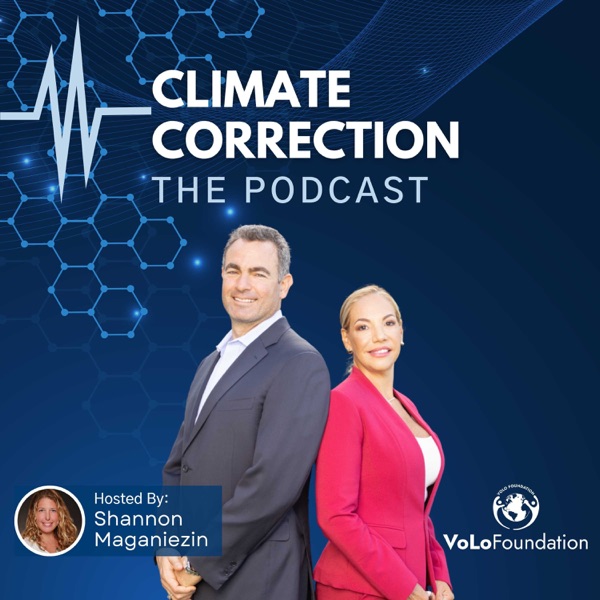
Looking for our Spanish Podcast? Listen here: https://volofoundation.org/es/climate-correction-podcast/ David S. Vogel is a world-renowned data scientist and predictive modeler. He has won the prestigious KDD Cup several times and the Heritage Health Prize in 2013. His wife, Thais Lopez Vogel, an attorney, manages VoLo Foundation. Together, they are raising six kids. David's research led them to become aware of the devastating economic impact of carbon pollution. They knew they had to do something for their kids and future generations. VoLo Foundation exists to be the bridge between the science community and everyone else. The Foundation's work accelerates change and global impact by supporting science-based climate change solutions, enhancing education, and improving health. Climate Correction™ is the premier climate solutions event in the Southeast. The main stage event brings top minds in climate solutions to one stage. Now, their cutting-edge research and solutions-focused education are available for streaming all year long on VoLo's Climate Correction Podcast. Podcast Host Shannon Maganiezin leads VoLo Foundation's public-facing initiatives, working closely with the press, media, and strategic partners to amplify VoLo's mission and impact. Learn More https://volofoundation.org/climate-correction-podcast/
On the charts
Every published chart this podcast appears in, in the snapshot behind this page. Each one links to the chart it came off.
From the feed
The latest episodes published to this podcast’s own RSS feed. Titles and descriptions are the publisher’s.
Title : Food: The Ultimate Messenger In this episode, we're looking at a warming world through a lens you may not expect: your dinner plate. Our guest is Mike Hoffmann, who has spent his career helping people understand the impacts of carbon pollution through the foods we all love and need. Mike has written on the subject for outlets including The Hill, Fortune, Medium, and USA Today, and is the lead author of Our Changing Menu: Climate Change and the Foods We Love and Need , published by Cornell Press in 2021. He's also delivered a TEDx Talk, "Climate Change: It's Time to Raise Our Voices," and has given more than 150 related talks over the course of his career. Mike grew up on a one-cow dairy farm, served in the Marines during the Vietnam War, and went on to hold multiple leadership roles at Cornell's College of Agriculture and Life Sciences, where he now holds the title of Professor Emeritus. As he puts it, he intends to keep telling this story for as long as he can. The conversation opens with a snapshot of where things stand this fall with extreme weather, from wildfires and rising heat to the incoming El Niño, setting the stage for the deeper conversation about food. From there, Mike explains why he chose food as his entry point into this story rather than energy, sea level rise, o r extreme weather, and what makes it such a powerful and relatable way to reach people. He and host Shannon Maganiezin dig into how food itself is changing due to excess greenhouse gases ( GHG s ) , including troubling shifts in nutritional quality, the vitamins, proteins, and essential minerals that o ur diets depend on. Mike also shares a story about pizza, one he's found to be a surprisingly effective way to illustrate the far-reaching effects of a warming climate on the foods we love, drawn from the many presentations he's given on the topic. The discussion turns to his teaching at Cornell, where he leads a course called Using the Power of Food to Confront Climate Change , and what he's learned from working with the next generation on these issues. The episode closes on a call to action: Mike's belief that food is the ultimate messenger for telling this story, and the potential for real change if more people start talking about and sharing it, including producers, food media, consumer groups, and chefs. Tune in for a conversation that reframes carbon and other GHG pollution as something we all encounter three times a day and hear why one of the field's most experienced voices believes food may be our best tool yet for getting people to listen.
For every dollar the world invests in protecting nature, it spends thirty dollars destroying it. In this episode of the Climate Correction Podcast, host Shannon Maganiezin sits down with two of the authors behind the United Nations Environment Programme's (UNEP) State of Finance for Nature 2026 report to unpack what that staggering imbalance means for biodiversity, climate resilience, economic stability, and the future of finance itself. The numbers are sobering: in 2023 alone, roughly $7.3 trillion flowed into nature-negative activities, while just $220 billion supported nature-based solutions. Shannon is joined by Ivo Mulder, who leads UNEP's Climate Finance Unit and has helped unlock more than one billion dollars for sustainable agriculture, forestry, and restoration across developing countries. Ivo is one of the report creators. Ivo co-founded the Natural Capital Finance Alliance and the ENCORE tool, laying the groundwork for the Taskforce on Nature-related Financial Disclosures. Also joining the conversation is Michael König- Sykorova , Senior Project Manager at the Frankfurt School of Finance and Management and a leading expert in climate and nature finance data. Michael contributed to the Intergovernmental Panel on Climate Change's (IPCC) Sixth Assessment Report and led key analytical components of the State of Finance for Nature 2026 report. He i was lead author on this report and i s also a founding member of the Climate Finance and Sustainability Centre at Makerere University in Uganda. The conversation begins with Michael walking listeners through the scope and methodology of the report, including how the team defined and measured nature-negative finance across sectors, what qualifies as nature-based solutions finance, and how the two sides of the equation can be meaningfully compared. He shares what the data reveals about trends over time, whether progress is moving fast enough, and how the report's findings were validated through rigorous peer review. Ivo then steps back from the numbers to explore what these findings signal about the trajectory of global finance. He examines whether nature-negative investments are starting to slow or still expanding, where the biggest synergies are emerging across the three Rio Conventions on climate, biodiversity, and land degradation, and what governments, public finance institutions, private investors, and financial institutions each need to take from this report. The discussion closes with a look at the financial instruments and emerging biodiversity finance mechanisms showing the most promise for scaling investment into nature-based solutions. The takeaway is clear: the challenge isn't only how much we invest in protecting nature. It's where the rest of our money is going. Redirecting even a fraction of nature-negative flows could fundamentally reshape outcomes for climate, biodiversity, and global resilience. Resources / Links: UNEP – State of Finance for Nature 2026 (SFN 2026) and State of Finance for Nature 2023 (SFN 2023). Interconnectivity between climate, nature & climate risk (including impacts on GDP) IMF 2024 'Embedded in Nature' SwissRe 2021 – The economics of climate change: No action not an option Klusak et al, 2021 – Rising temperatures, falling ratings: the Effect of Climate Change on Sovereign Creditworthiness. Bennett School, Cambridge University Nature Finance, 2022 . Loss of nature is pushing nations towards sovereign credit downgrade and 'bankruptcy' Some catalytic finance solutions UNEP has set up and/or supported: UNEP : Why use catalytic finance to tackle tropical deforestation . About the &Green Fund + &Green: Financing sustainable palm oil in Indonesia Restoration Seed Capital Facility (RSCF) : video about its structure & video about its support lines AGRI3 Fund : a guarantee fund to stimulate forest, food & famers in emerging markets. Responsible Commodities Facility : financing responsible soy in Brazil
Florida agriculture quietly underpins everyday life in the Sunshine State, shaping everything from grocery prices and water quality to how communities bounce back after a hurricane. In this episode of the Climate Correction Podcast, host Shannon Maganiezin sits down with the team behind the newly released report , Voices of Florida Farmers: Building a Circular Bioeconomy , to explore how the state's farmers, ranchers, foresters, and aquaculturists are producing more with less land, water, and resources , while keeping food affordable and local economies strong. Leading the conversation is Courtney Girgis, the report's lead author, who grew up on a beef cattle, corn, and soybean farm in northern Missouri and now writes about agriculture from her family's small - acreage farm in Oklahoma. Courtney unpacks what a "circular bioeconomy" means in practice: an approach to agriculture that moves away from the linear "make, use, waste" model and instead keeps nutrients, water, and materials cycling, starting with healthy soil and extending outward into partnerships across the food system. Joining her are three of the Florida producers featured in the report. Beaver Yoder, a Florida Panhandle cattle rancher, partners with neighboring crop farmers to graze his herd on cover crops between cash crop seasons, a practice that builds soil health, fertilizes fields, and creates a new revenue stream for everyone involved. Lanette Sobel, founder of Fertile Earth Worm Farm (now the largest commercial composting operation in South Florida), works across a wide network of distributors, food pantries, and farms to make sure food scraps go to their "highest and best use," feeding people first, then animals, then soil. Timothy Solano, a second-generation clam farmer and operations manager at Cedar Key Aqua culture Farms , raises clams that filter pollutants like nitrogen and carbon from Florida's coastal waters before being harvested for sale at Costco and Whole Foods. The clams' crushed shells go on to repair roads and surface local school parking lots. Together, the conversation moves from real-world examples of circularity on the farm and on the water, to the regulatory and economic obstacles that keep these practices from being more widespread, and to what listeners can do to support a more circular Florida. Along the way, the guests speak candidly about the realities of thin margins, volatile markets, red tide, local ordinances, and the long arc of agriculture's shift from generalist to specialist, and back again. Voices of Florida Farmers: Building a Circular Bioeconomy was made possible through a grant from VoLo Foundation. The full report is a substantive look at the 44,400 farms and ranches that make up Florida agriculture, the pressures they face from rapid development and a changing climate, and the policy, research, and market support that would allow them to go further in cycling nutrients, rebuilding soil, sequestering carbon, and strengthening local economies. The link is in the show notes. Florida agriculture deserves your attention, and this report is a great place to start. Links: Read the Report: bit.ly/Florida-Voices-Circular-Bioeconomy Florida Smart Agriculture's work: www.solutionsfromtheland.org/flcsa Connect with Beaver Yoder: https://www.thisfarmcares.org/steveyoder Connect with Lanette Sobel: https://fertileearth.net/ Connect with Timothy Solano: https://www.instagram.com/clamcaptain/ Learn more about "Fresh from Florida": https://followfreshfromflorida.com/
Season 6 | Episode 135 Episode Title: When the Grid Goes Down: Decarbonizing Disaster Response When disaster strikes, most people see only devastation. Will Heegaard, founding director of The Footprint Project, sees an opportunity. His perspective was shaped by his work as a paramedic deploying solar refrigeration during the Ebola outbreak in West Africa with International Medical Corps, and by hands-on disaster relief with Team Rubicon across Louisiana, Minnesota, and Puerto Rico, Will developed a guiding philosophy rooted in working with disruption rather than against it. In this episode, he brings that lens to one critical intersection in climate action today: what happens when the communities most battered by climate-driven disasters are also the ones least equipped to rebuild. The Footprint Project was founded on a simple but radical premise: every disaster is a rebuilding moment, and every rebuilding moment is a decarbonization opportunity. Will walks us through the organization's mission to deploy clean energy and sustainable technologies directly into disaster response and reconstruction, turning cascading climate emergencies into entry points for long-term resilience. Rather than treating green infrastructure as a luxury reserved for later-stage recovery, The Footprint Project embeds it on the front lines from day one. Central to that model is the Beehive Microgrid, a portable, scalable clean energy system designed to power frontline community organizations when the grid fails. Will explains how these microgrids work, who they serve, and why putting energy sovereignty in the hands of local organizations is as important as the technology itself. He also shares on-the-ground examples from recent projects along the Gulf Coast, in Appalachia, the Caribbean, and California that show how this approach works in real communities. With the 2026 hurricane season here, Will closes with something rare in climate conversations: concrete, actionable guidance. From individual households to community coalitions, he outlines what meaningful preparedness looks like before the next storm makes landfall.
Hospitals exist to protect human health, yet they sit squarely on the front lines of climate risk. They are among the most energy-intensive buildings in our economy, operating 24/7 with zero tolerance for failure. The healthcare sector itself is a significant contributor to greenhouse gas emissions. A difficult paradox emerges : how do you care for people without contributing to the very conditions that make them sick ? In this episode of the Climate Correction Podcast, we explore how one childr en's hospi tal is tackling that challenge head-on, turning sustainability into a core element of clinical and operational strategy. Our guest is Mike Solak, Executive Director of Design, Construction, and Infrastructure at Nicklaus Children's Hospital. With decades of experience on both sides of the healthcare construction equation , as a hospital owner-operator and as a consultant on large capital projects, Mike brings a rare, dual perspective on what it takes to move an institution from sustainability intentions to measurable impact. We dig into why hospitals consume more than 2.5 times the energy per square foot of the average commercial building, and what is really driving that footprint. Mike walks through the first concrete decisions and investments that put Nicklaus Children's on the map as a national sustainability leader, and which data points proved most persuasive in winning over finance teams, facilities staff, and executive leadership. The conversation digs into the cost of sustainability improvements , especially when viewed through the lens of power disruptions, fuel price volatility, extreme heat, and flooding. Mike makes the case that the investment in energy efficiency and resilience planning lower s operating costs over time , reduce s risk exposure, and strengthen s reliability, while also directly translating into better patient safety and continuity of care for one of healthcare's most vulnerable populations. This episode offers practical guidance for hospital leaders who want to act but feel overwhelmed, including the first one or two steps that can be taken over the next year to deliver both financial and climate returns. This is a solutions -focused look at how hospitals can protect their patients, their bottom line, and the communities they serve.
Season 6, Episode: 133 Peatlands 101 - Florida's Hidden Climate Superpower In this episode, we're joined by two leading scientists from The Nature Conservancy to explore one of the most under-recognized natural climate solutions on the planet: peatlands. Catherine Fitzgerald, global lead for peatlands at The Nature Conservancy, brings a wealth of expertise in unlocking equitable and durable opportunities to conserve and restore peatlands worldwide. With a Master of Environmental Management from Duke University and years of experience as a professional wetland scientist, Catherine leads TNC's global work to protect these ecosystems for climate, water, and people. Morgan Higman, climate strategy director for The Nature Conservancy in Florida, focuses on accelerating clean energy and natural climate solutions across the state. Her doctoral research in public administration and policy at Florida State University's Askew School was supported by the National Science Foundation, the U.S. Department of Energy and the Environmental Research and Education Foundation. Peatlands are ancient wetlands made up of layers of partially decayed plant matter that have accumulated over thousands of years. Bogs, swamps, and fens all fall into this category. Though they cover just 3% of the planet, peatlands store one-third of the world's soil carbon and 10% of its freshwater. That's more carbon than all the world's forests combined. Healthy peatlands filter water, buffer communities against floods and drought, reduce wildfire risk, and support unique plant and animal species. When drained or disturbed, they flip from carbon sinks to carbon sources, releasing stored greenhouse gases and compounding the very climate risks they once helped prevent. Catherine and Morgan walk us through why Florida is a standout state for peatland restoration. A 2025 TNC spatial analysis identified Florida as having some of the greatest restoration potential in the Southeast, with the St. Johns River Water Management District emerging as a priority area. With support from VoLo Foundation, TNC is conducting a deep-dive assessment of high-opportunity sites across the region, bringing together water management districts, local landowners, scientists, and community partners to identify lighthouse projects that can catalyze action at scale. This work is part of TNC's broader global peatland strategy, with active initiatives across more than a dozen countries and states, including North Carolina, Minnesota, Colombia, and Mongolia. In North Carolina alone, TNC was recently awarded a $200 million EPA grant to restore and protect approximately 43,000 acres of peatlands. Florida's program builds directly on those decades of groundwork, with the goal of creating a replicable framework for the entire Southeast. Learn more: The Nature Conservancy — Peatlands: https://www.nature.org/en-us/what-we-do/our-priorities/tackle-climate-change/climate-change-stories/peatlands-natural-climate-solutions/ Video 1: https://m.youtube.com/watch?v=lK9XVXdwTH8 Video 2: https://www.youtube.com/watch?v=V10SXNNcbuU Study on protected peatlands and where they are: The Society for Conservation Biology TNC Naturebase (Natural Climate Solutions Tool): https://naturebase.org VoLo Foundation: https://www.volofoundation.org
In this special episode of Climate Correction Podcast, we celebrate the power of student-led climate innovation and announce the 2026 VoLo VISTA Award Winners. The VISTA Award, created by VoLo Foundation, recognizes students who exemplify leadership, vision, innovation, sustainability, technology, and action-oriented climate solutions. This year's winning project does all of that and more. We are joined by an extraordinary research team from the University of Miami Department of Civil and Architectural Engineering. The team includes Jasmine Rodriguez, a first-year PhD student; Farzad Rezaeicherati, a second-year PhD candidate; Sevil Ozsut, also a second-year PhD candidate; and their advising professor, Dr. Ali G. Together, they are advancing a breakthrough solution at the intersection of materials science, climate mitigation, and Florida's natural ecosystems. Their winning project is called Functionalization and Pre-Carbonation of Florida-Native Algae Biochar for Carbon Negative Cementitious Composites. It reimagines one of the most carbon-intensive materials on Earth: concrete. Cement production alone accounts for roughly eight percent of global CO₂ emissions. This team is tackling that challenge head-on by replacing a significant portion of cement with algae-derived biochar sourced from Florida-grown algae. In simple terms, the team transforms algae into a charcoal-like material that naturally traps carbon. They then chemically treat, or "functionalize," this biochar so it bonds effectively with concrete, overcoming a major limitation seen in past biochar-concrete experiments where strength and durability were compromised. Their innovation doesn't just maintain structural performance; it enhances it. Even more importantly, the process permanently stores CO₂ inside the concrete itself, turning a traditionally high-emissions material into a carbon-storing one. During the episode, Jasmine walks us through the science behind the process, the climate and construction challenges they set out to solve, and how this novel idea emerged. The team explains how they measure success through rigorous lab testing at the University of Miami, evaluating strength, durability, workability, and long-term carbon storage. We also explore what large-scale, real-world application could look like, from infrastructure and buildings to broader adoption within the construction industry. The conversation turns toward what's next: scaling the research, refining the material, and moving closer to real-world deployment. The team shares how the $25,000 VISTA Award grant will directly support advanced testing, materials optimization, and the next phase of development needed to bring this solution closer to market. Then comes the moment no one saw coming. The interview was presented as a screening with "finalists." At the end, host Shannon Maganiezin reveals the truth. This team isn't just in the running; they are the 2026 VoLo VISTA Award Winners. The episode closes with a raw, joyful reaction that captures the heart of climate innovation, young leaders doing serious science, rooted in place, and driven by the belief that better solutions are possible. This episode is a reminder that the future of climate solutions is already being built in university labs, by students who refuse to accept the status quo, and by ideas bold enough to turn algae into carbon-negative concrete.
February 2026 | Season 6, Episode 131 The Road after COP30 Starts in the Ocean In this episode of the Climate Correction Podcast, we explore why the future of climate action, food security, and biodiversity is inseparable from the ocean. The conversation centers on the growing recognition that fish, seaweed, and other aquatic foods are not just economic resources, but climate-smart nutrition solutions with an outsized role in building resilient food systems. Our guest is Karly Kelso, Acting Senior Director of Global Ocean Strategies at the Environmental Defense Fund. Karly sits at the intersection of food, climate, and ocean policy, leading EDF's global aquatic foods work and serving as Secretariat for the Aquatic Blue Foods Coalition. She works closely with governments, civil society, the private sector, and UN climate processes to ensure aquatic foods are embedded in global climate and food policy conversations. With more than fifteen years at EDF, her work has helped shape sustainable fisheries management and ocean resilience efforts worldwide, including oversight of EDF's fisheries initiatives in India. The conversation reflects on a rare moment of global alignment in 2025, when major international convenings on ocean, climate, and biodiversity finally converged around a shared narrative. For the first time, aquatic foods emerged not as a side topic, but as a central solution linking climate mitigation, human nutrition, livelihoods, and ecosystem health. Karly explains why this alignment felt different, and how it opened the door for more integrated, systems-level thinking. We also dig into the growing momentum to recognize "blue foods" as a climate solution. Fish and seaweed provide high-quality protein and essential micronutrients with a significantly smaller climate footprint than most land-based foods. Yet, as countries look to scale aquatic foods in future food systems, Karly emphasizes that equity must remain core, ensuring coastal communities, small-scale fishers, and Indigenous Peoples benefit, rather than repeating patterns of industrial exploitation. A major focus of the episode is the deep ocean, particularly mesopelagic fish, a group of midwater species that most people have never heard of, yet which play a critical role in moving carbon from the ocean surface to the deep sea and supporting marine food webs. Karly explains why these species are essential to climate regulation and why growing interest in harvesting them for fishmeal and fish oil raises serious red flags. Drawing lessons from past ocean exploitation, she outlines why scientists and organizations like EDF are urging caution. Despite major data gaps about the deep ocean, EDF and partners successfully advanced IUCN Motion 035 to protect mesopelagic ecosystem integrity. Karly walks us through why acting now, before unregulated fishing begins, is so important, and how precautionary protections can safeguard climate benefits while science catches up. We close with a grounded discussion on agency and accountability: what consumers and voters can actually do to protect the ocean, support science-based decision-making, and push for food systems that are both climate-smart and fair. This episode makes one thing clear: The road after COP30 doesn't just run through land and policy halls. It starts in the ocean. Learn more about Blue Foods: https://aquaticbluefood.org/ https://fisherysolutionscenter.edf.org/resources/aquatic-blue-food-coalition
In this episode of the Climate Correction™ Podcast, we're joined by Leneita Fix, founding leader and executive director of The Reef Institute, one of Florida and the Caribbean's most important hubs for coral rescue, restoration, and ocean literacy. Leneita shares how The Reef Institute's groundbreaking Rescue to Reef model is transforming the future of coral conservation through a full-spectrum approach that includes emergency rescues, long-term holding and biobanking, indoor coral spawning, juvenile rearing, and strategic outplanting back into the wild. With more than 8,000 corals from 28 Caribbean species under their care, the organization is safeguarding genetic diversity while supporting scalable, community-driven restoration efforts across the region. Leneita breaks down the surprising biology and physiology of corals. Most people don't know that corals are animals whose "gut health" exists on the outside of their bodies. She explains why the biodiversity of a reef is inseparable from the survival of both stony reef-building corals and soft corals. She walks us through the world of coral reproduction, including IVF and land-based spawning, and shares what it takes to raise juvenile corals strong enough for outplanting in a warming , increasingly acidic ocean. Together, we explore why coral reefs are essential not only for marine ecosystems but for human life. As carbon pollution overwhelms the ocean's ability to absorb it, reefs face compounding threats, from heat-induced bleaching to stronger wave energy that breaks down weakened structures. Leneita connects the dots between reef decline, coastal vulnerability, ocean oxygen production, and the health of life on land, reminding us that the ocean's stability is inseparable from our own. This inspiring conversation highlights the urgent need for bold, collaborative conservation and the hope found in community-centered stewardship. Leneita's leadership illuminates how science, education, and local partnerships can rebuild resilience from the seafloor up . Tune in for a powerful look at the interconnectedness of everything in the ocean and why restoring coral reefs is an essential step toward a livable future for all. Links from the Show: Connect with our Guest: https://www.reefinstitute.org/ Watch the Peanut Island Mini-Documentary by Walker Wildlife: https://www.youtube.com/watch?v=NIZLW0oK-h8 The Reef Institute Facility Update (2026): https://www.youtube.com/watch?v=QvPpecrRl5I&t=10s The Coral Tipping Point (Article): https://www.theguardian.com/environment/2025/oct/13/coral-reefs-ice-sheets-amazon-rainforest-tipping-point-global-heating-scientists-report Functional Extinction of Acropora Species (Research Paper): https://www.science.org/doi/abs/10.1126/science.adx7825
In this special holiday episode of Climate Correction Podcast , we welcome Dr. Pablo Ribeiro Dias, co-founder and chief technology officer at SOLARCYCLE , a pioneering, tech-driven recycling company producing sustainable, domestic materials at scale for the solar industry. Dr. Dias is a world-renowned researcher in solar PV module and e-waste recycling technologies . He leads innovation in high-value, low-cost recycling processes that are shaping the future of renewable energy. With dual PhDs from UFRGS (Brazil) and Macquarie University (Australia), and a master's in photovoltaics recycling, Dr. Dias has authored seminal papers, book chapters, and multiple patents that advance the field of photovoltaic recycling. His research and thought leadership have been featured in The Guardian, Cosmos, PV Tech and Solar Power World. In 2023, Business Insider named him among its Climate Action 30 , which recognizes thirty global leaders building real climate solutions. As we close the year, Dr. Dias shares insights from his new book, Climate Changed: The Science of Sustainability and How Each of Us Can Do Our Part . The book is a perfect stocking stuffer for the climate-conscious reader. He invites us to reimagine sustainability through systems thinking, circular design and a regenerative mindset that scales solutions without sacrificing justice or humanity. Key Points: Climate change isn't a mystery . I t's a system s problem . We can redesign our economic, energy, and material systems to be regenerative rather than extractive. Sustainability = Systems + Scale , leaving nobody out of the equation . True sustainability ensures scalability without exploitation. Circular economy ≠ recycling. It's about reimagining products and industries for repair, reuse, and reintegration. Individual action multiplies change. When people act collectively , through voting, investing, and innovating , the impact compounds. Hope is a discipline , not a mood . The future remains unwritten, and data-driven optimism fuels transformation. What does living sustainably in the 21st century really mean? It's about alignment across energy, agriculture, and materials to build a livable planet for all. Episode Links: pablodias.net SOLARCYCLE LinkedIn: https://www.linkedin.com/company/solarcycle-inc/
Show notes for this episode come from an article that has been republished with approval from the author, Carlos Roa. See the original article here . As billions of garments end up in landfills each year, Catherine Valdivieso's SwapCo app makes sustainable fashion simple by helping users "swipe, match and swap" clothes while curbing overconsumption this holiday season By Carlos Roa According to Earth.org , the fashion industry produces more than 100 billion garments each year, and an estimated 92 million tons of them end up in landfills. That is the equivalent of a garbage truck full of clothes dumped every second. The same source states that if nothing changes, that figure could rise to 134 million tons by the end of the decade, while the industry's carbon emissions are projected to increase by 50 percent by 2030. To help reverse that trend, Catherine Valdivieso, CEO and founder of SwapCo , created an app designed to make sustainable fashion social, local, and easy. SwapCo works like a "dating app for fashion": users upload photos of their clothes, swipe to find matches, and connect with others to swap items in person. No packaging, no shipping, no waste. With record levels of clothing waste worldwide, Valdivieso's work comes at a crucial time. As the holiday season approaches, her message is simple: slow down consumption and rediscover joy in conscious fashion choices. "I wanted to show my kids that small actions matter," she said. Catherine, what gave you the idea to create SwapCo ? It began as a personal wake-up call. I watched The True Cost , a documentary about the dark side of fast fashion, and I was shocked. It made me question my own habits. I tried renting clothes, but everything came wrapped in plastic and shipped across the country. It just didn't feel sustainable. I thought, what if there was a local, people-driven alternative? That's how SwapCo was born. You've mentioned that your children inspired you to pursue this mission. Absolutely . I think about the world they'll inherit, one where climate challenges and waste are daily realities. I wanted to set an example. SwapCo is my way of showing them that small, individual actions can create meaningful change when multiplied by millions. Every year, 92 million tons of textile waste are generated worldwide. In the U.S. alone, the average consumer discards 81.5 pounds of clothing, about 2,150 pieces per second nationwide. When you hear numbers like that, what goes through your mind? It's staggering. But it also gives me hope. If we can extend the life of garments through systems like SwapCo , we can dramatically reduce that mountain of waste. Clothes shouldn't be disposable; they should tell stories and live many lives. Why do people find it so easy to throw clothes away? Because fast fashion made it normal. We're used to buying cheap items, wearing them once or twice, and tossing them. Social media reinforces that; people don't want to repeat outfits. SwapCo flips that script. Instead of discarding clothes, you can give them a second life and get something "new to you" in return. It's fun, social, and sustainable. For those who haven't tried it, how exactly does SwapCo work? Imagine if Poshmark and Tinder had a baby. You upload photos of your clothes, swipe right or left to find a match, and when both people agree, you chat to arrange a local meet-up. There's no shipping, which means fewer emissions and more community interaction. "We're changing how people see secondhand fashion" Some people still see used clothes as old or low-quality. How are you changing that mindset? By reframing the experience. When you open SwapCo , you see beautiful, trendy items , treasures waiting for new stories. It's about style, not sacrifice. And because you're connecting with real people, swapping becomes social and meaningful. We've seen incredible stories. One student swapped an outfit for her first job interview, and she got the job. Others have made new friends at swap events. Some users even suggested expanding the app beyond fashion to books or sports gear. That sense of community is what drives me. Beyond swapping, what sustainable habits do you personally follow? I try to buy less, choose natural fabrics like cotton or linen, and mend or upcycle what I already own. I also share clothes with friends . The key is progress, not perfection. Small changes add up when we all do them. "During the holidays, give experiences, not just things" The holidays are approaching, a time when consumption spikes. How can people make it more sustainable? It's all about intentionality. Instead of buying new, consider giving experiences, like a trip or a meal together, or secondhand gifts that tell a story. A pre-loved item can carry more meaning than something new from a store. And what would you say to those who still want to enjoy fashion and gift-giving while being mindful? Focus on creativity. Swap an outfit for your holiday party. Gift something with a story. Conscious fashion isn't about deprivation; it's about finding joy in choices that are better for people and the planet.
What if clean energy wasn't just about powering our homes, but about powering opportunity ? My guest today believes renewable energy can be the bridge to economic justice, workforce empowerment, and a more inclusive future. On this episode of the Climate Correction Podcast , I'm joined by Erica Mackie, P.E. , co-founder and Co-CEO of GRID Alternatives , the nonprofit that has turned solar into a tool for community transformation . From day one, Erica has led GRID's growth into a national force—bringing renewable energy technology and job training directly to underserved communities. Along the way, she's collected some of the most prestigious awards in environmental leadership, but her true focus is on impact: lowering energy bills, cutting carbon emissions, and opening doors to life-changing careers. We'll explore: Why clean energy and gender equity are more connected than you think. How GRID is doubling down on equity and inclusion even as those programs are being rolled back nationally. The ways workforce training in renewable energy is creating wealth-building opportunities that ripple through entire communities. Real stories of people whose lives have been changed when access to solar power and job training collided. The data that proves GRID's impact—from gigawatts installed to jobs created. And what's next: from localized solutions like transportation electrification to the bold plans GRID has for scaling across the country. If you've ever wondered how renewable energy can move beyond rooftop panels and into the heart of social and economic justice—this conversation will open your eyes.
In this episode of the Climate Correction ™ Podcast, we o pen the door to a conversation typically held behind closed doors. I sit down with someone who ha s spent decades in the rooms where financial decisions are made and where the impact of climate change is becoming impossible to ignore. Our guest is Steven M. Rothstein, the founding m anaging d irector of the Ceres Accelerator for Sustainable Capital Markets. Steven brings more than 40 years of leadership across public and private sectors , with experience spanning local to global levels of government, nonprofit boards, and philanthropic coalitions. His work today focuses on transforming the financial systems that underpin our economy to address the climate crisis head-on. In this candid recording, Steven and I discuss the mounting pressures facing the insurance industry and the communities already paying the price for climate inaction . He shares insight on the bold opportunities available if capital is moved in the right direction. We start with the hard truth: in 2024 alone, there were 27 billion -dollar weather disasters in the U.S., causing more than $182 billion in damages. And yet, only 29% of the largest insurers have disclosed measurable climate targets. That gap between awareness and accountability costs lives, livelihoods, and local economies. One in 13 homeowners in the U.S. is now uninsured . An estimated $1.6 trillion in assets are exposed due to insurance gaps. Steven outlines a path forward. From Ceres' 10-point plan for insurers to shift from reactive claims-paying to proactive risk prevention to the $8 trillion investment potential insurers hold to fund climate solutions, the message is clear: T he i nsurance industry has the power to shape our future. We also explore how AI, climate scenario analysis and forward-looking risk modeling can give insurers a competitive edge. And we ask: W here does the government come in ? Steven makes the case for a federal climate risk reinsurance program , stating that if private insurers pull out of high-risk areas, w e need public protections designed to endure, not disappear with every election cycle. This is a conversation for homeowners, policymakers , and every person who's ever paid an insurance premium. It's about rethinking the system and empowering it to build resilience, not just reacting to ruin. 🔗 Explore Ceres' insurance research and resources at ceres.org/accelerator/insurance
In this episode of the Climate Correction Podcast, we're joined by Lewis Pugh , the UN Patron of the Oceans, endurance swimmer, and founder of the Lewis Pugh Foundation . He joins us for an inspiring conversation about courage, the climate, and the power of the human spirit. Lewis is known for his record-setting swims in the world's most extreme environments , from the North Pole to Antarctica and the icy waters near Mount Everest. Through his daring expeditions, he has brought global attention to the urgent need for ocean conservation, helping secure protection for more than 3.5 million square kilometers of marine habitat. Recorded just after his highly anticipated 2025 JAWS 50th Anniversary Swim off the coast of Martha's Vineyard, this episode captures Lewis in a moment of reflection and deep motivation . He shares how he became both a swimmer and an advocate, the physical and emotional toll of long-distance swims in fragile ocean ecosystems, and what this latest mission means to him personally and for world leaders . We explore the shifting state of our oceans, what he's learned from swimming alongside nature's most powerful predators, and how he mentally prepares for uncertainty and danger in open water. This episode isn't just about adventure . I t's about action. Lewis reminds us that ocean health is human health, and we all have a role to play in protecting the blue heart of our planet. 🔗 Learn more at lewispughfo u ndation.org and get involved in the fight for the future of our oceans.
In this heartfelt and inspiring episode of the Climate Correction Podcast , we're joined by award-winning filmmaker Ashley Stokes, whose work stands at the intersection of storytelling, environmental consciousness, and emotional honesty. Ashley recently completed G ood Natured , a powerful and personal documentary that invites viewers into her journey to understand the state of our plane t and to find beauty, connection, and courage amid the uncertainty. Introduced to us by our friends at WEDU PBS in Tampa Bay, Ashley brings a fresh and deeply human perspective to the climate conversation. Through intimate interviews with conservationists, innovators, and everyday environmental hero es, Good Natured shows us how climate action d oesn't come in one shape or size. In fact, Ashley emphasizes the idea that the diversity of climate solutions is not only natu ral , i t's essential. Ashley shares how a quote from environmental activist and author Joanna Macy became the heartbeat of the film and the inspiration behind her journey: "When we face the darkness of our time, openly and together, we tap deep reserves of strength. The gateway of despair opens to belonging. We think despair condemns us to isolation because it seems so taboo in our culture. But as we find, again and again , what despair reveals is the depth of our caring . We hurt because we care. We are liberated because at the heart of our despair is our love for the world and our love for life itself." This perspective allows emotional honesty to guide action and is central to Ashley's direction . Rather than bypass the heaviness of climate grief, she invites us to feel it together. It's in our shared vulnerability that we reconnect to ourselves, to one another, and to the Earth. Throughout the conversation, Ashley reflects on the healing power of community, the wisdom of nature, and the importance of reconnecting with both in our search for meaning and direction. Good Natured serves as a reminder that fear alone doesn't shape the future; creativity, love, and collective resilience do. Whether you're deeply involved in climate action or just starting to explore your role, Ashley's insights will leave you encouraged, grounded, and more connected to the story we all share. 🎥 Watch Good Natured now at wedu.org/goodnatured 📊 Discussed: Pew Research on Americans' emotional responses to climate change 🌿 Explored: Emotional resilience, nature as teacher, diverse pathways to climate action
In this special episode of the Climate Correction Podcast , host Shannon Maganiezin welcomes Thais Lopez Vogel, co-founder of VoLo Foundation, and TV host Zay Harding to celebrate the launch of The Visioneers with Zay Harding , now airing on CBS WKND and CBS.com. This groundbreaking new show is produced by Hearst Media Production Group in exclusive partnership with VoLo Foundation. They dive into the inspiration behind the show, which spotlights extraordinary individuals and communities leading the way toward a more sustainable future. Thais and Zay share how powerful storytelling can spark real-world change , and why now is the perfect moment to amplify innovation, resilience, and hope. Highlights from The Visioneers include: Learn how oysters filter murky water in real time , and why it matters Meet the 12-year-old prodigy revolutionizing tornado monitoring and alerts Explor e the sunny science behind surfing Learn how a European city committed to clean energy is now profiting from it
Tune in to Climate Correction™ - Changing Hearts and Minds with The CLEO Institute, an engaging panel discussion recorded live and featuring esteemed climate advocates Yoca Arditi-Rocha, Nicole Gazo, and Ellen Siegel, moderated by Shannon Maganiezin. This session explores effective strategies for transforming public perception and fostering community engagement in climate action. Yoca Arditi-Rocha, Executive Director of The CLEO Institute, shares her experience in climate advocacy and education, emphasizing how grassroots movements are crucial for driving policy change. Nicole Gazo, a passionate youth activist, offers valuable insights into mobilizing younger generations and underscores the role of education in raising climate awareness. Ellen Siegel, recognized for her work in community resilience, discusses practical approaches to building sustainable and adaptive communities. Shannon Maganiezin expertly guides the conversation, covering both the challenges and opportunities in shifting public attitudes toward climate issues. This episode delivers actionable insights and inspiring stories that showcase the power of informed, united communities in creating meaningful environmental change. Tune in to learn from the experiences and lessons shared by these dynamic leaders in the climate space.
Talking Climate Across the Aisle with Kathleen Biggins, Founder of C-Change Conversations In this episode, we're joined by Kathleen Biggins, founder and president of C-Change Conversations , a nonprofit committed to fostering non-partisan, science-based conversations about climate change. Kathleen shares her journey from journalism and healthcare to climate communication and how she and her bipartisan team developed the acclaimed C-Change Primer —an accessible, apolitical introduction to climate science that's been presented to over 20,000 people across 32 states. We explore why bridging political divides is essential for meaningful climate action, how to talk about climate change around the kitchen table, and ways to engage skeptics using shared values like health, safety, and economic well-being. Kathleen also shares personal stories and examples from the Primer series that inspire understanding and action—even in the most polarized spaces. With a 90%+ consensus rate across audiences, C-Change proves that inclusive, solutions-oriented conversations can move the needle. This episode is a must-listen for anyone ready to talk climate without the conflict.
In this episode of the Climate Correction Podcast , we welcome back Chris Castro, Founding Director, Executive Vice President, and Chief Sustainability Officer at Climate First Bank . Chris has spent his career advancing sustainability, clean energy, and climate action at every level—from local government to federal leadership and now in the private sector. Joining us just days after leaving his post as Chief of Staff for the Office of State and Community Energy Programs (SCEP) at the U.S. Department of Energy, Chris reflects on his work managing a $16 billion portfolio of grants and technical assistance to help states, tribes, and communities transition to a 100% carbon-free future. We revisit his first Climate Correction appearance and examine how the climate landscape has evolved since then. Chris offers a behind-the-scenes look at his role in the Biden-Harris Administration, the implementation of the Inflation Reduction Act (IRA), and its long-term implications. He discusses the risks and opportunities for climate policy, sustainable business, and investment under new leadership as political tides shift. Chris highlights the private sector's crucial role in driving climate solutions beyond government action. Finally, he shares his vision for the future and how listeners can stay engaged in the fight against climate change. Don't miss this timely and insightful conversation!
In this episode of the Climate Correction Podcast , we're excited to welcome Tonmoy Ghosh, a Master's student in the Department of Civil Engineering at Embry-Riddle Aeronautical University in Daytona Beach, Florida. Tonmoy's journey into environmental engineering began with a deep passion for improving the quality of our environment and leaving a better planet for future generations. Tonmoy shares his inspiration for pursuing environmental research, particularly his focus on identifying environmental challenges and exploring sustainable engineering solutions. His dedication has led him to develop an innovative project titled "Use of Low-Cost Sensors for Addressing Environmental Justice." This project measures air pollutants using affordable sensors to promote equity and accessibility in environmental monitoring—breaking barriers for underserved communities. As the winner of VoLo Foundation's prestigious VISTA Award , Tonmoy is being recognized for his leadership in Vision, Innovation, Sustainability, Technology, and Action in climate solutions. His University will receive a $10,000 grant to advance his project and further its impact in the fight against climate change. Tune in to hear Tonmoy discuss: • How his project was inspired and developed. • The critical environmental challenges it addresses. • Its potential impact on communities and the environment. • How he plans to use the $10,000 VISTA grant to further his mission. Tonmoy will be presenting on the main stage at the 2025 Climate Correction Conference, hosted at The Celeste Hotel in Orlando, FL, on March 12-13, 2025. Be sure to grab your tickets at volofoundation.org/https://volofoundation.org/climate-correction/ and join us for this inspiring event. Episode Highlights: • Tonmoy's vision for a more equitable approach to monitoring and measuring environmental pollution. • Why low-cost sensors are game-changers for addressing environmental justice. • The importance of fostering innovation and sustainability in the fight against climate change. Don't miss this insightful conversation about actionable solutions to climate issues and the inspiring story of one individual making a significant impact!
Ranking source
Apple Podcasts rankings via the Mato Topic Intelligence Platform.
Observed September 20, 2026.
Apple and Apple Podcasts are trademarks of Apple Inc., registered in the U.S. and other countries.
Pairs with
Bring this source into Mato to read its transferable patterns, then turn them into an original show for your own audience.