
Live Interview
And why does that matter?
This is how a Mato agent talks. Take the other seat: answer a few and feel it follow the thread.
Podcast charts
Published by Bodhicitta Sangha | Heart of Enlightenment Institute
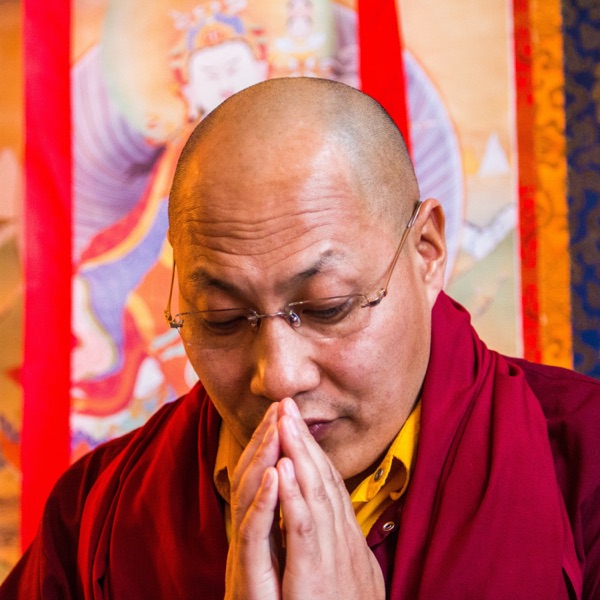
This is BodhiHeart, a podcast with in depth teachings on meditation and Tibetan Buddhism with Khenpo Sherab Sangpo. Our teacher, Khenpo Sherab Sangpo, is a monk and professor in the Nyingma lineage of Tibetan Buddhism. He trained with some of the greatest meditation masters of Tibet, starting when he was seven years old. In addition to mastering many profound teachings of the Buddhist path, he spent several years meditating in solitary retreat. He travels the world teaching at monasteries in Tibet and Nepal, as well as at meditation centers in Asia and Europe. BodhiHeart is produced by Bodhicitta Sangha | Heart of Enlightenment Institute in Minneapolis.
On the charts
Every published chart this podcast appears in, in the snapshot behind this page. Each one links to the chart it came off.
From the feed
The latest episodes published to this podcast’s own RSS feed. Titles and descriptions are the publisher’s.
"To meditate on self-awareness, just be aware of your mind—without any opinions or beliefs. If you do that, your thoughts will naturally disappear. Just watch—be aware. Focus simply on what is there. If while meditating you recognize that you are following your thoughts, be aware of that. Let it go. If you don't follow your thoughts, you'll notice that your mind is calm and relaxed—then, be there. Don't look for something special. Just be aware of everything as it is. By doing that again and again, you'll be self-aware and discover your buddha nature—your inner peace. This is a very simple meditation, but I find it to be profound. And, if you're lucky, you'll discover your true nature of mind." —Khenpo Sherab Sangpo Khenpo Sherab Sangpo, a professor of Tibetan Buddhism in the Nyingma Lineage, offered teachings from his book "The Heart of Tibetan Buddhism—Advice for Life, Death, and Enlightenment" on The Four Noble Truths, Buddha Nature, and The Guru-Disciple Relationship and How to Receive Empowerments, along with guided meditations on self-awareness and the union of shamatha and vipashyana. If you would like to learn more about Khenpo Sherab Sangpo's book , please visit our website .
"To meditate on self-awareness, just be aware of your mind—without any opinions or beliefs. If you do that, your thoughts will naturally disappear. Just watch—be aware. Focus simply on what is there. If while meditating you recognize that you are following your thoughts, be aware of that. Let it go. If you don't follow your thoughts, you'll notice that your mind is calm and relaxed—then, be there. Don't look for something special. Just be aware of everything as it is. By doing that again and again, you'll be self-aware and discover your buddha nature—your inner peace. This is a very simple meditation, but I find it to be profound. And, if you're lucky, you'll discover your true nature of mind." —Khenpo Sherab Sangpo Khenpo Sherab Sangpo, a professor of Tibetan Buddhism in the Nyingma Lineage, offered teachings from his book "The Heart of Tibetan Buddhism—Advice for Life, Death, and Enlightenment" on The Four Noble Truths, Buddha Nature, and The Guru-Disciple Relationship and How to Receive Empowerments, along with guided meditations on self-awareness and the union of shamatha and vipashyana. If you would like to learn more about Khenpo Sherab Sangpo's book , please visit our website .
"To meditate on self-awareness, just be aware of your mind—without any opinions or beliefs. If you do that, your thoughts will naturally disappear. Just watch—be aware. Focus simply on what is there. If while meditating you recognize that you are following your thoughts, be aware of that. Let it go. If you don't follow your thoughts, you'll notice that your mind is calm and relaxed—then, be there. Don't look for something special. Just be aware of everything as it is. By doing that again and again, you'll be self-aware and discover your buddha nature—your inner peace. This is a very simple meditation, but I find it to be profound. And, if you're lucky, you'll discover your true nature of mind." —Khenpo Sherab Sangpo Khenpo Sherab Sangpo, a professor of Tibetan Buddhism in the Nyingma Lineage, offered teachings from his book "The Heart of Tibetan Buddhism—Advice for Life, Death, and Enlightenment" on The Four Noble Truths, Buddha Nature, and The Guru-Disciple Relationship and How to Receive Empowerments, along with guided meditations on self-awareness and the union of shamatha and vipashyana. If you would like to learn more about Khenpo Sherab Sangpo's book , please visit our website .
"All phenomenal experiences are not truly there—they are unreal. We need to bring this recognition of appearance-emptiness into our ongoing experience. Longchenpa teaches us how to rest at ease in illusion, in order to recognize unborn luminosity continually during the daytime and nighttime." -Khenpo Sherab Sangpo Khenpo Sherab Sangpo, a professor of Tibetan Buddhism in the Nyingma lineage ( bodhicittasangha.org ), taught a retreat on "Finding Rest in Illusion" by Longchenpa on March 16, 2024. He used the root text, "A Wish-Fulfilling Gem: Guidance on the Meaning of Being at Ease with Illusion, A Dzogchen Teaching," in which Longchen Rabjam Drimé Özer shares oral instructions from his Dzogchen lineage that are the essential meaning of the Buddhist sūtras and tantras. This text explains how to meditate upon the eight similes of dream, illusion, hallucination, mirage, moon in water, echo, castles in the clouds, and apparition. Khenpo Sherab Sangpo focused his retreat teachings on explaining three stages of meditation instructions shared by Longchenpa: 1) the preliminary practice of guru yoga, 2) the main practice of recognizing mind and appearances as illusory, and 3) accomplishing meditative concentration (samādhi)—the ability to rest at ease without distraction in the ongoing experience of unborn luminosity (ösel). The retreat text and study resources for Longchenpa can be found on our website.
"All phenomenal experiences are not truly there—they are unreal. We need to bring this recognition of appearance-emptiness into our ongoing experience. Longchenpa teaches us how to rest at ease in illusion, in order to recognize unborn luminosity continually during the daytime and nighttime." -Khenpo Sherab Sangpo Khenpo Sherab Sangpo, a professor of Tibetan Buddhism in the Nyingma lineage ( bodhicittasangha.org ), taught a retreat on "Finding Rest in Illusion" by Longchenpa on March 16, 2024. He used the root text, "A Wish-Fulfilling Gem: Guidance on the Meaning of Being at Ease with Illusion, A Dzogchen Teaching," in which Longchen Rabjam Drimé Özer shares oral instructions from his Dzogchen lineage that are the essential meaning of the Buddhist sūtras and tantras. This text explains how to meditate upon the eight similes of dream, illusion, hallucination, mirage, moon in water, echo, castles in the clouds, and apparition. Khenpo Sherab Sangpo focused his retreat teachings on explaining three stages of meditation instructions shared by Longchenpa: 1) the preliminary practice of guru yoga, 2) the main practice of recognizing mind and appearances as illusory, and 3) accomplishing meditative concentration (samādhi)—the ability to rest at ease without distraction in the ongoing experience of unborn luminosity (ösel). The retreat text and study resources for Longchenpa can be found on our website.
"All phenomenal experiences are not truly there—they are unreal. We need to bring this recognition of appearance-emptiness into our ongoing experience. Longchenpa teaches us how to rest at ease in illusion, in order to recognize unborn luminosity continually during the daytime and nighttime." -Khenpo Sherab Sangpo Khenpo Sherab Sangpo, a professor of Tibetan Buddhism in the Nyingma lineage ( bodhicittasangha.org ), taught a retreat on "Finding Rest in Illusion" by Longchenpa on March 16, 2024. He used the root text, "A Wish-Fulfilling Gem: Guidance on the Meaning of Being at Ease with Illusion, A Dzogchen Teaching," in which Longchen Rabjam Drimé Özer shares oral instructions from his Dzogchen lineage that are the essential meaning of the Buddhist sūtras and tantras. This text explains how to meditate upon the eight similes of dream, illusion, hallucination, mirage, moon in water, echo, castles in the clouds, and apparition. Khenpo Sherab Sangpo focused his retreat teachings on explaining three stages of meditation instructions shared by Longchenpa: 1) the preliminary practice of guru yoga, 2) the main practice of recognizing mind and appearances as illusory, and 3) accomplishing meditative concentration (samādhi)—the ability to rest at ease without distraction in the ongoing experience of unborn luminosity (ösel). The retreat text and study resources for Longchenpa can be found on our website.
"A peaceful world just does not happen to us. We need to create it. We all have the root of compassion that desires others to be free from suffering—it just needs to be developed." -Khenpo Sherab Sangpo Khenpo Sherab Sangpo, a professor of Tibetan Buddhism in the Nyingma Lineage (bodhicittasangha.org), offered teachings on his prayer for world peace that he composed in February 2024. He composed this prayer to quell the selfishness, wars, natural disasters, and diseases that are causing widespread suffering throughout our world and to bring a kind mind (bodhicitta), happiness, and well-being to every land. Based on Shakyamuni Buddha's teachings on dependent origination, Khenpo Sherab Sangpo encourages his students see the interconnected nature of our world and to make a heartfelt commitment to take action to benefit all living beings—including human beings, animals, and the environment—to create a more peaceful world together. A PDF of Khenpo Sherab Sangpo's prayer can be found on our website: https://www.bodhicittasangha.org/world-peace-prayer/
"A peaceful world just does not happen to us. We need to create it. We all have the root of compassion that desires others to be free from suffering—it just needs to be developed." -Khenpo Sherab Sangpo Khenpo Sherab Sangpo, a professor of Tibetan Buddhism in the Nyingma Lineage (bodhicittasangha.org), offered teachings on his prayer for world peace that he composed in February 2024. He composed this prayer to quell the selfishness, wars, natural disasters, and diseases that are causing widespread suffering throughout our world and to bring a kind mind (bodhicitta), happiness, and well-being to every land. Based on Shakyamuni Buddha's teachings on dependent origination, Khenpo Sherab Sangpo encourages his students see the interconnected nature of our world and to make a heartfelt commitment to take action to benefit all living beings—including human beings, animals, and the environment—to create a more peaceful world together. A PDF of Khenpo Sherab Sangpo's prayer can be found on our website: https://www.bodhicittasangha.org/world-peace-prayer/
"A peaceful world just does not happen to us. We need to create it. We all have the root of compassion that desires others to be free from suffering—it just needs to be developed." -Khenpo Sherab Sangpo Khenpo Sherab Sangpo, a professor of Tibetan Buddhism in the Nyingma Lineage (bodhicittasangha.org), offered teachings on his prayer for world peace that he composed in February 2024. He composed this prayer to quell the selfishness, wars, natural disasters, and diseases that are causing widespread suffering throughout our world and to bring a kind mind (bodhicitta), happiness, and well-being to every land. Based on Shakyamuni Buddha's teachings on dependent origination, Khenpo Sherab Sangpo encourages his students see the interconnected nature of our world and to make a heartfelt commitment to take action to benefit all living beings—including human beings, animals, and the environment—to create a more peaceful world together. A PDF of Khenpo Sherab Sangpo's prayer can be found on our website: https://www.bodhicittasangha.org/world-peace-prayer/
"A peaceful world just does not happen to us. We need to create it. We all have the root of compassion that desires others to be free from suffering—it just needs to be developed." -Khenpo Sherab Sangpo Khenpo Sherab Sangpo, a professor of Tibetan Buddhism in the Nyingma Lineage (bodhicittasangha.org), offered teachings on his prayer for world peace that he composed in February 2024. He composed this prayer to quell the selfishness, wars, natural disasters, and diseases that are causing widespread suffering throughout our world and to bring a kind mind (bodhicitta), happiness, and well-being to every land. Based on Shakyamuni Buddha's teachings on dependent origination, Khenpo Sherab Sangpo encourages his students see the interconnected nature of our world and to make a heartfelt commitment to take action to benefit all living beings—including human beings, animals, and the environment—to create a more peaceful world together. A PDF of Khenpo Sherab Sangpo's prayer can be found on our website: https://www.bodhicittasangha.org/world-peace-prayer/
Khenpo Sherab Sangpo, a professor of Tibetan Buddhism in the Nyingma Lineage, offered teachings on "Advice for a Dying Practitioner" by Dodrupchen Jigmé Tenpé Nyima (1865-1926), whose father was Dudjom Lingpa, a great Dzogchen yōgin. Dodrupchen Jigmé Tenpé Nyima received teachings from Patrül Rinpoché, Jamyang Khyentsé Wangpo, Mingyur Namkhé Dorjé, Dzogchen Khenpo Pema Vajra, Mipham Rinpoché, and Jamgön Kongtrul. He wrote a concise commentary on the general meaning of the "Guhyagarbha Tantra" called "Key to the Precious Treasury" which is a profound guide to the teachings and practices of Mahāyoga. The short text for this retreat consists of essential advice on how to prepare for death by cutting completely through attachment to this life, confessing all harmful actions, and joyfully dedicating one's virtue and merit toward completing the path of the Mahāyāna at the moment of death (dharmakāya phowa) or in one's next lifetime. The essence of this path is bodhicitta and the courageous bodhisattva vow to attain buddhahood to free all beings from temporary suffering (relative bodhicitta) and to establish them permanently in the ultimate joy of enlightenment (ultimate bodhicitta). Khenpo Sherab Sangpo taught "Advice for a Dying Practitioner" line-by-line during the four sessions of this retreat, along with guided meditation sessions, to help his students reflect upon the meaning of their life and to prepare for their death. Visit our website to find the text and additional information about the text for "Advice for a Dying Practitioner". Our website also has information about Khenpo Sherab Sangpo , his teachings and practice texts . This episode can be seen on Youtube .
Khenpo Sherab Sangpo, a professor of Tibetan Buddhism in the Nyingma Lineage, offered teachings on "Advice for a Dying Practitioner" by Dodrupchen Jigmé Tenpé Nyima (1865-1926), whose father was Dudjom Lingpa, a great Dzogchen yōgin. Dodrupchen Jigmé Tenpé Nyima received teachings from Patrül Rinpoché, Jamyang Khyentsé Wangpo, Mingyur Namkhé Dorjé, Dzogchen Khenpo Pema Vajra, Mipham Rinpoché, and Jamgön Kongtrul. He wrote a concise commentary on the general meaning of the "Guhyagarbha Tantra" called "Key to the Precious Treasury" which is a profound guide to the teachings and practices of Mahāyoga. The short text for this retreat consists of essential advice on how to prepare for death by cutting completely through attachment to this life, confessing all harmful actions, and joyfully dedicating one's virtue and merit toward completing the path of the Mahāyāna at the moment of death (dharmakāya phowa) or in one's next lifetime. The essence of this path is bodhicitta and the courageous bodhisattva vow to attain buddhahood to free all beings from temporary suffering (relative bodhicitta) and to establish them permanently in the ultimate joy of enlightenment (ultimate bodhicitta). Khenpo Sherab Sangpo taught "Advice for a Dying Practitioner" line-by-line during the four sessions of this retreat, along with guided meditation sessions, to help his students reflect upon the meaning of their life and to prepare for their death. Visit our website to find the text and additional information about the text for "Advice for a Dying Practitioner". Our website also has information about Khenpo Sherab Sangpo , his teachings and practice texts . This episode can be seen on Youtube .
Khenpo Sherab Sangpo, a professor of Tibetan Buddhism in the Nyingma Lineage, offered teachings on "Advice for a Dying Practitioner" by Dodrupchen Jigmé Tenpé Nyima (1865-1926), whose father was Dudjom Lingpa, a great Dzogchen yōgin. Dodrupchen Jigmé Tenpé Nyima received teachings from Patrül Rinpoché, Jamyang Khyentsé Wangpo, Mingyur Namkhé Dorjé, Dzogchen Khenpo Pema Vajra, Mipham Rinpoché, and Jamgön Kongtrul. He wrote a concise commentary on the general meaning of the "Guhyagarbha Tantra" called "Key to the Precious Treasury" which is a profound guide to the teachings and practices of Mahāyoga. The short text for this retreat consists of essential advice on how to prepare for death by cutting completely through attachment to this life, confessing all harmful actions, and joyfully dedicating one's virtue and merit toward completing the path of the Mahāyāna at the moment of death (dharmakāya phowa) or in one's next lifetime. The essence of this path is bodhicitta and the courageous bodhisattva vow to attain buddhahood to free all beings from temporary suffering (relative bodhicitta) and to establish them permanently in the ultimate joy of enlightenment (ultimate bodhicitta). Khenpo Sherab Sangpo taught "Advice for a Dying Practitioner" line-by-line during the four sessions of this retreat, along with guided meditation sessions, to help his students reflect upon the meaning of their life and to prepare for their death. Visit our website to find the text and additional information about the text for "Advice for a Dying Practitioner". Our website also has information about Khenpo Sherab Sangpo , his teachings and practice texts . This episode can be seen on Youtube .
Khenpo Sherab Sangpo, a professor of Tibetan Buddhism in the Nyingma Lineage, offered teachings on "Advice for a Dying Practitioner" by Dodrupchen Jigmé Tenpé Nyima (1865-1926), whose father was Dudjom Lingpa, a great Dzogchen yōgin. Dodrupchen Jigmé Tenpé Nyima received teachings from Patrül Rinpoché, Jamyang Khyentsé Wangpo, Mingyur Namkhé Dorjé, Dzogchen Khenpo Pema Vajra, Mipham Rinpoché, and Jamgön Kongtrul. He wrote a concise commentary on the general meaning of the "Guhyagarbha Tantra" called "Key to the Precious Treasury" which is a profound guide to the teachings and practices of Mahāyoga. The short text for this retreat consists of essential advice on how to prepare for death by cutting completely through attachment to this life, confessing all harmful actions, and joyfully dedicating one's virtue and merit toward completing the path of the Mahāyāna at the moment of death (dharmakāya phowa) or in one's next lifetime. The essence of this path is bodhicitta and the courageous bodhisattva vow to attain buddhahood to free all beings from temporary suffering (relative bodhicitta) and to establish them permanently in the ultimate joy of enlightenment (ultimate bodhicitta). Khenpo Sherab Sangpo taught "Advice for a Dying Practitioner" line-by-line during the four sessions of this retreat, along with guided meditation sessions, to help his students reflect upon the meaning of their life and to prepare for their death. Visit our website to find the text and additional information about the text for "Advice for a Dying Practitioner". Our website also has information about Khenpo Sherab Sangpo , his teachings and practice texts . This episode can be seen on Youtube .
"Be mindful of the mind itself on your journey of self-discovery." -Khenpo Sherab Sangpo In this retreat, Khenpo Sherab Sangpo, a professor of Tibetan Buddhism, instructs his students on the three supreme methods that are the foundation of all stages of meditation. In brief, the three supreme methods are practicing each meditation session first, with the proper preparation of the correct motivation of bodhicitta; second, practicing with the profound, non-conceptual view; and third, closing (or sealing) the practice by dedicating the merit to benefit all beings with great equanimity. Khen Rinpoché then connects these three supreme methods to three fundamental stages of meditation. These are resting the mind, continuous resting, and repeated resting (or placement). By practicing these three stages of meditation combined with the three supreme methods, we develop a stable, disciplined mind with the profound qualities of realization (wisdom). This is how to practice bodhicitta (compassion) in union with wisdom. Our website has more information about Khenpo Sherab Sangpo , his teachings and practice texts . This episode can be seen on Youtube .
"Be mindful of the mind itself on your journey of self-discovery." -Khenpo Sherab Sangpo In this retreat, Khenpo Sherab Sangpo, a professor of Tibetan Buddhism, instructs his students on the three supreme methods that are the foundation of all stages of meditation. In brief, the three supreme methods are practicing each meditation session first, with the proper preparation of the correct motivation of bodhicitta; second, practicing with the profound, non-conceptual view; and third, closing (or sealing) the practice by dedicating the merit to benefit all beings with great equanimity. Khen Rinpoché then connects these three supreme methods to three fundamental stages of meditation. These are resting the mind, continuous resting, and repeated resting (or placement). By practicing these three stages of meditation combined with the three supreme methods, we develop a stable, disciplined mind with the profound qualities of realization (wisdom). This is how to practice bodhicitta (compassion) in union with wisdom. Our website has more information about Khenpo Sherab Sangpo , his teachings and practice texts . This episode can be seen on Youtube .
"Be mindful of the mind itself on your journey of self-discovery." -Khenpo Sherab Sangpo In this retreat, Khenpo Sherab Sangpo, a professor of Tibetan Buddhism, instructs his students on the three supreme methods that are the foundation of all stages of meditation. In brief, the three supreme methods are practicing each meditation session first, with the proper preparation of the correct motivation of bodhicitta; second, practicing with the profound, non-conceptual view; and third, closing (or sealing) the practice by dedicating the merit to benefit all beings with great equanimity. Khen Rinpoché then connects these three supreme methods to three fundamental stages of meditation. These are resting the mind, continuous resting, and repeated resting (or placement). By practicing these three stages of meditation combined with the three supreme methods, we develop a stable, disciplined mind with the profound qualities of realization (wisdom). This is how to practice bodhicitta (compassion) in union with wisdom. Our website has more information about Khenpo Sherab Sangpo , his teachings and practice texts . This episode can be seen on Youtube .
Khenpo Sherab Sangpo, a professor of Tibetan Buddhism in the Nyingma Lineage, offers teachings on The Six Root Verses of the Six Bardos. These verses are some of the most famous sections of The Great Liberation Through Hearing in the Bardo (Bardo Tödrol Chenmo), a treasure text revealed by the fourteenth century tertön Karma Lingpa. This text offers instructions on each of the six intermediate states (bardo) and helps us to live a better life while preparing for death and beyond. Visit our website to find the text and additional information about The Six Root Verses of the Six Bardos. Our website also has information about Khenpo Sherab Sangpo , his teachings and practice texts . This episode can be seen on Youtube .
Khenpo Sherab Sangpo, a professor of Tibetan Buddhism in the Nyingma Lineage, offers teachings on The Six Root Verses of the Six Bardos. These verses are some of the most famous sections of The Great Liberation Through Hearing in the Bardo (Bardo Tödrol Chenmo), a treasure text revealed by the fourteenth century tertön Karma Lingpa. This text offers instructions on each of the six intermediate states (bardo) and helps us to live a better life while preparing for death and beyond. Visit our website to find the text and additional information about The Six Root Verses of the Six Bardos. Our website also has information about Khenpo Sherab Sangpo , his teachings and practice texts . This episode can be seen on Youtube .
Ranking source
Apple Podcasts rankings via the Mato Topic Intelligence Platform.
Observed September 20, 2026.
Apple and Apple Podcasts are trademarks of Apple Inc., registered in the U.S. and other countries.
Pairs with
Bring this source into Mato to read its transferable patterns, then turn them into an original show for your own audience.