
Live Interview
And why does that matter?
This is how a Mato agent talks. Take the other seat: answer a few and feel it follow the thread.
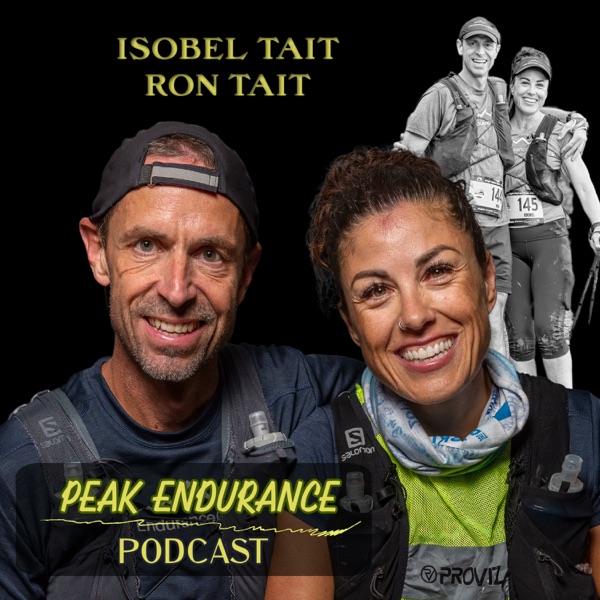
Podcast charts
Published by Isobel Ross
Welcome to the Peak Endurance podcast, where we talk all things endurance, mainly running! You will hear from athletes, experts in the field and also myself on all topics designed to help you reach your endurance goals!
On the charts
Every published chart this podcast appears in, in the snapshot behind this page. Each one links to the chart it came off.
From the feed
The latest episodes published to this podcast’s own RSS feed. Titles and descriptions are the publisher’s.
Ron and I discuss my final preparations for TDG. It's getting real now!!!
Ron and I discuss strength training for runners: How often you need to train, when is the best time and the sort of work you need to do.
Have you lost your running mojo? Ron and I discuss 10 ways to spice up your running!
You've had your rest days, your legs feel fine, your blood markers would look fine too, and you're still snapping at your kids, can't sleep, can't focus, feel flat or wired for no reason. That's not laziness or being soft. That's a nervous system still in overdrive weeks after the race finished. This episode is about the recovery nobody talks about because it doesn't show up on a training log.
Isobel and Ron discuss Isobel's 100k race at the Elephant Trail Race in Port Macquarie and give updates on the tent and Tor Des Geants training
I don't really have a big why. And I've represented Australia three times, won Six Foot Track, run three Barkleys. So, either I've been doing it wrong the whole time, or the 'find your why' advice is oversold. The real question of the episode: is a why necessary, or just sometimes useful.
We live in a world where our watches tell us how we slept, how recovered we are, how hard we should train and even how stressed we are. While technology can be incredibly useful, many runners have become so dependent on it that they no longer trust what their own body is telling them. In this episode, Isobel and Ron discuss why learning to run by feel is one of the most valuable skills you can develop, especially if you want to become a stronger trail and ultra runner. They talk about why pace and heart rate are often poor guides on technical trails, how perceived effort becomes your most reliable tool on race day, and practical ways to start reconnecting with your body's signals. If you have ever cancelled a session because your watch said you were "unrecovered" despite feeling great, or pushed through exhaustion because the numbers looked good, this episode is for you.
Isobel and Ron talk about what Isobel is doing for her training for Tor Des Geants. They discuss the daily and weekly work required and the fact that big races take a lot out of you.
Ron and Isobel chat with Kerryn Bell about the Southern Lakes Ultra, a 7day, 6 stage multi day event in New Zealand. If you've ever thought about doing a multi-day event but don't want to have to go all the way to the states or Europe, then this one is for you! Kerryn gives us all the details on how the race works and shares the fun that is the Southern Lakes Ultra. Link to enter is here: https://southernlakesultra.com/entryform
Isobel's daughter Elizabeth comes on to discuss her hike of the Camino Trail. This is a very runnable trail and a popular destination for multi day running. Hear how you could easily organise this adventure for yourself!
Most runners train hard and eat like an afterthought. In this episode, Isobel and Ron break down the nutrition fundamentals that directly support your training: not the fads, not the noise, just what the research actually says and what she's learned from years of racing and coaching at the sharp end of the sport. They cover the biggest mistake runners make with food (hint: it's not eating too much), why carbohydrates are not the enemy, how much protein you actually need as an endurance athlete, and why your gut health might be the thing standing between you and your next finish line. Ron also weighs in, because someone has to represent the people who just eat whatever and hope for the best. In this episode: RED-S — the underfuelling syndrome that's wrecking performance for more runners than you think The carbohydrate conversation (and why low-carb isn't the answer for most of you) Protein targets for endurance athletes, the numbers will probably surprise you Timing your nutrition around training — what actually matters Gut health, GI distress, and why race day is not the time to experiment This is training nutrition: day-to-day eating that builds a body that can handle the work. Race-day fuelling is a separate episode entirely. If this episode makes you realise your nutrition needs a proper look, start with booking a call at peakendurancecoaching.com.au Peak Endurance Coaching is based in Melbourne, Australia. Isobel Tait is a Level 3 Sports Nutritionist, UESCA certified ultra running and endurance nutrition coach, and three-time Australian representative at the World Long Distance Mountain Running Championships, as well as competing at The Barkley Marathons three times.
Your crew shows up on race day wanting to help. The problem is you never told them how. In this episode, Isobel and Ron (who has crewed Isobel for years) break down exactly what a good crew needs to know before race day, and why most athletes get this completely wrong. They cover what actually happens at crew points when the briefing hasn't happened, what a proper race plan looks like from the crew's perspective and how to handle the mental and emotional side of crewing. Ron brings a perspective you don't often hear: what it's actually like to stand at a crew point watching someone you care about suffer, and what makes his job easier every single time. What we cover: What crewing actually is and what it isn't What a crew needs to know from your race plan Nutrition, gear, and logistics: the specifics that get missed The mental stuff: what your dark place looks like and what you want your crew to say What to do when an athlete is seriously considering dropping Free download mentioned in this episode: Crew Race Day Briefing Template → https://go.peakendurancecoaching.com.au/crew-briefing Work with Peak Endurance Coaching: https://form.jotform.com/261448771119058 Peak Endurance Coaching is based in Melbourne, Australia. Isobel Tait is a three-time Australian representative at the World Long Distance Mountain Running Championships, three-time Barkley Marathons competitor, and founder of Peak Endurance Coaching.
Most ultra runners have a race calendar that looks impressive and a performance trajectory that doesn't match it. Here's why: racing is eating the cake. Training is making it. And if you're racing every other weekend — or hammering yourself in training like every session is a time trial — you're eating cake you haven't baked yet. In this episode I break down the A, B, C race framework: what it actually means, how to use it properly, and why getting this wrong is one of the most common reasons experienced runners plateau, burn out, or keep having disappointing race days despite putting in the work. What's covered: The cake analogy and why it applies to how you train, not just how you race The real difference between A, B and C races (and how to be honest about which is which) Why A races should be no more than 2–3 times a year and what that actually makes possible How racing your training is sabotaging your results A simple audit to fix your race calendar today If you've ever finished a race wondering why your fitness didn't show up then this episode is probably the answer. 🎙️ Peak Endurance Coaching | Isobel Tait Ultra running performance: mindset, race prep, nutrition, and the stuff most coaches won't say out loud. 📞 Free 30-minute strategy call: https://api.leadconnectorhq.com/widget/booking/9CtIbU6cHXlavK22YvQb 📸 Instagram: @peakendurancecoaching
Winter doesn't care about your goals. It's cold, it's dark,and your bed is warm. So, what separates the runners who come out the other side fitter, sharper, and ready; from the ones who spend September wondering wheretheir fitness went? Isobel and Ron get into the real mechanics of stayingconsistent when conditions are against you. Habits, habit stacking, identity, and why keeping promises to yourself in winter is the most important training you'll do all year. This isn't a motivation pep talk. It's a conversation aboutwho you're becoming when no one's watching.
Most runners use the same race strategy for every distance. That’s why they blow up in marathons, fall apart in ultras, or leave speed on the table in shorter races. In this episode, Ron and Isobel break down how race strategy changes from the half marathon all the way to the 100 miler. They cover: Pacing mistakes runners make at every distance Fueling differences from road races to ultras Why the marathon to the miler it's really an eating competition The mental shift required for 50Ks and beyond What actually matters in a 100K and 100 miler The biggest mistakes ultra runners make early How different race distances expose different weaknesses This is not just about running fitness. It’s about strategy, patience, emotional control, and knowing what the race actually demands from you. Whether you’re training for your first half marathon or your next miler, this episode will change how you approach race day.
At 39km into the Buffalo Stampede 100k, I rolled my ankle (and broke it!) and ruptured my ATFL ligament. Boot on. Running stopped. Tor des Géants in September still on the calendar. In this episode, Ron and I talk through what actually happens when a serious injury hits mid-season, not the motivational version, the real one. The emotional crash, the identity hit, the urge to panic-plan at midnight while Googling recovery timelines. We cover:— The right and wrong way to respond in the first 48 hours— Cross training options that actually maintain fitness (and the ones that don't)— Mental coping strategies including visualisation, identity separation, and controlling the controllables— Why volunteering is more useful than most injured athletes think— How to return to running without wrecking yourself a second time— Adjusting race goals without abandoning them If you're navigating an injury right now — or you coach athletes who are — this one is worth your time. Isobel Tait is the founder of Peak Endurance Coaching, a three-time Barkley Marathons competitor, three-time Australian representative at the World Long Distance Mountain Running Championships, and winner of the Six Foot Track Marathon. She coaches ultra runners on mindset, race preparation, nutrition, and performance. 📅 Free 30-minute strategy call: here 📸 Instagram: @peakendurancecoaching
Hiring a running coach should make your life easier. It should fast-track your progress, keep you consistent, and get you better results. But the reality is… most runners either don’t hire one whenthey should or they hire the wrong one and waste months, sometimes years. So today Ron and I are going to walk you through exactly what you need to look for in a coach so you actually get results from it.
Racing is one thing. Crewing is another game entirely. In this episode, we unpack the reality of the Buffalo Stampede. What it felt like out there, what went right, what didn’t, and what you only learn when you’re deep in it. Then we shift gears into the NZ 6 Day race. Not as athletes this time, but as crew. And honestly, it gives you a completely different perspective on suffering, pacing, and what it actually takes to keep moving for days. Two completely different experiences. Same sport. Big lessons. If you think you understand ultras, this one might change your mind.
Most runners waste time on the wrong cross training. They do workouts that feel hard They do sessions that look impressive They do what everyone else at the gym is doing But very little of it actually makes you a better runner. So in this episode we ranked different types of cross training out of 10 based on how useful they actually are for runners. Strength training Cycling Swimming Stairmaster Yoga Elliptical Rucking Gym work And a few controversial ones Some of them help a lot Some of them help a bit Some of them are almost useless If you want to know what is actually worth your time, listen to this one.
Most runners think they need more mileage, more speed work, or more motivation to improve. Most of the time that isn’t the problem. In this episode we talk about the habits that actually keep runners stuck. Comparing yourself to people on Strava without knowing their context. Panicking after one bad run. Winging your training instead of following a plan. Expecting every session to feel good. Chasing motivation instead of building discipline. We also break down the rule of thirds. Why a third of your runs will feel great, a third will feel average, and a third will feel terrible. And why that is exactly what should be happening if your training is working. If you want to level up your running, this is the stuff that matters. If you want structured training instead of guessing, you can apply for coaching at Peak Endurance.
Ranking source
Apple Podcasts rankings via the Mato Topic Intelligence Platform.
Observed September 20, 2026.
Apple and Apple Podcasts are trademarks of Apple Inc., registered in the U.S. and other countries.
Pairs with
Bring this source into Mato to read its transferable patterns, then turn them into an original show for your own audience.