
Live Interview
And why does that matter?
This is how a Mato agent talks. Take the other seat: answer a few and feel it follow the thread.
Podcast charts
Published by SLP Now
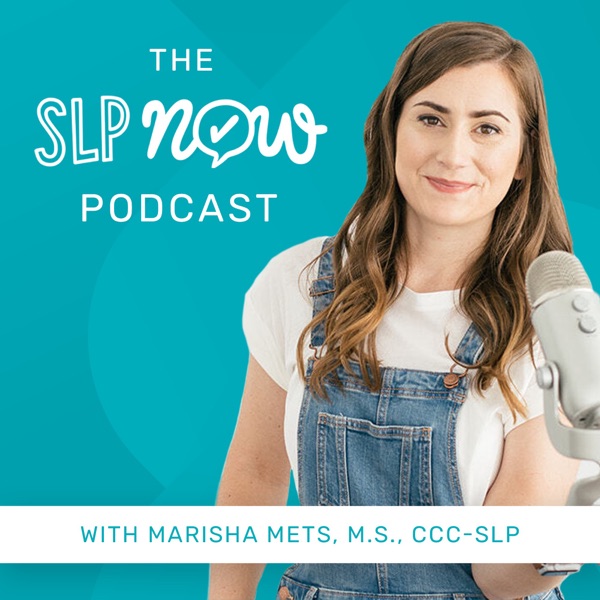
The SLP Now Podcast is your go-to resource for practical speech-language pathology tips. Through this podcast, you'll hear directly from Marisha Mets, a school-based SLP turned research nerd. She’ll be joined by expert guests to answer your biggest questions. Submit your questions at slpnow.com/ask.
On the charts
Every published chart this podcast appears in, in the snapshot behind this page. Each one links to the chart it came off.
From the feed
The latest episodes published to this podcast’s own RSS feed. Titles and descriptions are the publisher’s.
Show Notes: slpnow.com/269 In this episode, I break down what literacy-based therapy actually is. I share how I use one text, like a picture book, article, or reading passage, to anchor a full unit of therapy. That gives students meaningful, language-rich practice instead of isolated drills. I also talk about why this approach works. We look at Dr. Ukrainetz's framework, repeated exposure, background knowledge, and one study showing stronger gains in comprehension and story retell with contextualized intervention. I also share how this helped me plan for a triple-digit caseload while still individualizing sessions. Resources mentioned: Dr. Ukrainetz's literacy-based therapy framework Gillam, Gillam, and Reese (2012) Sign up for a free trial of SLP Now at slpnow.com/pod
Show Notes: slpnow.com/268 When a session goes sideways, I do not assume I did something wrong. In this episode, I walk through how I use my five-step session structure, Check-in, Assess, Teach, Practice, and Wrap Up, as a flexible guide and a reflection tool. I share how to spot where a session got stuck, what to adjust next time, and why backtracking is a normal part of clinical decision-making. We also talk about using documentation to remember what worked, so we can keep working smarter, not harder. Resources: SLP Now goal bank Probes tied to goals Teaching visuals Evidence-based strategy cheat sheets Listen in: slpnow.com/pod
Show Notes: slpnow.com/267 In this episode, I break down why I collect probe data at the start of the session, not the end. A quick, clean baseline helps me see exactly where each student is, how much support they need, and how to use our time wisely. I also share how I use goal cards to keep students engaged while I gather probes, plus how this routine makes planning, data collection, billing, progress notes, and IEPs so much easier. Working smarter, not harder. Resources: Speech Room Organization: Student Goals: https://slpnow.com/blog/student-goals/ Free Resource Library for SLPs: https://slpnow.com/free-resources/ Soft CTA: slpnow.com/pod
Show Notes: slpnow.com/266 In this episode, I walk through the 5-step session framework I use to plan speech therapy that is simple, flexible, and easy to adapt for any group. We talk about Check-in, Assess, Teach, Practice, and Wrap Up, plus why it does not have to be perfectly linear. I also share how quick probes, goal cards, and a simple wrap-up routine help me make better clinical decisions in the moment, collect solid data, and support students based on what they need that day. Resources mentioned: SLP Now goal card template Teachers Pay Teachers temperature check visuals Dr. Karen Ukrainetz's therapy framework slpnow.com/pod
Show Notes: slpnow.com/265 If you feel like you're reinventing the wheel every session, this episode is for you. I'm sharing why that happens, what it costs us, and the simple fix that made a huge difference for me. A lot of the stress comes from not having a repeatable routine. When we're making a million decisions on the spot, sessions feel harder than they need to. In this episode, I give a sneak peek at my five-step framework: Check-in, Assess, Teach, Practice, and Wrap Up. It works for any group, any grade, any goal.
Show Notes: slpnow.com/264 If progress report season always sneaks up on you, this episode is for you. I’m sharing what defensible data actually means, and why it does not have to be fancy or overwhelming. The goal is simple. Collect clear, usable data that helps you explain progress, make clinical decisions, and support your notes, billing, and parent conversations. I also walk through the four questions every note should answer, how I use quick probes to guide treatment, and why a simple digital system can save so much stress later. Working smarter, not harder. Resources: Digital Data Bootcamp: slpnow.com/ddb SLP Now Level of Support Rubric: https://slpnow.com/blog/probe-data/
Show Notes: slpnow.com/263 If you have ever found yourself scrambling for the right therapy materials right before a session, you are not alone. In this episode, I share why the real issue usually is not a lack of materials. It is a lack of a system. We walk through the four parts of a simple workflow: planning, materials, data, and follow through. I also share a story from my own career, plus examples of SLPs who saved time, lowered stress, and felt more confident after building a repeatable process. Resources mentioned: Session Structure course inside SLP Now Thematic Units course inside SLP Now Data Collection course inside SLP Now Ready for more support? slpnow.com/pod
This is a short and sweet Summit week episode! If you have been feeling stretched thin, this is your reminder that support can make a big difference. The Summit is a simple way to get practical ideas and head into the school year with a better plan. Working smarter, not harder. Sign up at slpsummit.com!
It is my favorite time of year! The SLP Summit is almost here! In this episode, I share a quick preview of the July 2026 lineup, including six live courses and two on-demand sessions you can watch through August 15. We talk about AAC, motor learning, stuttering, health literacy, organization, executive functioning, and evidence-based therapy planning. Register at slpsummit.com !
Show Notes: slpnow.com/260 A lot of us think being prepared for back to school means having every lesson planned and every material printed. In this episode, I share a simpler way to think about it. Prepared means being clear on your caseload, clear on your priorities, and clear on your next few steps. I also walk through my 4 step framework to help you get the lay of the land, segment your caseload, set up your core systems, and plan the first two weeks without trying to map out the whole year. We are focusing on rapport, routines, and quick baseline data, working smarter, not harder. Resources: - Episode 21: slpnow.com/21 - Free trial: slpnow.com/pod - Join the webinar on August 3: (SIGNUPLINK)
Show Notes: slpnow.com/259 A caseload number can look tidy on paper, but it never tells the whole story. In this episode, I break down why caseload does not equal workload, what the 2024 ASHA survey tells us, and why so many school based SLPs feel stretched thin even when the numbers look manageable. I also walk through a simple way to make invisible work visible, so you can use data and clear language to advocate for support without making it personal. If you are feeling behind, this is your reminder that the system may be the problem, not you. Resources: - 2024 ASHA schools survey - SLP Now Academy - slpnow.com/pod
Show Notes: slpnow.com/258 What if it actually felt doable to leave work at work? In this episode, I’m sharing five things I’ve seen school based SLPs do to leave on time more consistently. It is not about caring less. It is about building systems that make the job more manageable. I talk about planning ahead, giving every part of the job a home, documenting as you go, and protecting your energy. If you’ve been telling yourself that staying late is just part of being a good SLP, this episode is your reminder that burnout is not a badge of honor. There is a better way, and it starts with one repeatable system. Working smarter, not harder. Resources: - Follow along on Instagram: instagram.com/slpnow - Email: hello@slpnow.com - Sign up for a free trial: slpnow.com/pod
Show Notes: slpnow.com/257 Mixed groups are a reality for most school-based SLPs, and managing them well takes the right tools. In this episode, Marisha walks through how the SLP Now Visuals Binder makes it work, covering how to use it digitally in a pinch, how to test what works for your students, and why eventually printing and laminating your go-to visuals changes everything about session flow. The binder covers preschool through 12th grade with 95 pages of evidence-based visuals across early language, grammar, vocabulary, and later language skills. No prep required. Just open it and use it. Already a member? Contact us at hello@slpnow.com to access your binder bundle! Not a member yet? When you upgrade to a monthly or yearly membership, we'll send you the full bundle. Start your free trial: slpnow.com/pod
Show Notes: slpnow.com/256 Ever finish writing a goal and then realize you have no clear way to measure it at progress report time? You're not alone, and this episode has a fix. I'm walking you through the Digital Probe Binder (nearly 2,300 pages of goal-aligned probes) and showing you exactly how I pair it with goal cards to collect solid data for every student in a group in under five minutes. This combo keeps sessions moving, tells you exactly where each student is at, and makes progress reporting way less stressful. Resources mentioned: - Digital Probe Binder — available inside SLP Now - Data Collection Course — access it free at slpnow.com/pod (complete the course and the binder is automatically sent to you)
Show Notes: slpnow.com/255 Evals coming up and you're still digging through folders looking for the right screener? This episode is for you. In this episode, I'm walking you through the SLP Now Assessment Binder, a 70-page digital resource that lives right on your iPad. No printing. No hunting. Just everything you need, right at your fingertips. I'll show you how this binder covers articulation, phonology, and grade-level assessments across multiple skill areas. And when you pair it with SLP Now's built-in assessment tools, you can collect data, generate goal recommendations, and auto-populate your present levels statement all in one place. In this episode: What the Assessment Binder includes and how to access it How to use the binder alongside the SLP Now assessment tool How the platform auto-generates present levels summaries How to create goals directly from assessment data How to get your full binder inside the membership Resources mentioned: Free Trial: slpnow.com/pod
Show Notes: slpnow.com/254 The vast majority of school-based SLPs don’t have perfectly matched groups, and that doesn’t mean therapy has to be less effective. With the right structure and planning strategy, mixed groups can actually become a powerful way to target multiple goals, support peer learning, and simplify your workload. In this episode, we walk through a practical framework for running structured, efficient therapy sessions, even when your groups include different grade levels and goals. In this episode, you’ll learn: How to segment your caseload so you can plan therapy more efficiently Why language-rich thematic units help you target multiple goals at once A simple way to let students build on each other’s responses in mixed groups How the "Check in → Assess → Teach → Practice → Wrap up" structure reduces cognitive load Three small strategies you can implement immediately to make sessions easier If you'd like help setting this up for your own caseload, you can explore the tools and units inside a free trial at slpnow.com/pod .
Show Notes: slpnow.com/253 If you had five extra hours this week (completely protected from meetings, paperwork, and emails), how would you use them? Many school-based SLPs say they’d spend that time collaborating with teachers, analyzing student progress, planning more intentional therapy, or simply taking a real lunch break. In this episode, we explore why those meaningful parts of the job often get squeezed out + what you can do to start reclaiming that time. In this episode, we discuss: Why the gap many SLPs feel isn’t a competence problem How reducing rework can save hours of therapy planning each week Simple ways to batch decisions and reduce decision fatigue Why tracking your “invisible work” can help advocate for a more manageable workload If therapy planning, paperwork, and prep are taking over your evenings and weekends, you can start your free trial at slpnow.com/pod to explore tools designed to help you streamline the process and get that time back.
Show Notes: slpnow.com/252 School-based SLPs don’t struggle with planning because they’re disorganized; they struggle because their workload is overflowing. And when something has to give, therapy planning is often the first thing sacrificed. But thoughtful, structured planning is what actually makes therapy more efficient and effective. In this episode, you’ll learn: A simple 5-step session structure to reduce cognitive load How to use goal-aligned materials to plan in minutes (not hours) Why thematic units dramatically cut decision fatigue A 30-second habit that makes future planning easier How structure improves student progress and behavior If you’re ready to make therapy planning sustainable, start your free trial at slpnow.com/pod and put these systems into action.
Show Notes: slpnow.com/251 A caseload of 63 students doesn’t tell the full story of your job. School-based SLPs juggle therapy, evaluations, IEP meetings, Medicaid billing, AAC programming, travel time, and more — yet capacity is often measured by one number. In this episode, we unpack the difference between caseload and workload, why “the math isn’t mathing,” and how to shift the conversation with clarity and confidence. In this episode, you’ll learn: The difference between caseload and workload (and why it matters) Four principles to manage impossible workloads How to protect your contract hours without guilt Simple ways to document and make your workload visible How to approach administrators with clear, objective data If paperwork and planning are part of your overwhelm, check out our free trial at slpnow.com/pod .
Show Notes: slpnow.com/250 Paperwork doesn’t have to be the reason this job feels unsustainable. In this final episode of our paperwork series, we zoom out and look at why burnout is often a systems problem (not a passion problem), and what actually helps school-based SLPs get paperwork done more efficiently. You’ll hear practical ways to reduce cognitive load, create repeatable workflows, and make steady progress without adding more stress to your plate. In this episode, you’ll learn how to: Identify your biggest paperwork stressors and prioritize what matters most Use a “buffet” approach to implement systems without overwhelm Plan IEPs and evaluations in a way that supports working ahead Create reliable workflows that make paperwork feel manageable and sustainable If you’re ready to make paperwork feel lighter, pick one strategy from this episode and try it this week.
Ranking source
Apple Podcasts rankings via the Mato Topic Intelligence Platform.
Observed September 20, 2026.
Apple and Apple Podcasts are trademarks of Apple Inc., registered in the U.S. and other countries.
Pairs with
Bring this source into Mato to read its transferable patterns, then turn them into an original show for your own audience.