
Live Interview
And why does that matter?
This is how a Mato agent talks. Take the other seat: answer a few and feel it follow the thread.
Podcast charts
Published by BBC World Service
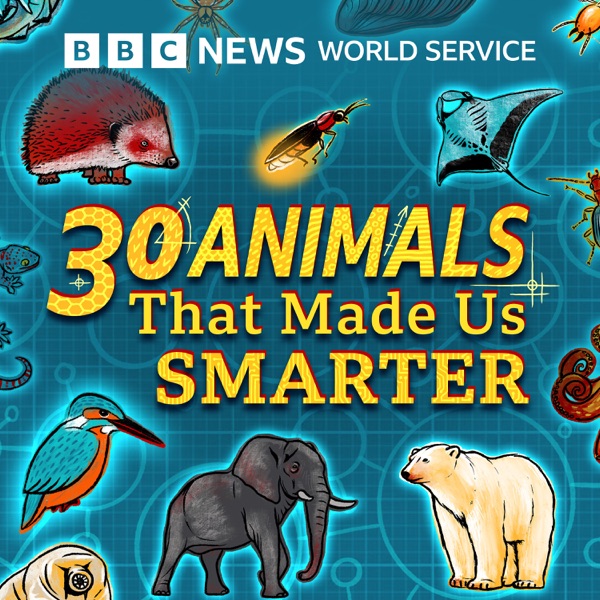
Amazing things humans have learnt from the animal kingdom. Inspiring, fascinating, bingeable. Please note, we are no longer able to receive emails for this series.
On the charts
Every published chart this podcast appears in, in the snapshot behind this page. Each one links to the chart it came off.
From the feed
The latest episodes published to this podcast’s own RSS feed. Titles and descriptions are the publisher’s.
S2 Ep 30. Smart phones could become even smarter – thanks to ants, beetles, moths and spiders! A multi-animal special episode, marking the season 2 finale. Patrick explores what could be an insect inspired phone of the future! There’s the story of the fire ants and bark beetles and a new camera lens with a much greater field of view. The hairs on butterflies, moths and spiders could help with an amazing new microphone. Moths might make it easier to look at our phones in bright sunlight. There’s also a waterproof, anti-bacterial cover which could be based on the wings of cicadas. Thanks for listening and please help us spread the word. #30Animals
S2 Ep 29. Not all butterflies are colourful. The transparent wings of the longtail glasswing butterfly may hold the key to more effective eye implants. This could be of huge benefit to people with glaucoma - the second leading cause of blindness in the world. Get in touch: www.bbcworldservice.com/30animals #30Animals
S2 Ep 28. From goo to super glue! Slug slime may hold the key to mending wounds without stitches or staples. Scientists have developed new adhesives based on the properties of slug slime, that are as sticky as any glue, stretchier than a rubber band and aren’t toxic to humans. This sticky substance could be used to repair a delicate organ like the heart or lung without using methods that could damage the organ. Get in touch: www.bbcworldservice.com/30animals #30Animals
S2 Ep 27. The amazing agility of a dragonfly leads to the creation of a new spy drone. Their four wings can move independently of each other, enabling them to fly forwards, backwards, sideways, up and down and suddenly stop and hover like a helicopter. This caught the attention of engineers who wanted to develop a small drone that could be used by the military as a spying device. In the future, this sort of technology might send back pictures from areas where it’s too dangerous for humans to go. Get in touch: www.bbcworldservice.com/30animals #30Animals
S2 Ep 26. A very clever solution to a significant environmental problem based on a kingfisher’s eyelids. When the brightly coloured bird dives for food, its eyes are covered in a way that protects the kingfisher’s eyeballs, rather like swimming goggles protect ours. Architects have copied this design to help prevent soil erosion on the banks of the huge Three Gorges Dam in China. Get in touch: www.bbcworldservice.com/30animals #30Animals
S2 Ep25. Sweet moves! Honey bees have developed an extraordinary form of communication known as the “waggle dance”, which directs other bees to where the best nectar can be found. As more and more bees explore the area, their directions become more refined. This method of refining information has been copied into an algorithm to help delivery drivers save time and fuel, without the need to plot journeys by hand. Get in touch: www.bbcworldservice.com/30animals #30Animals
S2 Ep 24. The world’s most efficient swimmer is the moon jellyfish! It’s the inspiration for a soft underwater robot that is safe enough to use in fragile environments like coral reefs and aquatic archaeological sites. By contracting a ring of muscle, the jellyfish can push water out of their bell-shaped bodies, thrusting them forwards without using much energy at all. Get in touch: www.bbcworldservice.com/30animals #30Animals
S2 Ep 23. The science behind some fascinating fur could help humans keep warm in space. A polar bear’s fur is brilliant at insulating it from freezing arctic temperatures. Each shaft of hair contains multiple chambers which trap heat close to the skin, making it an incredible thermal insulator. Now, scientists have copied its structure to build a light and flexible material which may be useful for the aerospace industry. Let us know what you think. #30Animals Get in touch: www.bbcworldservice.com/30animals
S2 Ep 22. From heart stopper to heart saver? The electric eel creates energy within its body to shock its prey. Scientists are copying the electricity-producing cells of the eel to develop a new type of soft, fleshy battery which may be used inside the body to power medical implants. Let us know what you think. #30Animals Get in touch: www.bbcworldservice.com/30animals
S2 Ep 21. Take a peek into a camel’s nose! The science inside could help to cool desert homes. A camel re-absorbs the water normally lost in the breathing cycle, keeping its temperature down. An architect has copied this to create a system that could control the temperature of desert dwellings without the need for costly electricity. Let us know what you think. #30Animals Get in touch: www.bbcworldservice.com/30animals
S2 Ep 20. How a sea creature can help us see more of our universe. A lobster’s eyes have evolved to spot food and potential threats in murky conditions at the bottom of the ocean. Scientists have copied their structure to create a new X-ray telescope that can be used to see into the dark expanse of space. Recordings of pulsars courtesy of The University of Manchester/Jodrell Bank. Get in touch: www.bbcworldservice.com/30animals #30Animals
S2 Ep 19. A tricky design challenge solved! All thanks to the scaly skin of the pangolin. Scales cover its body in an overlapping pattern, providing both flexibility and armour against attack. Architects copied this to create a glass roof for a famous British railway station, which meant the structure could fit into an oddly shaped location. Let us know what you think. #30Animals Get in touch: www.bbcworldservice.com/30animals
S2 Ep18. Snap! The trap-jaw ant’s amazing jaws can move faster than a speeding bullet, snapping shut at a top speed of 230km per hour. When the ant bites down, the force is so great that it launches the insect high into the air. Their powerful spring mechanism is being copied by scientists and may help move a new type of mini robot, which one day could be deployed in situations too dangerous for humans to enter – like fires or earthquake zones. Thanks for listening. Let us know what you think. #30Animals Get in touch: www.bbcworldservice.com/30animals
S2 Ep 17. A new synthetic test to create safe vaccines – based on the secrets of the horseshoe crab and its blue blood. Scientists hope this new technology could mean they no longer need to use the blood to test vaccines for harmful bacteria. Get in touch: www.bbcworldservice.com/30animals #30Animals
S2 Ep16. It’s a “living fossil”! This fish can resist piranha attacks and is inspiring a new body armour. The arapaima has been swimming the waters of the Amazon for millions of years. It’s also home to a famous predator, the fearsome piranha. The Arapaima has a secret weapon – it’s scales are both tough and flexible and they’ve caught the attention of scientists. Get in touch: www.bbcworldservice.com/30animals #30Animals
S2 Ep15. Learning from Lily the owl – could she help small aircraft cope with turbulence? Scientists hope what they’ve learnt about barn owls might help with the design of drones. Let us know what you think. #30 Animals www. bbcworldservice.com/30animals
S2 Ep14. Will a ray save the day? It’s inspiring a way to prevent more pollution of our oceans. As sea water enters a manta ray’s large mouth, plankton are captured and other particles are thrown up by whirlpools. Systems are being developed to extract or capture microplastics from water. Thanks for listening. Get in touch: www.bbcworldservice.com/30animals #30Animals
S2 Ep13. Bye-bye bacteria! How an insect’s wings inspired materials that could keep surfaces free from bacterial infections. The wings of cicadas are covered with tiny spikes which burst the walls of bacteria and kill them. Replicating this remarkable design could lead to the development of antibacterial materials with potential for industrial and medical use. Thanks for listening. Get in touch: www.bbcworldservice.com/30animals #30Animals
S2 Ep12. We love cats (well, many people do)! Thanks to one feline friend, they help keep us safe. An inventor narrowly avoided a road accident thanks to the eyes of a cat. He developed reflective road studs and named them, fittingly, ‘cat’s eyes’, which help us drive safely at night. Thanks for listening. #30Animals Get in touch: www.bbcworldservice.com/30animals
S2 Ep11. Can the remarkable dexterity of octopus suckers help improve delicate surgery? The octopus uses its powerful arms to grip onto rocks, capture prey and walk around the sea floor. Suckers are found along the arms which are crucial for manipulating objects. The action of these suckers has inspired a device to transfer fragile sheets of thin tissue in surgical procedures. Thanks for listening. Let us know what you think. #30Animals Get in touch: www.bbcworldservice.com/30animals
Ranking source
Apple Podcasts rankings via the Mato Topic Intelligence Platform.
Observed September 20, 2026.
Apple and Apple Podcasts are trademarks of Apple Inc., registered in the U.S. and other countries.
Pairs with
Bring this source into Mato to read its transferable patterns, then turn them into an original show for your own audience.