
Live Interview
And why does that matter?
This is how a Mato agent talks. Take the other seat: answer a few and feel it follow the thread.
Podcast charts
Published by Andrew Heaton
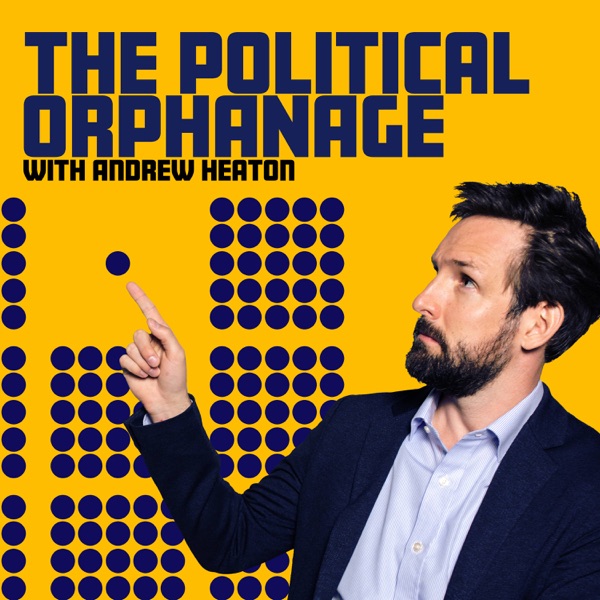
Politics minus bile plus jokes. Comedian and avowed independent Andrew Heaton interviews authors and thought leaders about policy and big thinky stuff.
On the charts
Every published chart this podcast appears in, in the snapshot behind this page. Each one links to the chart it came off.
The Mato Topic Intelligence Platform does not report this podcast as charting in a published category in this snapshot.
From the feed
The latest episodes published to this podcast’s own RSS feed. Titles and descriptions are the publisher’s.
Are we racing toward an AI-powered golden age—or building something we won't be able to control? Justin Robert Young joins to explore the emerging philosophical divide over artificial intelligence: accelerate innovation and reap potentially enormous benefits, or slow down before we unleash risks we don't understand. We discuss OpenAI and Anthropic, the politics of AI regulation, competition with China, whether the AI boom is a bubble, the strongest case for the AI doomers, and the possibility that advances in AI could transform medicine, work, and even human aging. Plus: Justin explains why the best way to prepare for the AI revolution is surprisingly simple—start asking it dumb questions.
Dr. Steve Fuller of Warwick University says the meaningful split in society is not Leftwing vs. Rightwing, but rather Upwing vs. Downwing. Both have radically different attitudes to both risk and human nature, which informs their policy decisions and the direction they want to steer society. SUPPORT THE SHOW! www.patreon.com/andrewheaton Dr. Fuller's book at: www.mightyheaton.com/featured Referenced in the show today: TPO: "Was Abraham Lincoln Leftwing or Rightwing?" https://politicalorphanage.libsyn.com/hyrum-lewis "Transcendant Man" – Documentary by Ray Kurzweill about the Singularity https://www.amazon.co.uk/Transcendent-Man-Ray-Kurzweil/dp/B016V7WCLA ATA: The Bioethics of Gattica – Discussed on Alienating the Audience https://alienating.libsyn.com/gattaca ATA: How Cryonics Works – Interview on Alienating the Audience https://alienating.libsyn.com/we-can-freeze-you-how-cryonics-works ORIGINAL AIR DATE: August, 2023
Healthcare in America is more expensive than anywhere else in the world—but what are other countries actually doing differently? Physician and Slice of Life MD author Sally Primus joins me to tour healthcare systems from Germany and Britain to Japan, Australia, and Estonia. We look at single payer, private insurance, wait times, doctor shortages, drug prices, bureaucracy, and the strange economics of American healthcare—and ask which ideas the United States might actually want to steal.
Donald Trump has renamed Lake Ontario "Lake America" for federal purposes—but can a president actually rename a place, or only change what the government calls it? Andrew Heaton traces the strange history of who gets to control language, from ancient river names that survived Romans and Normans, to Cardinal Richelieu's Académie française, to Noah Webster, John Adams, Thomas Jefferson, and America's long refusal to appoint an official authority over English. Along the way: French language purism, loanwords, bad translations, official English, and why language usually belongs less to governments than to the people who actually speak it.
The DSA recently released a policy platform establishing the goals of their political movement. In this episode we got through the main planks of that document, namely the bits about "socialism" and "democratic." We likewise go through a few articles and interviews of prominent DSA members to get an idea of what, in their own words, they're actually up to. (Spoiler: it's socialism.)
The Save Our Bacon Act, now repackaged into the Farm Bill, would upturn state rights in favor of federal prohibitions on animal cruelty laws. It's being pushed, in large part, by Chinese-owned conglomerates irritated by federalism. Lewis Bollard is the Farm Animal Welfare Managing Director at Coefficient Giving on Substack. He joins to discuss the Save Our Bacon Act, and the economic tradeoffs of better animal welfare against higher meat prices. Senate switchboard number: (202) 224-3121 Prior Episode: "Big Ag's Meat Ethics"
What is The Odyssey actually about beyond a clever guy trying to get home? Classicist Isabella Reinhardt joins to dig into the poem's deeper themes of civilization, hospitality, identity, belonging, and what it means for a warrior to return from war. Then we turn to adaptation itself, and the choices involved in translating an ancient epic for a modern audience. Using Christopher Nolan's The Odyssey as our case study, we ask what an adaptation is free to change, what it has to preserve, and at what point a new version stops being The Odyssey at all. "All the Gods Suck Except Circe" https://alienating.libsyn.com/all-the-gods-suck-except-circe
It's not that America won't spend money on mass transit, it's that we piss it away when we do. Our transit system is a mess, with a lot of problems in spending, procurement, NIMBYism and good 'ol fashioned idiocy. Will Poff-Webster is the Director of Infrastructure Policy at the Institute for Progress, where he works on energy, transportation and housing policy.
Should you trust experts—or trust yourself? Richard Hanania, author of Kakistocracy: Why Populism Ends in Disaster joins to discuss why populism has become one of the defining forces in modern politics. We discuss whether elites really deserve their bad reputation, why expertise and institutions matter, where academia and the media have genuinely failed, and whether movements built around "the wisdom of ordinary people" inevitably drift toward conspiracy theories, corruption, and bad governance.
Why has trust in the news collapsed—and is it really all the media's fault? Tangle founder Isaac Saul joins for a candid conversation about the incentives driving modern journalism, from clickbait and audience capture to ideological groupthink and the collapse of local news. We explore whether readers are rewarding the very coverage they claim to hate, why viewpoint diversity matters inside newsrooms, whether AI poses a real threat to journalism, and what it would actually take to rebuild public trust. It's a nuanced discussion about media, incentives, and why fixing the news may require fixing ourselves first.
Is Rumpsringa real? Are Amish people happier than you? Let's visit Amish country! Heaton visits Muhlenberg County, Ohio, to investigate America's unique subculture of pacifistic, techno-phobic Anabaptists. We meet Marcus Yoder, the Executive Director of the Amish and Mennonite Heritage Center, and talk to him about all things Amish. Why do they have weird beards? Why eschew buttons, automobiles, and smartphones? And, crucially… are they onto something?
Brian Dunning of the Skeptoid podcast returns to The Political Orphanage for a spirited pushback episode on the modern non-profit industry. In a previous conversation, we argued that sprawling tax-exempt organizations can become bloated, unaccountable, and more interested in perpetuating themselves than solving problems. Brian arrives armed with skepticism, data, and counterarguments. Do non-profits actually dodge property taxes? Are giant charities a public good or just corporations with better branding? And when does cynicism about institutions become its own kind of ideological blind spot? This episode dives into philanthropy, incentives, tax policy, and the uneasy overlap between altruism and bureaucracy—with plenty of disagreement along the way. This interview was edited for purposes of clarity and brevity. When I significantly alter an interview I make the uncut version available, just in case: https://drive.google.com/file/d/1szkeykHYAmerFXpeDTww2o_uHyLsj1_2/view?usp=sharing
Why did the United States become a stable republic while so many revolutions ended in dictatorship? The answer lies in two men pivitol to the Revolution: George Washington... and Oliver Cromwell. A century before George Washington, Cromwell fought a king in the name of liberty, overthrew the monarchy, and then—step by step—became everything he opposed. Washington would later face many of the same temptations: an unpaid army loyal to him, politicians begging him to stay in power, even a proposal to become king. This is the story of two revolutionary generals, two republics, and why America stayed on the path of democracy instead of descending into a military junta. BECOME A PATRON! www.JoinTheOrph.com
What if history isn't a string of great man biopics or a struggle between conservatives and progressives? What if it's a battle of disciplinarians against drunks and harlots? Thaddeus Russell comes on to talk about his book, "A Renegade History of the United States."
The Founding Fathers were all children of the Enlightenment, and they agreed on kicking King George out, but they never agreed on how to run the country. Seth Radwell, author of American Schism: How the Two Enlightenments Hold the Secret to Healing Our Nation joins on to discuss these two halves of our Founding, and how they are ultimately complimentary.
Jeffrey Rosen is a legal scholar and the President of the National Constitution Center. He's the author "the Pursuit of Happiness: How Classical Writers on Virtue Inspired the Lives of the Founders and Defined America."
Zuby is a British rapper who spent his childhood on a Saudi Aramco compound—a sprawling corporate community complete with schools, recreation, housing, and services. We discuss what it was like growing up in a place where one company effectively functioned as the local government, and whether company towns deserve their bad reputation. Then the conversation takes an unexpected turn. Having also lived in Dubai, Zuby reflects on how one of the world's most diverse and immigrant-heavy societies manages to maintain remarkably high social trust, low crime, and social cohesion. What can Dubai teach us about community, culture, and governance? And what assumptions do Westerners make about diversity that may not hold true elsewhere? It's a conversation about company towns, global cities, social trust, and the strange places that challenge our political priors.
Henry Ford revolutionized manufacturing, built the modern automobile industry, and amassed one of the greatest fortunes in American history. Then he decided to conquer the Amazon. In this installment of our series on company towns, we explore Fordlandia—the bizarre Midwestern utopia Ford attempted to build in the Brazilian jungle. It had golf courses, square dancing, vegetarian cafeterias, anti-soccer policies, and enough cultural arrogance to power a small nation. It also had malaria, jaguars, vampire bats, riots, crop failures, and one of the most spectacular corporate disasters ever conceived. Join Heaton for the strange, hilarious, and cautionary tale of what happens when industrial genius collides with nature, culture, and the limits of human planning. HEAR THE FULL EPISODE: www.thepoliticalorphanage.com
George Pullman built his employees a sparkling company town with clean homes, parks, libraries, luxury trains, and some of the best living conditions in the country—but demanded obedience in return. When recession hit and workers rebelled against wage cuts and paternalistic control, the conflict exploded into one of the most violent labor crises in American history. Featuring Eugene V. Debs, federal troops in Chicago, luxury sleeper trains, class warfare, and a rogue alligator loose in South Chicago, this is the story of how America nearly tore itself apart over the question: can capitalism become humane without becoming authoritarian? SUPPORT THE SHOW! Patreon.com/andrewheaton www.thepoliticalorphanage.com PayPal: andrew@mightyheaton.com Venmo: @mightyheaton
Robert Owen was a factory owner, a social reformer, the father of British socialism… and possibly the nicest company-town tyrant in history. Long before Karl Marx called for revolution, Owen tried to build a kinder version of capitalism: humane factories, universal education, shorter work days, and workers treated like human beings instead of expendable machinery. His model industrial town at New Lanark became world famous, attracting kings, intellectuals, and even the Tsar of Russia. But success convinced Owen he could go further. So he sold everything and moved to Indiana to build a socialist utopia from scratch. What followed was a chaotic experiment involving communal child rearing, endless committee meetings, militant intellectuals, religious clashes, labor shortages, and eventually… the ghost of Thomas Jefferson. In this episode, Heaton travels to Scotland to explore the strange rise and catastrophic collapse of Robert Owen's alternate-universe socialism—and asks whether history might have looked very different if Owenism, rather than Marxism, had become the dominant socialist tradition.
Ranking source
Apple Podcasts rankings via the Mato Topic Intelligence Platform.
Observed September 20, 2026. Cached outside the daily freshness window; the positions keep the date they were taken on.
Apple and Apple Podcasts are trademarks of Apple Inc., registered in the U.S. and other countries.
Pairs with
Bring this source into Mato to read its transferable patterns, then turn them into an original show for your own audience.