
Live Interview
And why does that matter?
This is how a Mato agent talks. Take the other seat: answer a few and feel it follow the thread.
Podcast charts
Published by Martin Piskoric
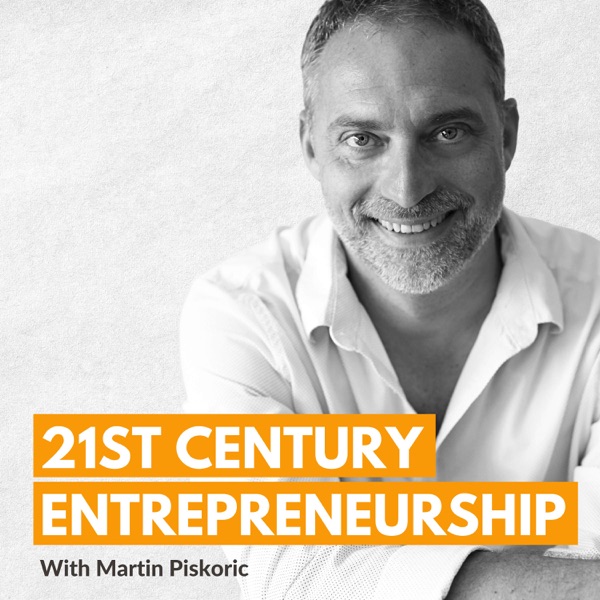
An entrepreneurship podcast that transforms in-depth interviews with founders, CEOs, investors, executives, creators, and business leaders into tightly edited, first-person narratives that distill what matters most from their real-world experience. A four-time Gold Award-winning show with more than 540 published interviews, 21st Century Entrepreneurship explores how businesses are built, funded, scaled, transformed, and sometimes rebuilt from failure. Host Martin Piskoric guides each conversation toward the moments, decisions, lessons, and experiences most useful to listeners, then steps out of the final edit. What remains is the guest's voice—without small talk, unnecessary promotion, or interview clutter—shaped with music and space for reflection. Episodes cover entrepreneurship, leadership, business strategy, growth, marketing, finance and investment, AI and technology, personal development, and the realities of building and leading businesses.
On the charts
Every published chart this podcast appears in, in the snapshot behind this page. Each one links to the chart it came off.
From the feed
The latest episodes published to this podcast’s own RSS feed. Titles and descriptions are the publisher’s.
Matt Edelman is the CEO and president of Super League Enterprise and we spoke about how the gamified consumer mindset is reshaping marketing—and how his own path from Marvel and film production unexpectedly prepared him to run a public company. He describes producing a film as surprisingly close to running a business: “a film is like a mini company,” with budgets, contracts, marketing, distribution, and production all moving at once. When the pandemic eliminated the live-event foundation of the company’s esports model, Matt first led a commercial pivot and later, as CEO, a much harder corporate turnaround under severe time pressure. His operating principle became simple: “you actually have choice. You have agency.” In negotiations, he recommends focusing on the other party’s motivations rather than your own emotions. The same thinking shapes his approach to marketing: understand a player mindset built around progress, status and rewards, then create participation with real value. One campaign linked digital mini-games to 30,000 free-popcorn coupons, all claimed on the first day—evidence, he says, that consumers “expect participatory rewards.” For entrepreneurs and marketers, the practical value is a framework for handling pressure, designing stronger engagement, and treating gaming as a serious customer-acquisition channel across ages and business models. Key takeaways Build engagement around progress, status, rewards, and repeated participation. When pressure spikes, make one daily decision that improves the situation. In negotiations, focus first on the other party’s needs and motivations. Use participatory rewards connecting digital actions to real-world value. Treat gaming as a channel for B2C and B2B customer acquisition. Don’t let emotion drive decisions when the business is cornered.
Dean Drako is a serial entrepreneur who has founded somewhere between five and fifteen companies, raised venture capital around 20 times in Silicon Valley, and experienced both successful exits and failures—and we spoke about the operating lessons that came from building repeatedly. His starting principle is simple: find a pain point you understand deeply, make sure many other people share it, and build what he calls “painkillers, not vitamins.” Dean also breaks company growth into three distinct organizational phases. From roughly one to 25 people, almost everyone knows everything; as the company grows, specialization and communication systems become necessary; and around 500 employees, the CEO must increasingly delegate and trust major leaders rather than rely on founder-level visibility. Timing can be just as decisive: one of his businesses spent roughly five years “pushing a rock uphill” because the market was not yet ready, reinforcing his view that success depends on product, timing, and some luck. That long-term perspective also explains why Dean says, “I don’t believe in an exit.” Instead of optimizing a company for sale, he argues founders should build durable products, customer relationships, revenue, service, and leadership—while staying adaptable enough to move quickly when customers and markets change. For Dean, the larger purpose is practical as well: his current work is organized around making physical spaces safer. For listeners, the value is a concrete framework for choosing problems, scaling leadership, surviving bad timing, and building for endurance rather than an exit. Key takeaways Solve painful problems you personally understand and many customers actually share. Expect leadership needs to change dramatically as headcount grows. Around 500 employees, delegate major functions to trusted leaders. Being years early can be as dangerous as having the wrong product. Treat product, timing, and luck as separate ingredients of success. Build enduring customer value instead of optimizing for an exit.
Sam Demma is an author and keynote speaker who has delivered close to 850 talks across four continents, and we spoke about how losing a Division I soccer scholarship after three major knee injuries redirected his life toward service, storytelling, and speaking. A teacher challenged him to take small, consistent action, which led to five and a half years of community cleanups—and eventually to schools inviting him back as a paid speaker. Sam also explains the practical principles behind his latest work: “assume positive intent” when customers, colleagues, or family frustrate you, and “self-evaluate first” before blaming someone else when things go wrong. He describes great speaking as combining useful ideas with humor and stories, while his broader philosophy is that “when you give expecting nothing in return, beautiful things unfold.” That philosophy is operational inside his company: 10% of annual profits after tax and expenses goes toward giving—half through books donated in January and half through cash donations in July, when charities may receive less support. For Sam, the purpose is less about what comes back financially and more about fulfillment, relationships, and knowing the work genuinely helps people. Listeners leave with practical ways to manage reactions, take ownership, communicate memorable ideas, and make generosity part of how they operate. Key takeaways Assume positive intent before reacting to an angry customer or difficult email. Self-evaluate your contribution before blaming someone when something goes wrong. Turn personal experiences into stories that help people change their behavior. Wrap useful information in humor and storytelling so people remember it. Build generosity into business intentionally instead of treating it as an afterthought. Small, consistent acts of service can open completely unexpected career paths. Learn more about Return on Goodwill and Sam’s live events at https://samdemma.com/rog-live/
Amy Perez, CEO at myDream & Mindful Software, Inc. - is a former government technology leader, Lean Six Sigma Black Belt, and responsible AI consultant, and we spoke about using dreams as another source of information for decisions, self-awareness, and major life changes. After years managing high-stakes programs - including a digital system that distributed more than $10 billion in pandemic aid - Amy was outwardly successful but exhausted: “I was slowly dying on the inside.” A violent dream centered on her work phone became the turning point. She quit, immediately felt “20 pounds lighter,” and she and her husband left their careers to travel the world for a year. That experience led Amy into systematic dream interpretation and eventually to building an AI-assisted approach that combines emotions, common symbolism, personal meanings, recurring patterns, and input from experts with more than 180 years of combined clinical experience. What previously took Amy more than an hour can now be explored in seconds, but she stresses that interpretations should offer possibilities rather than dictate decisions. Her philosophy is equally clear about AI: “Technology should serve the person, not turn the person into the product.” Privacy, anonymization, expert review, and keeping human judgment in the loop are therefore central to the approach. For listeners, the practical starting point is simple: set an intention before sleep, record whatever you remember - even one word - and begin looking for recurring emotional and symbolic patterns over time. Amy created myDream to make that process easier: the app lets users capture dreams quickly, add their own personal meanings to symbols, explore expert-informed interpretations, and identify recurring trends that may connect to waking life. Her larger argument is especially relevant to entrepreneurs: “you will never have all of the data you need to make a decision,” so dreams and intuition can become an additional source of information- not a replacement for judgment, but another signal worth learning how to hear. Set an intention before sleep to strengthen dream recall. Record dreams immediately, even if you remember only one word. Track recurring symbols alongside your personal emotional context. Treat dream interpretations as possibilities, not instructions. Use subconscious insights as additional data for difficult decisions. Design personal AI around privacy, reflection, and human judgment. Learn more about Amy’s work and explore myDream: https://www.mydream.io/
Saurabh Gupta is CEO of The Modern Data Company, and we spoke about why so many AI initiatives struggle to scale despite massive investment in the technology. His perspective comes from nearly 30 years in data: designing the World Bank’s open data platform, spending 12 years leading statistical data at the IMF, serving as Chief Data Officer for Washington, DC, and later working across more than 20 major enterprise data initiatives at Thoughtworks. Across those environments, he kept seeing the same pattern: “people are not focusing on outcomes, people are focusing on technologies.” Saurabh explains why “bad data leads to bad AI,” and why adding more compute cannot fix a weak data foundation. His approach starts with right-to-left thinking: “bring only the minimum data that you need to solve a problem,” then expand as new problems emerge. He describes one manufacturer planning seven to eight quarters of foundational work before his team delivered the first use case and supporting platform in less than one quarter. Instead of stitching together 10–12 specialized tools, the method combines ingestion, quality, governance, orchestration, transformation and cataloging while keeping context attached to the data itself. Complex customer problems, he says, can often move from months to roughly four or five weeks. For listeners building with AI, the practical lesson is simple: start with the outcome, minimize the data and infrastructure required, prove value quickly, and only then expand. Key takeaways Start with the business outcome before choosing technologies or infrastructure. Bring only minimum necessary data, then expand as adjacent problems emerge. Replace 10–12 disconnected tools with a unified ingestion-to-cataloging layer. Package context, governance, lineage, and transformations with each data product. Track unused pipelines and shut them down to stop wasted compute. Aim to prove complex use cases in four to five weeks, not months.
Digna Deleon-Morris is an entrepreneur and insurance agency CEO, and we spoke about her path from arriving in the United States at 17 and earning $5.25 an hour to building an agency doing almost $4 million a month. Before entrepreneurship, she earned two college degrees, supervised 30 locations and managed $82 million in operations while working seven days a week — but, as a mother of four, realized, “I was building somebody else's business.” The turning point was painful: after making millions in their first business, Digna and her husband lost everything in 2016 because, she says, they lacked financial education. They began learning through books, seminars and mentors, then applied those lessons to their own family before building a business around them. In 2023, Digna shifted her focus toward the Hispanic community and says she “literally 10x the business” by serving entrepreneurs in Spanish as well as English. Her broader method is equally clear: build people, create repeatable systems, delegate to leaders and give newcomers a structure they can “plug in and play.” She also shares a practical 90-day planning framework covering seven areas: spirituality, health and energy, relationships, career, personal development, finances and contribution. Rather than waiting five years, she recommends defining what each area should look like in 90 days, writing it down and taking daily action — while using books, mentors, seminars and other successful people as blueprints. Her motivation comes back to family and freedom: she remembers being a mother who was rarely home and now wants other parents to build income without making the same sacrifice. The practical value is a concrete model for turning personal growth, mentorship and repeatable systems into a business that can scale beyond you. Key takeaways Set specific goals across seven life areas for the next 90 days. Work harder on yourself, not simply longer inside the business. Use mentors, books and proven examples instead of starting from zero. Build repeatable systems newcomers can use without prior experience. Delegate authority and develop leaders if you want a scalable business. Serve an underserved community in the language and context it understands.
Robert Misheloff, Smarter Equipment Finance co-owner, is an equipment-financing entrepreneur, and we spoke about how small business owners can finance essential equipment without falling into costly traps. After running direct marketing campaigns for financing companies, Robert saw firms brag about how they “pulled the wool over the eyes of their customers.” That experience pushed him to build a business around transparency and helping owners make informed financing decisions. Robert breaks the market into three practical options: start with dealer financing, then try a bank, and only then look to private equipment financing when those routes do not work. Dealer programs can sometimes offer 0% rates—“You can't do any better than free financing”—while brokers become more useful for startups, used equipment, or challenged credit. He also explains how fake approvals can turn a seemingly standard deposit into a $2,000–$3,000 loss, and why reading negative reviews for patterns of deceptive behavior matters before signing anything. For Robert, the larger purpose is helping very small businesses—often just one to four employees—turn equipment into economic opportunity. He walks through a dump-truck example where someone earning $50,000–$60,000 annually could potentially build toward roughly $10,000 monthly after modeled expenses, then add trucks and drivers over time. In industries like trucking and construction, “the equipment literally is the business,” making the quality of a financing decision consequential not just for the company, but for the owner and their family. Listeners leave with a concrete framework for comparing financing options, spotting scams, and deciding when debt can genuinely help a small business grow. Key takeaways Check dealer financing first; 0% offers can beat every alternative. Try your bank before entering the private equipment-financing market. Brokers are strongest for startups, used equipment, or challenged credit. Read negative reviews specifically for patterns suggesting fake approvals or deposit scams. Never assume an approval deposit is refundable without reading the contract. Model revenue, expenses, payments, and repair reserves before financing equipment.
Luke Girgis is a founder, operator and author, and we spoke about why he believes companies should be designed around workflows rather than org charts. The idea grew out of businesses where revenue increased but efficiency did not: while running Rolling Stone and Variety Australia, margins never exceeded 4% because new revenue continually required more people. Looking back, Luke says, “we were just buying revenue with labor.” That lesson became urgent when Luke stepped into an interim CEO role at an e-commerce food business losing $400,000 a month. He broke every role into microtasks, mapped the workflows from customer order to delivery, reorganized the business and used automation to help bring it to breakeven. His four-step method is straightforward: audit where the business is bleeding, architect the highest-value workflow, activate the solution, then accelerate what works. Simply bolting AI onto an existing operation, he argues, is like “driving a Ferrari in traffic.” In his artist management business, automating 90% of managers’ administrative work freed them to spend their time developing artists—and every artist on the roster is now earning more than ever before. Luke’s principle is that “we hate wasting their time,” connecting automation not just to lower costs, but to better work, stronger careers and businesses more capable of surviving. Listeners leave with a concrete method for finding wasted work, redesigning workflows and applying AI where it creates measurable operating leverage. Key takeaways Map individual tasks before deciding what technology to automate. Redesign workflows first; reorganize people around those workflows second. Revenue growth is not scaling if headcount must rise equally. Audit, architect, activate, then accelerate the workflows producing results. Automating 90% of admin can redirect people toward higher-value work. Treat AI as a tool for saving time, not replacing people.
Marissa Alfe & Lauren Fitzgerald is the partnership behind a boutique talent agency PRTNRS MGMT, and we spoke about what it takes to turn creative talent into a durable business. After years in artist representation, they launched their own agency as COVID upended the industry; Marissa remembers, “I had $800 in my checking account,” while still needing to protect clients she had spent years building. Their response was to help artists become more visible, commercially valuable and entrepreneurial because, as Lauren puts it, “the talent today really is not enough.” Their approach is deliberately hands-on. Instead of building the kind of 50-to-200-person roster they saw elsewhere, they keep their roster small enough to combine daily bookings with long-term career strategy, brand partnerships and even travel logistics. That means maintaining relationships with publicists, editors and brands, creating consistent social content, and double-checking everything from pickup times to approved captions rather than assuming someone else handled it. Underneath the tactics is a philosophy Lauren summarizes simply: “relationships are everything.” Their story shows how trusted networks, continuous learning and disciplined client advocacy can turn a frightening entrepreneurial starting point into a focused agency built for long-term careers—not just the next booking. Key takeaways Treat creative talent as a business, not just a craft. Build relationships with brands, publicists, editors and peers before opportunities appear. Keep your roster small enough to provide meaningful career strategy. Double-check critical details instead of assuming another party handled them. Use difficult market shifts to create new value for clients. Keep learning even after becoming an expert in your field.
Scott Oldford is a lifelong entrepreneur who built his first seven-figure business at 16, and we spoke about what happened when decades of entrepreneurial instinct collided with an identity he was trying to force. By 2022, he was making roughly $7 million a year at a 70% profit margin while working 15–20 hours a week. Then he chased a bigger identity and a $100 million outcome, losing $14 million across 2023 and 2024. Looking back, Scott says the difference between entrepreneurship as a “beautiful laboratory” and “a prison” can come down to ego. That collapse brought him back to what he believes he actually does best: understanding entrepreneurs, spotting patterns, and helping founders scale without unnecessarily reproducing his mistakes. His approach goes beyond tactics. He argues that sustainable scaling depends on mindset, nervous-system capacity, identity, and understanding whether you are operating reactively, willfully, intellectually, or intuitively. In marketing, he reduces the problem to relevancy, repeated exposure—generally “60+ times”—and intimacy: creating enough connection that you become the inevitable choice. A five-month illness then forced another practical shift. Unable to reliably take calls, Scott converted years of frameworks and judgment into AI-guided systems that walk entrepreneurs step by step through areas such as offers, email, marketing, and business strategy. Instead of requiring hours of courses or six-figure one-on-one engagements, his goal is to encode the logic behind his decisions so entrepreneurs can use it when they need it. Underneath that work is a simple motivation: helping founders feel “seen and heard” and avoid pain they do not need to experience themselves. The value for listeners is a practical framework for scaling around who you actually are—not around the business identity your ego says you should become. Key takeaways Define success before ego quietly replaces your original reasons for building. Scale around your natural strengths instead of forcing the wrong entrepreneurial role. Treat mindset, nervous system, and identity as core scaling infrastructure. Build marketing through relevancy, repeated exposure, intimacy, and human conversation. Use AI to compensate for structural, memory, and execution weaknesses. Identify recurring personal patterns before they distort business decisions.
Denis O'Shea is the founder and CEO of a technology services company, and we spoke about how a painful sales failure became the foundation for 22 years of helping organizations extract more value from technology. Early in his career at Nokia, a customer challenged him on why they should buy more technology when employees barely used what they already had. Denis says that conversation “burnt a piece of my brain.” He later built a 250-person mentoring operation that worked one-on-one with a million people across multiple countries, and today applies those lessons to AI, security, and workplace productivity. His own company’s AI rollout exposed exactly why enthusiasm is not enough. After deploying AI to roughly two-thirds of the organization, the team discovered 33,000 sensitive files that were overexposed, gaps in employee training, no clear foundation for AI agents, poorly defined use cases, and no objective way to demonstrate ROI. Their response became a five-part method: define use cases, secure and classify data, train people, establish a secure foundation for agents, and measure the economic value of AI-supported work. Denis also explains how extreme strategic focus changed his company’s trajectory. From New Zealand, his team committed to becoming exceptionally good at one narrow technology specialization, eventually winning a global partner award and gaining introductions to major enterprise customers. The discipline, he says, was to “say no to 99 things” while continuing to say yes to one thing for years. The same philosophy now informs his view of AI: build security in from the beginning, prepare for potentially hundreds of agents per employee, and expect companies to face three growing management problems—data, agents, and spend. For listeners, the practical value is a concrete framework for adopting AI without losing control of security, costs, focus, or measurable business outcomes. Key takeaways Define AI use cases before deciding who receives the technology. Audit and classify sensitive data before exposing it to AI. Train employees beyond browser-based AI into everyday productivity tools. Give every AI agent clear ownership, permissions, policies, and lifecycle management. Measure AI ROI at the task level, not through adoption alone. Say no to 99 opportunities to become exceptional at one.
Jonny Price is President of WeFunder, and we spoke about why startup investing should no longer be reserved for millionaires—and why founders may be overlooking one of their strongest sources of capital: their own customers. He explains how changes in U.S. regulation opened private investing to everyday people and why that shift creates opportunities not only for investors, but also for entrepreneurs who struggle to access traditional venture capital. Rather than positioning community investing as a replacement for venture capital, Jonny describes it as a complementary model. Some of the fastest-growing startups raise from top-tier VCs and still invite customers to participate because they want to “let their customers and community invest alongside” institutional investors. For founders outside Silicon Valley, the impact can be even greater. As Jonny puts it, “the vast majority of companies... are just not a good fit for venture capital,” making community funding a practical alternative instead of a last resort. The conversation goes well beyond fundraising mechanics. Jonny argues that a successful community round creates loyal customers, valuable product feedback, and emotional resilience for founders. He recalls one entrepreneur saying that traditional fundraising “feels like no,” while a community raise “feels like yes,” because every investment arrives as another vote of confidence. That support often translates into customers who buy more, stay longer, recommend the product, and genuinely want the company to succeed. Whether you're building a technology startup, healthcare company, local business, or consumer brand, this episode offers a practical look at how community capital can unlock funding, strengthen customer relationships, and make entrepreneurship a little less lonely. Key takeaways Venture capital isn't the only path to raising startup capital. Turn existing customers into investors through community fundraising. Community investors often become loyal customers and product advocates. Lower investment minimums dramatically expand your potential investor pool. Fundraising should support building the company—not become the goal. Community backing provides emotional resilience alongside financial capital.
Kim Butler, Prosperity Thinkers founder, is a financial educator with more than 30 years of experience in banking, investing, and insurance, and we spoke about why strong earners often build wealth in the wrong order. Her starting question is direct: “You’re awesome at making money. How much of it are you keeping?” Rather than beginning with investment products, she helps entrepreneurial thinkers establish principles for making their own financial decisions. After a decade in the financial industry, Kim wrote her seven Principles of Prosperity in 1999. The first three—think, see, and measure—translate into a practical sequence: define and fully fund separate personal and business emergency reserves, continue accumulating an opportunity fund, and measure every decision by its opportunity cost. Using her example, a $100,000 emergency reserve could grow into $350,000, leaving $250,000 available for investments, acquisitions, or business opportunities without sacrificing peace of mind. As she puts it, “If you’re in a position of cash, opportunities will seek you out.” Kim also challenges people to compare mortgage prepayments, taxable interest, and other uses of cash against their highest realistic earning opportunity. The goal is not simply a better return—it is helping families sleep well, helping entrepreneurs act when opportunities appear, and ensuring more of every earned dollar remains productive. Listeners will leave with a clear order for building liquidity, evaluating financial trade-offs, and investing without weakening their safety net. Key takeaways Fully fund personal and business emergency reserves before discussing investments. Build a separate opportunity fund for large, time-sensitive investments. Choose reserve targets with your spouse or business partners. Measure mortgage prepayments against your highest realistic investment return. Prioritize liquidity and tax efficiency over small interest-rate differences. Match financial education to how you learn and take action best.
Mike Ryan, BPN CEO, is a former Goldman Sachs analyst who later ran its global equity business and managed Harvard’s $18 billion endowment, and we spoke about why powerful AI still fails investors when its answers cannot be trusted. After repeatedly receiving polished but incorrect information from generic tools, he decided to develop a more reliable approach. As he puts it, “AI wouldn’t pass a first-round job interview at most firms because it’s not trustworthy.” Ryan explains that AI has a “big stomach, but a very small mouth”: it can process enormous volumes, yet each answer depends on the limited information selected for that prompt. His method maps every question to the most reliable and relevant sources, uses trusted spreadsheets for calculations, preserves citations and source controls, and keeps one person directing the process through an “AI plus 1” model. Purpose-built agents can screen opportunities, identify the one or two highest-value priorities, and support complex decisions as new evidence arrives. The result he describes is decision-grade memos, models, and presentations produced in 80% less time, with templates or first drafts often completed within one or two days. For listeners, this is a practical blueprint for reducing processing work while preserving human judgment, accountability, and confidence in consequential decisions. Key takeaways Map every AI prompt to the most reliable, relevant sources. Keep one human responsible for supervision, interpretation, and final judgment. Use trusted spreadsheets for calculations, then visualize results for faster review. Let AI screen opportunities before committing time to deep analysis. Update complex decisions iteratively as new evidence arrives. Use saved time for company visits, customer calls, debate, and judgment.
Chris Majer is a former University of Washington rugby captain, performance psychologist, and organizational consultant, and we spoke about how practice, mood, and coordination determine whether growing companies can actually transform. An airport-bookstore encounter with George Leonard’s The Ultimate Athlete led him from rugby into Aikido, sports psychology, and work with elite athletes, Olympic teams, and Special Forces. That path eventually took his methods into business, where a 48-month engagement helped an AT&T division generate $3 billion in profit. Majer’s governing lesson is blunt: “Understanding is the booby prize.” Transformation fails when companies install new practices and processes on top of resignation, resentment, or distrust. Because “mood is everything,” leaders must first change the organization’s predisposition for action, then develop new leadership and coordination practices, and finally align compensation, recognition, promotion, and workflows with them. He recommends judging learning by what people can do, dedicating 3–10% of working time to development, and allowing months—not a weekend—for competence to become embodied: “It’s simple, but it’s not easy.” Listeners will leave with a concrete sequence for turning stalled coordination into sustainable performance: shift mood, practice new actions, and make systems coherent with them. Key takeaways Dedicate 3–10% of working time to deliberate learning and practice. Change organizational mood before introducing new practices or systems. Align rewards, compensation, promotion, and workflows with teamwork. Treat coordination as the core capability required for scaling. Build competence through repeated action, not information alone. Sustain transformation through months of follow-up, not one intensive event.
Simon Mach is a crypto trader and founder of MyCryptoParadise, and we spoke about how a lean operation that began with four traders survived repeated market cycles after launching in 2016. When meme-coin bets that worked during bull markets vanished in a downturn, Simon stopped chasing potential 1,000% gains and developed a professional approach guided by one hierarchy: “Capital protection first, consistency second, and growth third.” He explains why professionals calculate potential losses before profits, determine exit rules before entering a trade, and use checklists to prevent volatility from hijacking their decisions. The business grew through word of mouth with almost no initial expenses, while Simon treated focus as an economic resource because “your main product is your time and you yourself.” His team publishes both profits and losses, limits participation when added trading volume could expose its positions, and even uses a 12-song album to reinforce the daily discipline behind “risk first, profit second.” Listeners will gain a practical framework for protecting capital, managing emotions, and building consistency that can outlast a bull market. Key takeaways Calculate the possible loss before considering a trade’s potential profit. Define profit targets and loss limits before entering every trade. Use daily routines to protect focus and decision quality. Publish wins and losses to earn trust through transparency. Cap participation when added volume could expose your strategy. Reinforce disciplined behavior with checklists and repeated daily cues.
Xavier Rivera is a former U.S. Marine, trader, and financial education mentor, and we spoke about turning a $200 teenage investment into $20,000—then borrowing $60,000, losing most of it, and spending four years trapped in debt. At 17, he entered the military believing his basic needs would be covered while he learned the markets, but the failed pharmaceutical trade pushed him so far into pressure that, as he says, “I was so deep in survival mode.” During a nine-month deployment aboard the USS America without internet access, Xavier printed financial materials, studied constantly, and began translating market concepts into the language of engines, transmissions, and mechanical systems. Teaching other Marines helped him understand the infrastructure himself; after returning, a researched electric-vehicle options trade earned him about $300,000 while three people at the table became millionaires. He stresses that this was a unique event, not a repeatable promise: traders must “calm your nervous system down and learn first,” prove a strategy, manage risk, and “become an operator, not a trader.” Listeners will leave with a practical framework for studying markets, testing systems, protecting savings, and recognizing opportunities without blindly following someone else. Key takeaways Learn the market’s language before risking meaningful capital. Build a repeatable system instead of copying another trader’s positions. Calm your nervous system before expecting consistent decisions. Prove your strategy before accessing larger proprietary-firm capital. Protect savings by separating education, testing, and funded trading. Teach complex concepts simply to deepen your own understanding.
Timothy Dougherty is a fitness entrepreneur and franchisor, founder and CEO of Project LeanNation, and we spoke about rebuilding identity after poverty, financial success, federal prison, and the collapse of everything he had tied his value to. The gym was the first place “where pain had purpose,” and keeping a small promise—to arrive at 6:00 each morning—gave him evidence that he could become disciplined. Years later, despite the house, Porsche, boat, and growing family, he says, “I never felt more empty.” After serving 1,000 nights in federal prison, Timothy returned home with anxiety, guilt, and no clear direction. He relied on a repeatable daily routine, Rational Self-Analysis—thinking about his own thinking—and the confidence that adversity had revealed his ability to persevere. Training one person became meal preparation for many; soon he was producing 1,000 meals each weekend while learning that “it wasn’t the food.” The real value was consistent support, accountability, empathy, and honest conversations that helped people change their behavior. That relationship-based approach eventually became a scalable operating model. Timothy describes spending a decade reaching roughly 30 units, then awarding more than 100 territories within 12 months after building stronger development and support teams. His practical method includes continuously auditing processes, educating himself before hiring specialists, protecting culture through accountability, and accepting that leadership sometimes requires delivering unpopular news. His mission is grounded in service—“we rise by serving others”—and in making healthier choices more accessible to adults and children. Listeners will learn how small promises, structured reflection, consistent service, and transferable skills can turn adversity into disciplined leadership. Key takeaways Keep one small daily promise until discipline becomes evidence. Use routine to reduce uncertainty during high-pressure seasons. Examine your thinking before challenging someone else’s beliefs. Build support, accountability, and education into the operating model. Learn enough to identify and hire genuinely competent specialists. Protect the shared mission, even when accountability makes you unpopular.
Mike Stone is President & CEO of CertaPro Painters®, and we spoke about building scalable businesses through trust, proven systems, technology, and values. After more than 26 years with the organization, Mike believes sustainable growth comes from moving beyond individual projects toward long-term relationships because “projects end,” while strong customer relationships endure. Mike explained how franchising lets entrepreneurs be “in business for yourself, not by yourself,” combining independence with coaching, technology, national sales support, and established processes. He described an unusually fragmented $60–70 billion North American market where even the largest operator holds roughly 1% market share. Franchise owners receive different support as they grow—from accurate estimating and financial discipline to hiring, leadership development, succession planning, tax considerations, and maximizing enterprise value. Technology will reshape how that work is managed rather than eliminate it. Mike expects AI to improve marketing, proposals, estimating, and organizational knowledge, potentially allowing ten employees supporting a $5 million operation today to support a $10 million business in the future. Remote estimates, property data, Google Earth, FaceTime, reviews, and strong customer metrics will also reduce friction as younger customers increasingly expect digital buying experiences. Underneath these changes is a values-based culture built around keeping promises, respecting individuals, pursuing excellence, continuously improving, and being willing to “embrace the possibilities.” Key takeaways Build lasting customer relationships instead of optimizing only for individual projects. Use proven systems while preserving the franchise owner’s entrepreneurial independence. Develop financial discipline early, then add talent and leadership capacity. Apply AI to proposals, estimating, marketing, and shared organizational knowledge. Design remote buying experiences around data, reviews, and customer convenience. Protect long-term growth with clear values, succession planning, and continuous improvement. Listeners will gain a practical framework for scaling a service business without sacrificing trust, profitability, or customer experience.
Andy Harris is a former three-time CEO and current President of North American Strategies and Managing Director with STS Capital, and we spoke about how founders can prepare their companies for an exit that delivers more than standard market value. After completing more than 20 acquisitions and six exits, Andy learned M&A by “being in the shoes” of business owners—building companies, managing daily operations, and preparing them for strategic buyers. His central advice is to remove “founder risk” by creating a capable leadership team, establishing succession, and proving the company can operate without its founder. Owners should also define why they want to sell, what outcomes they require, and what life should look like afterward. Because circumstances can change unexpectedly, Andy argues that “it’s never too early to start” building a business that is ready for an exit. Andy explains how advisors identify strategic buyers, run a competitive process, and move negotiations beyond ordinary industry multiples. In one case, buyer competition helped a company close at 100% above its base financial value—twice what the owner originally expected. He also emphasizes the emotional side of selling, particularly in family businesses, where stakeholders must remain aligned around their original purpose and preferred outcomes. Listeners will learn how to reduce buyer risk, strengthen value drivers, create strategic competition, and prepare emotionally for a successful exit. Key takeaways Build leadership that allows the company to operate without its founder. Define required outcomes and post-exit plans before starting negotiations. Prepare for an exit years before you expect to sell. Identify buyers who gain unique strategic value from your company. Use competitive tension to move offers above standard industry multiples. Align shareholders early to prevent emotional reversals near closing.
Ranking source
Apple Podcasts rankings via the Mato Topic Intelligence Platform.
Observed September 20, 2026.
Apple and Apple Podcasts are trademarks of Apple Inc., registered in the U.S. and other countries.
Pairs with
Bring this source into Mato to read its transferable patterns, then turn them into an original show for your own audience.